
Amtrak Launches $112M Chicago Union Station Upgrade
Amtrak launched a $112 million project at Chicago Union Station to convert former mail tracks 30 to 38 into level passenger boarding platforms by mid-2027.
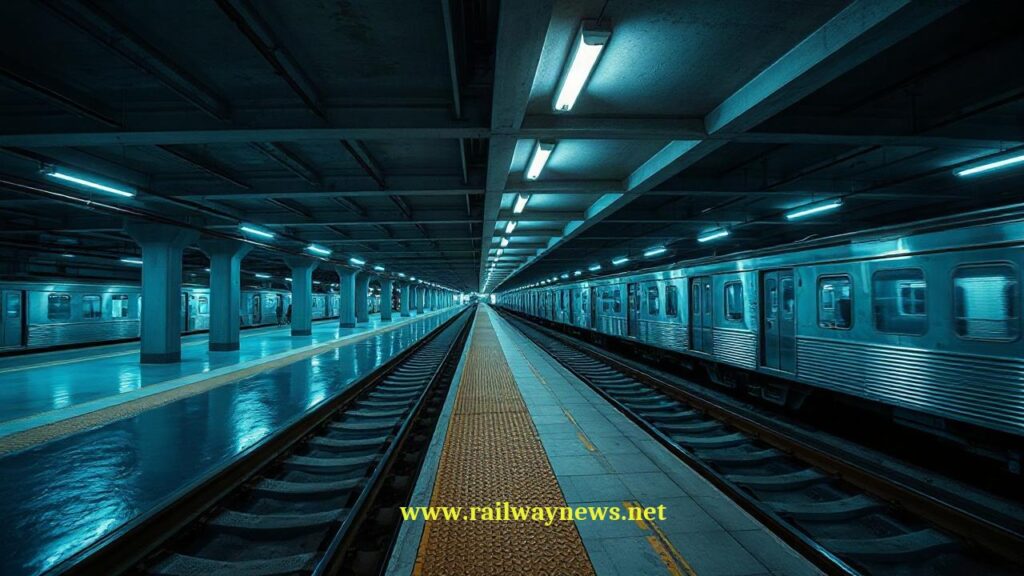
⚡ In Brief: Amtrak will start a $112 million, 30-month infrastructure project at Chicago Union Station before year-end to convert former mail platforms into accessible passenger boarding areas across tracks 30 to 38.
CHICAGO, UNITED STATES – Amtrak will break ground before the end of 2024 on a $112 million platform overhaul at Chicago Union Station. The project converts disused subterranean postal infrastructure into level-boarding passenger platforms serving tracks 30 through 38. Work on the 30-month initiative is scheduled to run through mid-2027 to address long-standing capacity limits at the central Midwestern terminal.
What Is the Full Scope of This Project?
The Chicago Union Station platform project rebuilds dormant mail tracks 30 through 38 into high-capacity boarding platforms compliant with the Americans with Disabilities Act. Travelers will board directly on the first level without relying on staircases, temporary bridge plates, or mechanical lifts. Financing draws from three distinct capital streams: a $49.6 million Federal-State Partnership for Intercity Passenger Rail grant, $40 million from fiscal-year 2025 federal appropriations, and $22.4 million in matching funds split between Amtrak, the City of Chicago, and Cook County. The identity of the primary construction contractor was not disclosed at the time of publication.
Key Project Data
| Parameter | Value |
|---|---|
| Project / Contract Name | Chicago Union Station Mail Platform Conversion (Tracks 30-38) |
| Total Value | $112 million |
| Parties Involved | Amtrak, Federal Railroad Administration, Illinois Department of Transportation, City of Chicago, Cook County |
| Timeline / Completion | 30 months (Scheduled completion mid-2027) |
| Country / Corridor | United States / Chicago Terminal Hub (Midwest Network) |
How Does This Compare to Similar Projects?
Station platform interface revisions are a critical operational bottleneck in modern passenger networks, frequently incurring massive rework when vehicle and platform standards diverge. In the United Kingdom, the £2 billion fleet procurement for High Speed 2 required design revisions after fleet length specifications failed to match future platform clearance limits on classic line stations (Source: Railway Supply, 2024). While the Chicago conversion focuses on static retrofits rather than greenfield rolling stock integration, legacy station constraints impose similar execution risks. North American passenger investments form part of a broader global intercity expansion where high-speed and intercity passenger rail is projected to grow at 4.6% annually through 2035 (Source: SCI Verkehr, 2025). Unlike newer high-speed terminal projects in Canada’s planned Alto corridor between Ottawa and Montreal, Amtrak must execute heavy structural modifications within an active underground terminal handling daily commuter and interstate operations.
Editor’s Analysis
Transforming inactive freight and mail infrastructure into high-density passenger space provides Chicago Union Station with swing capacity needed before larger concourse redesigns take place. Global rail infrastructure spending increasingly targets operational debottlenecking, driven by a projected 4.6% compound annual growth rate in high-speed and intercity rail through 2035 (Source: SCI Verkehr, 2025). By funding track upgrades jointly with municipal and state agencies, Amtrak demonstrates a viable regional cost-sharing model that mitigates sole dependence on federal discretionary grants.
FAQ
Q: What tracks are being modified at Chicago Union Station?
A: Work focuses directly on tracks 30 through 38, converting former mail handling infrastructure into active passenger boarding areas. The revamp will eliminate the need for boarding lifts and stairs on these specific tracks.
Q: How is the $112 million Chicago Union Station project funded?
A: Funding consists of a $49.6 million Federal Railroad Administration grant, $40 million from FY25 federal appropriations, and $22.4 million from local partners including Amtrak, Cook County, and the City of Chicago.
Q: Will passenger rail services experience disruptions during the 30-month build?
A: Amtrak intends to utilize these dormant tracks to expand terminal flexibility during future modernization efforts, though specific interim service modifications were not disclosed.

Railway infrastructure, rolling stock and transport technologies specialist focused on global rail industry developments, high-speed rail systems, signaling technologies and freight transportation. Covering railway investments, public transport modernization, rail operations and international mobility projects across Europe, Asia and North America.
RELATED POSTS
November 1, 2026 6:16 am
CPKC signed a five-year labor contract with BLET covering 250...
November 2, 2026 5:15 pm
WSP secured an advisory contract from Transport for London in...
November 1, 2026 7:12 am
Metra launched its draft rail plan across an 11-line Chicago...
November 2, 2026 8:15 pm
Network Rail confirmed the installation of a new Church Fenton...
November 3, 2026 5:14 pm
Conrail confirmed 28-year rail veteran John Wright as president and...
November 2, 2026 6:14 pm
HS2 confirmed Howard Smith as Chief Operations Officer to integrate...