
Cologne Rail: Stadler’s €700M Light Rail Upgrade for Future Mobility
Cologne orders €700M in new light rail cars from Stadler, modernizing its transit.
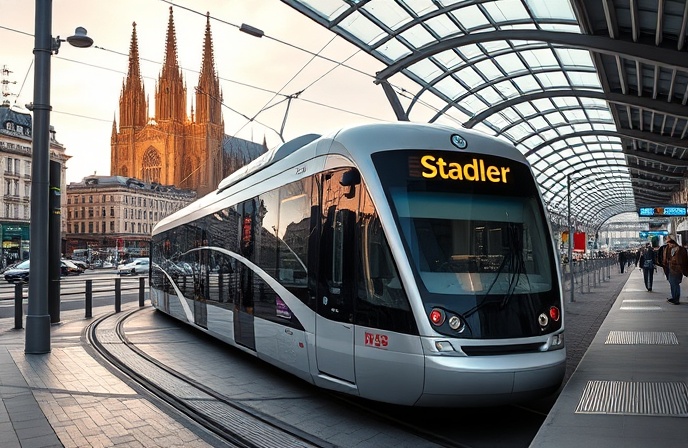
Cologne to Modernize Light Rail Fleet with €700 Million Stadler Order
Cologne, Germany, is poised to revolutionize its public transport system. In a landmark deal announced on July 29, 2025, Kölner Verkehrs-Betriebe (KVB), the city’s public transport operator, has awarded Stadler a substantial €700 million contract (approximately $816.4 million) for 132 new high-floor light rail vehicles. This strategic investment, with the first deliveries slated for 2029, aims to replace aging rolling stock, significantly enhance passenger capacity and comfort, and integrate cutting-edge technology into Cologne’s light rail network. The project highlights a commitment to sustainable urban mobility and represents a significant step forward in upgrading the city’s transport infrastructure. This article will delve into the specifics of the order, exploring the innovative features of the new trains, the strategic benefits for Cologne, and the broader implications for the rail industry.
Advanced Technology and Enhanced Passenger Experience
The new Stadler vehicles are designed to incorporate a suite of advanced technologies to improve safety, operational efficiency, and the overall passenger experience. Key features include sophisticated collision warning systems and rear-view mirror video systems, enhancing operational safety. Additionally, the trains will feature automatic ambient-adjusting cockpit displays, which improve driver ergonomics. An integrated passenger counting system, coupled with advanced evaluation software, will optimize operational planning, allowing KVB to better allocate resources and adjust services to meet demand. The incorporation of hybrid wheels with aluminium rim rings will contribute to reduced weight and noise pollution, further enhancing the passenger experience. Inside, the design focuses on energy efficiency and passenger comfort, with air conditioning, large 29-inch passenger information monitors, and LED lighting throughout. Spacious aisles will facilitate efficient passenger flow, supporting faster boarding and alighting, thus reducing station dwell times.
Modular Design and Increased Capacity
One of the key design features of the new vehicles is their modularity. The light rail vehicles can be quickly coupled together using a quick-release coupling system, enabling the formation of longer trains to accommodate higher passenger volumes. This flexibility allows for configurations capable of carrying up to 470 passengers per coupled unit. Additionally, the contract includes 34 intermediate modules, each enabling extensions to approximately 70 meters, further enhancing passenger flow and operational efficiency, particularly during peak hours. This modular design offers KVB significant operational advantages and allows for adaptability as passenger demand fluctuates. This design will replace the 2200/2300 and 5100 series vehicles, and will serve lines 4, 13, and 18.
Strategic Benefits and Long-Term Support
The KVB views this investment as vital for its strategic goals. According to KVB CEO Stefanie Haaks, the city council’s approval of the project provides essential planning security. “In view of a challenging budget situation, we are very grateful for the financial support, which sends a positive signal for the implementation of the mobility transition and strong public transport,” she noted. The project is backed by significant financial support, demonstrating a strong commitment to modernizing public transport infrastructure and supporting the city’s mobility transition objectives. Stadler will provide detailed long-term support to guarantee the fleet’s reliability and safety, offering dedicated maintenance and technical services over the vehicles’ anticipated 30+ year lifespan. The first ten trains and five connecting modules are scheduled for delivery in 2029, with the complete fleet rolling out between mid-2030 and the end of 2032.
Conclusion
The €700 million order placed by KVB with Stadler marks a significant step in the modernization of Cologne’s light rail network. The introduction of 132 high-floor light rail vehicles, with their advanced technology, enhanced passenger comfort, and modular design, will transform the city’s public transport. The strategic decision to invest in new rolling stock underscores Cologne’s commitment to sustainability and efficient urban mobility. The new fleet will help KVB manage passenger growth more efficiently and provide passengers with improved service quality. The project’s success is reliant on the seamless integration of cutting-edge technologies, along with Stadler’s commitment to providing long-term support. This project serves as a powerful example of how rail investment can drive urban development by improving the quality of public transport, potentially influencing future initiatives in other European cities facing similar challenges with ageing infrastructure and increasing passenger demand. The project’s impact on passenger experience, operational efficiency, and the overall enhancement of Cologne’s public transport system will be closely watched, potentially setting a new benchmark for light rail modernization projects across Europe.
Company Summary
Stadler Rail AG is a leading manufacturer of railway rolling stock, with a global presence and a strong reputation for innovation and quality. Stadler designs, builds, and maintains a wide range of vehicles, including high-speed trains, regional trains, light rail vehicles, and locomotives. With a focus on modular design and sustainable technologies, Stadler has become a key player in the rail industry, contributing to the modernization and expansion of rail networks worldwide. Recent developments, such as the unveiling of the RS ZERO, a zero-emission train powered by hydrogen and batteries, highlight Stadler’s commitment to developing sustainable rail solutions. The company’s expertise in railway engineering and its focus on customer-centric design have made it a preferred partner for transit authorities, supporting sustainable mobility and transforming railway systems.

Railway infrastructure, rolling stock and transport technologies specialist focused on global rail industry developments, high-speed rail systems, signaling technologies and freight transportation. Covering railway investments, public transport modernization, rail operations and international mobility projects across Europe, Asia and North America.
RELATED POSTS

October 1, 2026 7:09 am
United States regulators confirmed a September 30 deadline for the...

October 1, 2026 12:13 am
Illinois approved $1.5 billion annually for the Northern Illinois Transit...

October 1, 2026 6:10 am
Amtrak approved a System Expansion Committee on July 30 to...

October 4, 2026 5:14 pm
Alstom secured a CA$4.7 billion order from VIA Rail Canada...
October 1, 2026 3:12 am
Greenbrier confirmed Brian Comstock as new president and CEO effective...

October 6, 2026 2:14 am
Union Pacific launched export rail shipments with Ferromex to deliver...