
California’s Hydrogen Rail Revolution: Stadler FLIRT H2 Expands
California expands its hydrogen train order from Stadler, bringing ten FLIRT H2 trains to the state, positioning it as a leader in sustainable rail transportation and demonstrating innovative solutions for decarbonizing public transport infrastructure.
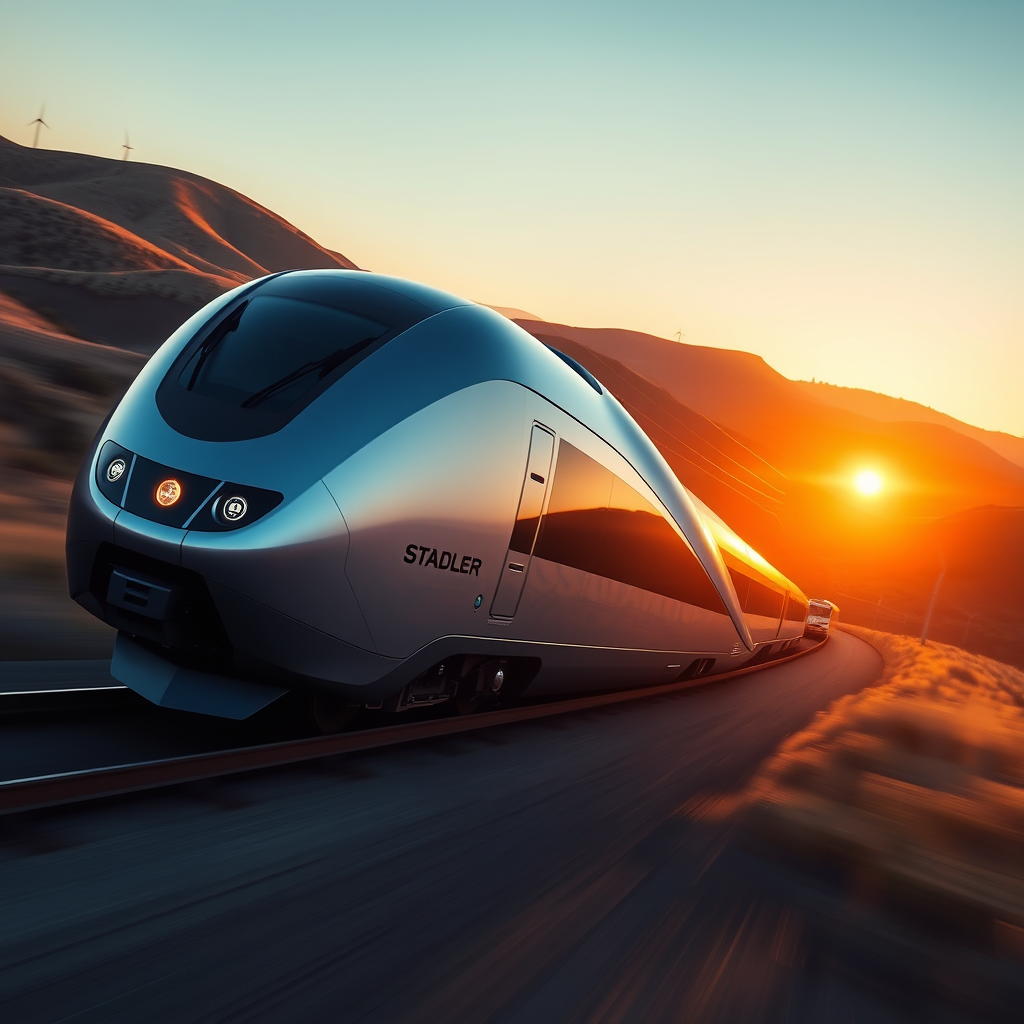
This article explores California’s significant expansion of its hydrogen train order from Stadler, focusing on the implications for the state’s transportation infrastructure, environmental goals, and the broader adoption of hydrogen-powered rail systems. The recent addition of six more Stadler FLIRT H2 (Fast Light Intercity and Regional Train) trains brings the total order to ten, solidifying California’s position as a leader in sustainable rail transportation. This expansion signifies a major investment in decarbonizing the state’s rail network and demonstrates a commitment to innovative, environmentally friendly transportation solutions. We will examine the technical specifications of the FLIRT H2, its operational deployment, the funding sources behind this initiative, and the wider implications for the future of rail transport in the United States and beyond. The successful integration of this technology has the potential to influence other states and countries grappling with similar challenges in achieving sustainable public transport.
The Stadler FLIRT H2: A Technological Deep Dive
Stadler’s FLIRT H2 represents a significant advancement in hydrogen fuel cell technology for passenger rail. Unlike traditional diesel-electric locomotives, the FLIRT H2 utilizes hydrogen fuel cells to generate electricity, eliminating harmful emissions at the point of operation. The modular power pack containing the hydrogen fuel cells provides a flexible and efficient power system. The train’s design, based on Stadler’s existing FLIRT platform, ensures proven reliability and integration with existing rail infrastructure. Extensive testing in Switzerland and the United States, including a display at the APTA (American Public Transportation Association) Expo, has validated the train’s performance and readiness for deployment. The successful testing demonstrates the robustness and practicality of this technology, paving the way for wider adoption.
Deployment and Operational Strategies
The initial deployment of the FLIRT H2 trains is planned for the future Valley Rail service connecting Merced and Sacramento, representing an expansion of the Altamont Corridor Express and Amtrak San Joaquins services. This strategic deployment targets a corridor with limited electrification, highlighting the technology’s suitability for non-electrified lines. The San Bernardino County Transportation Authority also plans to introduce the FLIRT H2 to its Metrolink services later in 2024, demonstrating the versatility and adaptability of the train across different rail networks and operational contexts. This phased approach allows for effective testing and refinement before broader implementation, minimizing operational risks and maximizing efficiency.
Funding and Policy Implications
The funding for California’s expanded order stems from Governor Gavin Newsom’s $10 billion zero-emission vehicle package, providing $407 million to the California State Transportation Agency (CalSTA). This substantial investment underscores the state’s commitment to decarbonizing its transportation sector and fostering the development of clean energy technologies. The success of this initiative will undoubtedly influence future investments in sustainable transportation technologies, both within California and potentially across the United States. The state’s commitment sets a powerful example, encouraging other states and countries to explore similar initiatives to achieve ambitious sustainability goals. The funding model provides a blueprint for other jurisdictions looking to integrate sustainable transport technologies.
Environmental and Societal Impact
The adoption of hydrogen-powered trains represents a significant step towards reducing greenhouse gas emissions from the transportation sector. By replacing diesel locomotives with zero-emission alternatives, California can significantly improve air quality in populated areas served by these lines. This initiative also offers significant economic benefits, potentially creating jobs in the manufacturing, maintenance, and operation of hydrogen fuel cell trains. Additionally, the successful integration of hydrogen technology in the rail sector could encourage similar developments in other transportation modes, accelerating the transition to a more sustainable transportation system. The long-term implications extend beyond emissions reductions, potentially fostering innovation and economic growth within the clean energy sector.
Conclusions
California’s expanded order of Stadler FLIRT H2 trains marks a pivotal moment in the advancement of sustainable rail transportation. The commitment to hydrogen fuel cell technology, driven by significant state funding and forward-thinking policies, sets a powerful precedent for other regions seeking to decarbonize their rail networks. The article has highlighted the technical capabilities of the FLIRT H2 train, its planned operational deployment across various rail services in California, the crucial funding mechanisms driving this ambitious project, and the substantial environmental and societal benefits. The successful implementation of this technology will not only contribute significantly to reducing greenhouse gas emissions but also potentially stimulate economic growth and innovation in the clean energy sector. The project’s success is likely to influence the future direction of rail transport globally, fostering the wider adoption of hydrogen-powered trains as a sustainable alternative to traditional diesel-powered locomotives. The long-term impact extends beyond environmental improvements to encompass economic growth, technological advancement, and enhanced public transportation services. This commitment to sustainability signifies a positive shift towards a more environmentally responsible and technologically advanced transportation future. The lessons learned from California’s experience with the FLIRT H2 will be invaluable for other states and countries facing similar challenges in balancing environmental protection and transportation needs. The careful planning, phased deployment, and robust financial backing demonstrate a responsible approach to integrating groundbreaking technology into existing infrastructure. The future of rail transportation hinges on innovative solutions such as the FLIRT H2, and California’s bold initiative positions the state at the forefront of this crucial transition.

Railway infrastructure, rolling stock and transport technologies specialist focused on global rail industry developments, high-speed rail systems, signaling technologies and freight transportation. Covering railway investments, public transport modernization, rail operations and international mobility projects across Europe, Asia and North America.
RELATED POSTS

October 8, 2026 1:15 pm
Alstom secured a €1bn contract to build 13 automated trains,...

October 1, 2026 7:09 am
United States regulators confirmed a September 30 deadline for the...

October 4, 2026 5:14 pm
Alstom secured a CA$4.7 billion order from VIA Rail Canada...

October 8, 2026 12:18 pm
Siemens Mobility signed an agreement with VinSpeed to supply 350...

October 5, 2026 6:12 pm
AECOM and Jacobs secured a contract in September 2026 to...

October 4, 2026 11:08 pm
Sound Transit confirmed the September 30 opening of Seattle Pinehurst...