
CAF’s €400M Global Rail Maintenance Surge
CAF’s strategic expansion through two significant contracts—Northern Trains’ maintenance agreement in the UK and a long-term maintenance contract with Medellín Metro in Colombia—demonstrate the company’s global reach and expertise in providing comprehensive lifecycle support for railway fleets, highlighting trends in integrated, long-term maintenance solutions and technological advancements optimizing maintenance operations.
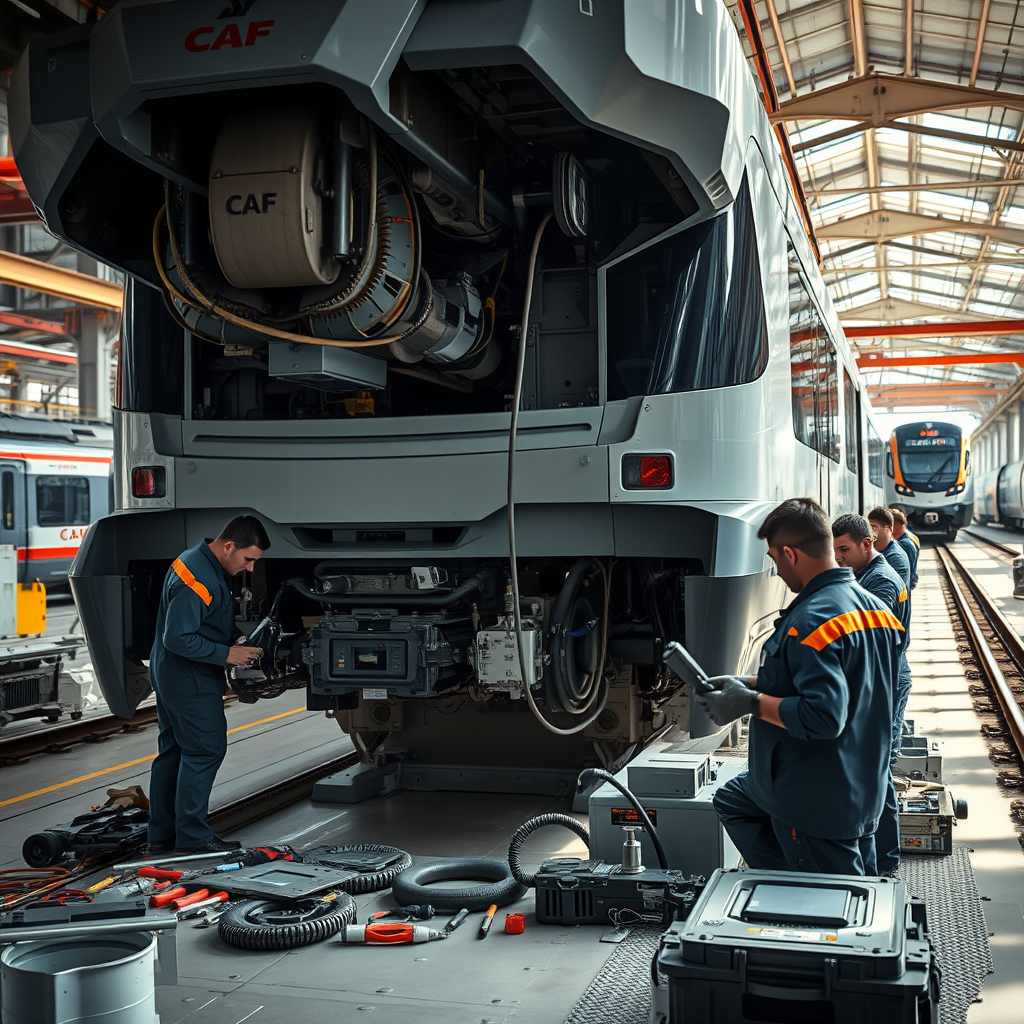
This article analyzes the recent strategic expansion of Construcciones y Auxiliar de Ferrocarriles (CAF), a leading rolling stock manufacturer and maintenance provider, through two significant contracts: a substantial maintenance agreement with Northern Trains in the UK and a long-term maintenance contract with Medellín Metro in Colombia. These contracts, totaling nearly €400 million ($453.3 million), highlight CAF’s global reach and expertise in providing detailed lifecycle support for railway fleets. The analysis will explore the specifics of these contracts, their implications for CAF’s business strategy, and the broader trends in the railway maintenance sector, including the increasing demand for integrated, long-term maintenance solutions and the role of technological advancements in optimizing maintenance operations. Additionally, the article will examine the implications of these contracts within the context of CAF’s existing global portfolio and future growth prospects within the railway industry.
CAF’s UK Maintenance Contract: A Collaborative Approach
CAF’s renewed partnership with Northern Trains and Eversholt Rail for the maintenance of Northern’s rolling stock fleet exemplifies a collaborative model in railway maintenance. The ten-year contract covers a fleet of 101 trains (both electric multiple units (EMU) and diesel multiple units (DMU)), delivered by CAF to Eversholt Rail between 2018 and 2020. The contract’s structure is noteworthy: Northern Trains provides direct labor for certain maintenance tasks, while CAF assumes responsibility for overall management, technical support, spare parts supply, and major overhauls. Eversholt Rail, as the rolling stock owner, provides multidisciplinary support to both Northern Trains and CAF. This collaborative structure showcases a trend toward shared responsibility and optimized resource allocation within the railway maintenance sector, maximizing efficiency and expertise. This model emphasizes CAF’s expertise in technical management and parts supply, effectively leveraging the strengths of all parties involved. The success of this model could be a template for future railway maintenance contracts.
CAF’s Colombian Contract: Expanding Latin American Presence
CAF’s long-cycle maintenance contract with Medellín Metro in Colombia underscores its continued growth in the Latin American market. The contract involves the overhaul of 38 CAF-supplied metro cars, encompassing 25 general overhauls and 13 intermediate overhauls. This builds upon CAF’s existing relationship with Medellín Metro, demonstrating their trust and confidence in CAF’s capabilities. This contract reinforces CAF’s commitment to the Colombian market and demonstrates the long-term value proposition that CAF provides in supporting existing fleets throughout their lifecycle. The inclusion of recent orders for new trains and Train Control and Monitoring System (TCMS) upgrades further solidifies this long-term partnership and demonstrates a holistic approach to rail infrastructure development. This reinforces the importance of building lasting relationships with clients and offering detailed services beyond initial train supply.
CAF’s Global Strategy: A Focus on Lifecycle Management
These two contracts illustrate CAF’s broader strategic focus on lifecycle management within the railway sector. The company’s extensive portfolio of over 150 service agreements across more than 20 countries highlights its commitment to providing detailed maintenance and support services throughout the entire lifespan of its rolling stock. This holistic approach contrasts with more traditional, transactional approaches and positions CAF as a key player in the increasingly sophisticated railway maintenance market. By offering long-term maintenance contracts, CAF not only secures recurring revenue but also builds stronger client relationships and gains valuable operational experience. This business model also mitigates the risks associated with unforeseen maintenance costs and allows for proactive planning and resource allocation.
The Future of Railway Maintenance: Technological Advancements and Collaboration
The railway maintenance sector is undergoing significant transformation, driven by technological advancements and evolving operational strategies. The adoption of digital technologies, such as predictive maintenance systems and advanced data analytics, is enhancing efficiency, reducing downtime, and improving overall reliability. Collaborative partnerships, like the one between CAF, Northern Trains, and Eversholt Rail, are also gaining prominence, leading to optimized resource allocation and improved performance. The future of railway maintenance lies in the integration of advanced technologies with strategic partnerships, creating more efficient and cost-effective solutions. The success of CAF’s recent contracts reflects this trend towards detailed, collaborative lifecycle management. The integration of digital technologies will further optimize maintenance processes and enhance overall reliability, ultimately benefiting both operators and passengers.
Conclusion
CAF’s securing of significant maintenance contracts in both the UK and Colombia demonstrates the company’s strategic success in the global railway market. The contracts, totaling nearly €400 million, highlight CAF’s ability to provide detailed lifecycle maintenance solutions, moving beyond simple equipment supply to encompass long-term partnerships focused on operational efficiency and cost optimization. The UK contract exemplifies a successful collaborative model, sharing responsibilities and expertise among Northern Trains, Eversholt Rail, and CAF, maximizing efficiency and resource utilization. The Colombian contract further solidifies CAF’s presence in Latin America, building upon existing relationships and providing a detailed maintenance program for Medellín Metro’s fleet. Looking forward, the railway industry is undergoing a significant shift towards digitalization and collaborative partnerships. CAF’s strategic focus on lifecycle management, supported by its technological expertise and dedication to building long-term relationships, positions the company for continued growth and success in an increasingly competitive market. The success of these two projects underscores the growing importance of integrated, holistic approaches to railway maintenance, and serves as a model for other manufacturers and maintenance providers seeking to thrive in this evolving landscape. This is not just about maintaining rolling stock; it is about ensuring the reliable and efficient operation of critical transportation infrastructure, positively impacting communities across the globe.

Railway infrastructure, rolling stock and transport technologies specialist focused on global rail industry developments, high-speed rail systems, signaling technologies and freight transportation. Covering railway investments, public transport modernization, rail operations and international mobility projects across Europe, Asia and North America.
RELATED POSTS

October 1, 2026 7:09 am
United States regulators confirmed a September 30 deadline for the...

October 8, 2026 1:15 pm
Alstom secured a €1bn contract to build 13 automated trains,...

October 4, 2026 5:14 pm
Alstom secured a CA$4.7 billion order from VIA Rail Canada...

October 8, 2026 12:18 pm
Siemens Mobility signed an agreement with VinSpeed to supply 350...

October 5, 2026 6:12 pm
AECOM and Jacobs secured a contract in September 2026 to...
October 6, 2026 12:16 am
FTA awarded $233 million in grants to eight US rail...