
Brussels RER Rail Project: Belgium’s Regional Network Upgrade
Belgium’s Brussels RER railway project enhances regional connectivity, modernizing infrastructure and boosting rail service.
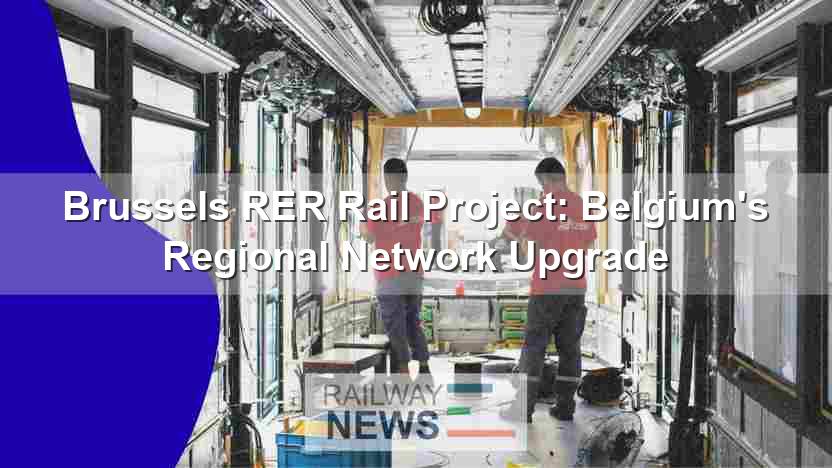
The Brussels RER (Réseau Express Régional) project represents a significant undertaking to modernize and expand the rail network surrounding Brussels, Belgium. This ambitious project aims to create a more efficient and integrated regional rail system, improving connectivity within the Brussels metropolitan area and its surrounding regions. The project’s objectives encompass enhanced service frequency, improved travel times, better integration with other transport modes, and ultimately, a more attractive and convenient rail experience for commuters and travelers. This article will delve into the key aspects of the Brussels RER, examining its infrastructure development, rolling stock acquisition, signaling and communication systems, and the anticipated impact on the region’s transportation landscape. The project’s success hinges on its ability to deliver a reliable, high-frequency service that effectively addresses the growing transportation needs of the Brussels region, setting a new standard for regional rail networks. The overall success will be measured by increased ridership, reduced travel times, and improved passenger satisfaction.
Infrastructure Development
The Brussels RER network encompasses lines within a 30km radius of Brussels. The project builds upon existing infrastructure, incorporating elements such as the rebuilt Halle station (which incorporates access to the high-speed line to Lille) and upgrades to several suburban stations. A crucial component is the quadrupling of existing double-track lines to accommodate increased service frequency without compromising through-traffic. This line quadrupling is particularly evident on lines towards Ottignies, Nivelles, and Denderleeuw. Long-distance trains (SNCB IC, Thalys/TGV/Eurostar) will utilize one pair of tracks, while RER and other local services will use the other. This approach mirrors the strategy employed on the Leuven route during the Belgian high-speed rail project. Additionally, the Watermael-Schuman-Josaphat project involves the construction of a new 1.25km double-track tunnel in the northeast of Brussels. This tunnel will enable direct connections to Brussels National Airport (Zaventem), significantly reducing travel time (by two-thirds to approximately 13 minutes). It also improves access to the Leuven line, bypassing the congested North-South Junction. The project also incorporates the rebuilding and integration of Schuman SNCB and Metro stations, along with the addition of two new stations: Germoir and Arcades.
Rolling Stock Acquisition
The SNCB (Société Nationale des Chemins de fer Belges/Nationale Maatschappij der Belgische Spoorwegen), the Belgian national railway company, has undertaken a substantial fleet modernization program as part of the RER project. A significant element is the procurement of 305 Desiro ML electric multiple units (EMUs) from Siemens. This represents the largest single order placed by SNCB. These EMUs will be deployed across various services, unlike the specialized EMUs used in some other RER networks. Initially, 95 of these units were dedicated to the Brussels RER. The Desiro ML units are three-car sets (capable of multiple-unit coupling), boasting a 2MW power rating and a capacity of 280 passengers. Two variants will be deployed: a 3,000V DC version for RER services and a dual-voltage (3,000V DC/25kV AC) version for cross-border operations into France and Luxembourg.
Signaling and Communication Systems
The Brussels RER integrates seamlessly with existing Infrabel signaling systems. On-board communication will consist of audio (likely trilingual) and visual announcements. While integrated ticketing already exists in Brussels, it is set to be further enhanced with the implementation of the RER. However, unlike the Paris RER, there was no indication of a specific branding or train identification system to denote different stopping patterns along given routes at the time of writing.
Project Summary and Conclusion
The Brussels RER project represents a substantial investment in Belgium’s rail infrastructure. It aims to transform the regional rail network, creating a more efficient, reliable, and integrated system for the Brussels area. The project involves significant upgrades and expansions to existing infrastructure, including line quadrupling, tunnel construction, and station renovations. The introduction of a new fleet of modern EMUs from Siemens will significantly improve service quality and consistency. While fully integrated, the signaling and communication system will enhance operational efficiency and passenger information. This project has involved numerous key players in the rail industry. The seamless integration of the new system with existing infrastructure is a key success factor. The completion of the project will significantly benefit the region, improving connectivity, reducing travel times, and boosting the appeal of rail travel. The increased frequency of services and improved accessibility will contribute to reducing road congestion and promoting sustainable transportation. The overall success of the Brussels RER will be measured against its stated objectives. These objectives include improved service frequency (15-minute peak frequency on each of the eight routes), significantly reduced travel times, significantly to the airport, and enhanced passenger experience through improved rolling stock and station facilities. The long-term benefits include increased ridership, reduced reliance on private vehicles, and a positive contribution to the sustainable development of the Brussels region.
| Project Parameter | Value |
|---|---|
| Project Name | Brussels RER |
| Type of Project | Regional Express Rail Network Upgrade |
| Project Area | Within 30km radius of Brussels |
| Infrabel Investment | €1.85 billion |
| Rolling Stock Order (Siemens Desiro ML) | 305 units (€1.425 billion) |
| Number of RER Lines | Eight |
| Target Completion | 2015-2016 |
Company Information:
- Infrabel: The Belgian railway infrastructure manager.
- SNCB/NMBS: The Belgian national railway operator.
- Siemens: A global engineering and electronics conglomerate that supplied the Desiro ML EMUs.
- Alstom and Bombardier: Competitors in the bidding for the EMU contract.

Railway infrastructure, rolling stock and transport technologies specialist focused on global rail industry developments, high-speed rail systems, signaling technologies and freight transportation. Covering railway investments, public transport modernization, rail operations and international mobility projects across Europe, Asia and North America.