
Brisbane to Gold Coast Rail Upgrade: $1.8B Investment
Queensland’s $1.8B rail upgrade between Brisbane and the Gold Coast. The project will boost capacity, increase train frequencies, and deliver world-class transport in time for the 2032 Olympic and Paralympic Games.
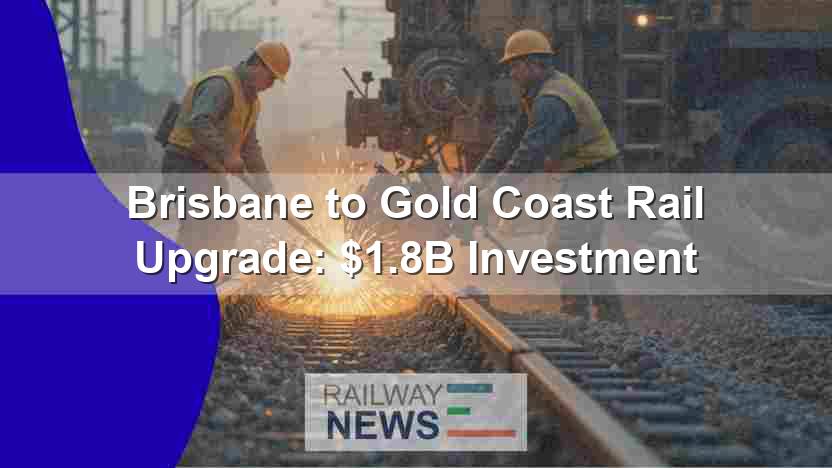
This article focuses to the significant $807 million (AUD 1.12 billion) investment by the Queensland Government in upgrading the rail network between Brisbane, Logan, Beenleigh, and the Gold Coast. This project, a crucial component of the Olympic transport infrastructure plan, aims to drastically reduce commute times and alleviate congestion along one of Queensland’s most heavily trafficked corridors. The initiative is multifaceted, encompassing track duplication, level crossing removals, and integration with broader Intelligent Transportation Systems (ITS). This investment not only promises improved efficiency and accessibility but also substantial economic benefits through job creation and stimulation of related industries. We will examine the project’s scope, projected impacts, funding sources, and its place within Queensland’s broader transport strategy and economic recovery plan. The analysis will consider the technical challenges inherent in such a large-scale undertaking and its overall contribution to the state’s future infrastructure needs.
Project Scope and Objectives
The core objective is to significantly reduce travel times between Brisbane and the Gold Coast by enhancing the existing rail infrastructure. This involves a substantial expansion of the rail network, primarily through track duplication along the Kuraby to Beenleigh section. Currently, this segment operates with a single track in each direction, creating bottlenecks and limiting operational efficiency. The project will address this limitation by constructing additional tracks, allowing for more frequent and faster train services. A key element is the elimination of level crossings, a common source of delays and safety concerns. The removal of these crossings will enable uninterrupted high-speed rail transit, leading to reduced journey times and improved reliability. The initiative will also likely involve upgrading existing stations and implementing advanced signalling systems to optimise train movements and capacity. This forms a vital part of the wider South East Queensland Regional Transport Plan and integrates with the overall goal of creating a streamlined and efficient public transport network.
Economic and Social Impacts
Beyond the immediate benefits of faster and more reliable rail services, this project is expected to generate substantial economic activity. The Queensland Government anticipates the creation of approximately 900 jobs during the construction phase, providing a significant boost to the regional economy. The improved connectivity facilitated by the upgraded rail network will also have positive ripple effects, making the Gold Coast and surrounding areas more accessible for commuters and tourists. This could spur further economic growth in the region through increased investment, tourism, and business activity. Reduced commute times translate to increased productivity, improved quality of life for residents, and a more sustainable transportation system, thus lessening reliance on private vehicles and associated congestion. The environmental benefits also include a reduction in greenhouse gas emissions compared to car travel.
Funding and Governance
The project is being financed through a combination of state and federal government funding. The Queensland Government has committed $807 million (AUD 1.12 billion), while the Australian Government has contributed $128 million (AUD 178.1 million) in pre-construction funding. The total project cost is estimated at $1.8 billion (AUD 2.598 billion). Infrastructure Australia, an independent statutory body, has recognized the importance of this project, listing the “Gold Coast rail line and station upgrades: Kuraby to Beenleigh” on its priority list since March 2018. This endorsement underscores the strategic importance of the project within the broader national infrastructure plan. The Queensland Government’s commitment to this project is further evidenced by its inclusion within the state’s COVID-19 Economic Recovery Plan, highlighting its significance in stimulating economic growth and creating employment opportunities.
Conclusion
The Queensland Government’s substantial investment in upgrading the rail network between Brisbane and the Gold Coast represents a significant commitment to improving transport infrastructure and stimulating economic growth. The project’s multifaceted approach, encompassing track duplication, level crossing removals, and integration with broader ITS, is designed to significantly reduce travel times, enhance operational efficiency, and address long-standing congestion issues. The anticipated creation of nearly 900 jobs during the construction phase underlines the project’s positive economic impact. The project’s alignment with the South East Queensland Regional Transport Plan and its inclusion in the state’s COVID-19 Economic Recovery Plan demonstrate its strategic importance within a wider framework of economic development and sustainable transport. The successful completion of this project will not only enhance the daily lives of commuters but also contribute significantly to the economic vitality and future growth of the region. The robust governance structure and involvement of independent bodies such as Infrastructure Australia lend further credence to the project’s strategic importance and ensure its long-term viability. The project serves as a model for future infrastructure development in Australia, highlighting the importance of investing in efficient and sustainable transport solutions.

Transport and railway industry editor covering global rail infrastructure, sustainable mobility, urban transit systems and next-generation railway technologies with a focus on accessible and industry-focused reporting.
RELATED POSTS

October 1, 2026 7:09 am
United States regulators confirmed a September 30 deadline for the...

October 8, 2026 1:15 pm
Alstom secured a €1bn contract to build 13 automated trains,...

October 4, 2026 5:14 pm
Alstom secured a CA$4.7 billion order from VIA Rail Canada...
October 1, 2026 10:14 am
HS2 installed a 55-metre steel span in Birmingham, completing phase...

October 4, 2026 11:08 pm
Sound Transit confirmed the September 30 opening of Seattle Pinehurst...

October 5, 2026 6:12 pm
AECOM and Jacobs secured a contract in September 2026 to...