
Boca Raton Secures $2M for Jeffery Street Grade Crossing
Boca Raton secured $2 million in federal funding to build the Jeffery Street grade crossing across the Florida East Coast Railway, closing NW 28th Street.
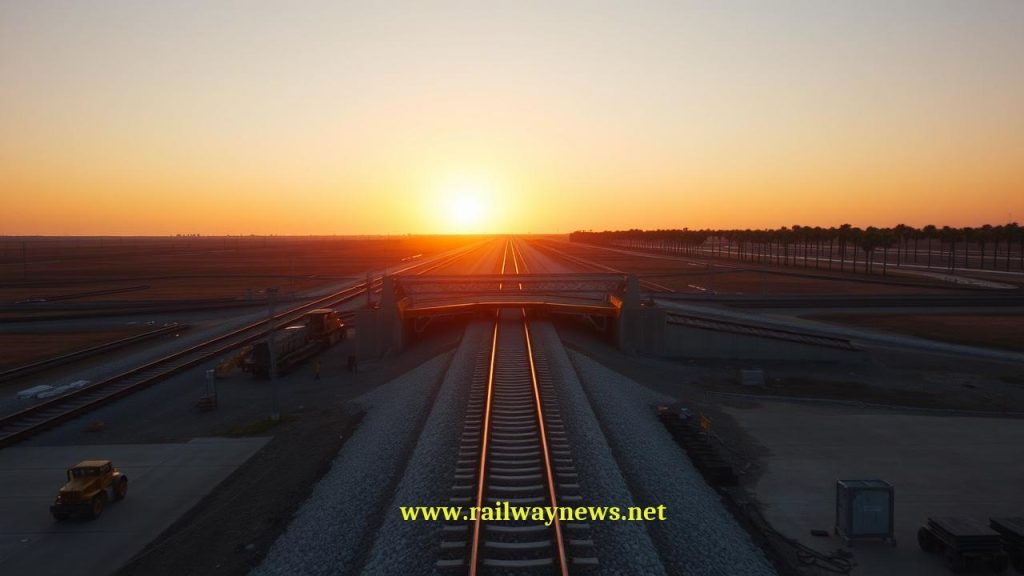
⚡ In Brief: Boca Raton, Florida, secured $2 million in federal Community Project Funding to build a new rail grade crossing at Jeffery Street, closing the existing NW 28th Street crossing, with construction from fall 2026 through 2027.
BOCA RATON, USA – The City of Boca Raton received a $2 million federal grant to construct a new public grade crossing across the Florida East Coast Railway corridor at Jeffery Street, city officials announced. The project will extend NW Second Avenue to Federal Highway/US-1, reconnect divided neighborhoods, and improve emergency vehicle access. Construction is scheduled to begin in fall 2026 and conclude in 2027.
What Is the Full Scope of This Project?
The Jeffery Street grade crossing project includes extending and widening the existing roadway, building an entirely new at-grade crossing, and closing the adjacent NW 28th Street railway crossing. Intersection improvements, traffic signal modifications, sidewalks, drainage, lighting, signage, pavement markings, and other safety upgrades are part of the scope. The work is managed through the city’s Capital Improvements Program in coordination with the Florida Department of Transportation and Florida East Coast Railway. No total project budget beyond the $2 million federal contribution was disclosed.
Key Project Data
| Parameter | Value |
|---|---|
| Project / Contract Name | Jeffery Street Public Grade Crossing |
| Total Value | $2 million (federal share only; full project cost not disclosed) |
| Parties Involved | City of Boca Raton, Florida Department of Transportation, Florida East Coast Railway |
| Timeline / Completion | Construction starts fall 2026, completion in 2027 |
| Country / Corridor | United States, Florida East Coast Railway corridor |
How Does This Compare to Similar Projects?
Grade crossing construction costs in the U.S. typically range from $250,000 for basic installations to over $5 million when major road widening and signalization are involved, placing Boca Raton’s $2 million federal grant near the median. By contrast, Indian Railways sanctioned Rs 2.7 billion (approximately $32 million) to deploy the Kavach collision avoidance system across 631 route kilometres in its East Coast Railway zone—a per-kilometre safety investment far exceeding a single crossing upgrade. In the broader U.S. context, large-scale rail infrastructure projects such as the Hudson Tunnel project and California high-speed rail attract multi-billion-dollar commitments, while localized road-rail separation projects like this rely on smaller, targeted federal appropriations. (Source: Indian Railways budget documents, FY2026-27; Construction Dive, 2025)
Editor’s Analysis
The Jeffery Street project illustrates how Congressional Community Project Funding enables municipalities to execute small but operationally critical rail-adjacent improvements without competing against mega-projects in discretionary grant programs. In a year when global rail dealmaking is focusing on premium, tech-enabled logistics assets (Source: PwC midyear outlook, 2025), even peripheral connectivity upgrades can remove bottlenecks and enhance last-mile access. The parallel move by Indian Railways to consume nearly 30% of its annual capital budget in just two months—spending over Rs 840 billion—underscores how vastly different the scale of national rail ambition can be, and why U.S. cities must often cobble together layered local, state, and federal financing for basic crossings.
FAQ
Q: Why is NW 28th Street crossing being closed?
A: The closure consolidates crossings to improve safety and traffic flow. The new Jeffery Street crossing will serve as the primary connection, meeting modern design standards that the older crossing lacks.
Q: What is the total project cost beyond the $2 million federal grant?
A: The City of Boca Raton has not publicly disclosed the full project budget or the specific cost-sharing breakdown with state and local sources as of publication.
Q: How will emergency response change in northeast Boca Raton?
A: Restoring a direct road link across the railway will shorten travel distances for police, fire, and medical services between neighborhoods on either side of the Florida East Coast Railway tracks, potentially cutting response times.

Railway infrastructure, rolling stock and transport technologies specialist focused on global rail industry developments, high-speed rail systems, signaling technologies and freight transportation. Covering railway investments, public transport modernization, rail operations and international mobility projects across Europe, Asia and North America.
RELATED POSTS

October 8, 2026 1:15 pm
Alstom secured a €1bn contract to build 13 automated trains,...

October 1, 2026 7:09 am
United States regulators confirmed a September 30 deadline for the...

October 4, 2026 5:14 pm
Alstom secured a CA$4.7 billion order from VIA Rail Canada...

October 1, 2026 12:13 am
Illinois approved $1.5 billion annually for the Northern Illinois Transit...

October 6, 2026 2:14 am
Union Pacific launched export rail shipments with Ferromex to deliver...

October 1, 2026 6:10 am
Amtrak approved a System Expansion Committee on July 30 to...