
BNSF Safety Soars, But Industry Safety Concerns Persist
BNSF Railway celebrates record safety improvements in 2025, yet industry-wide safety concerns persist due to regulatory inaction and infrastructure issues.
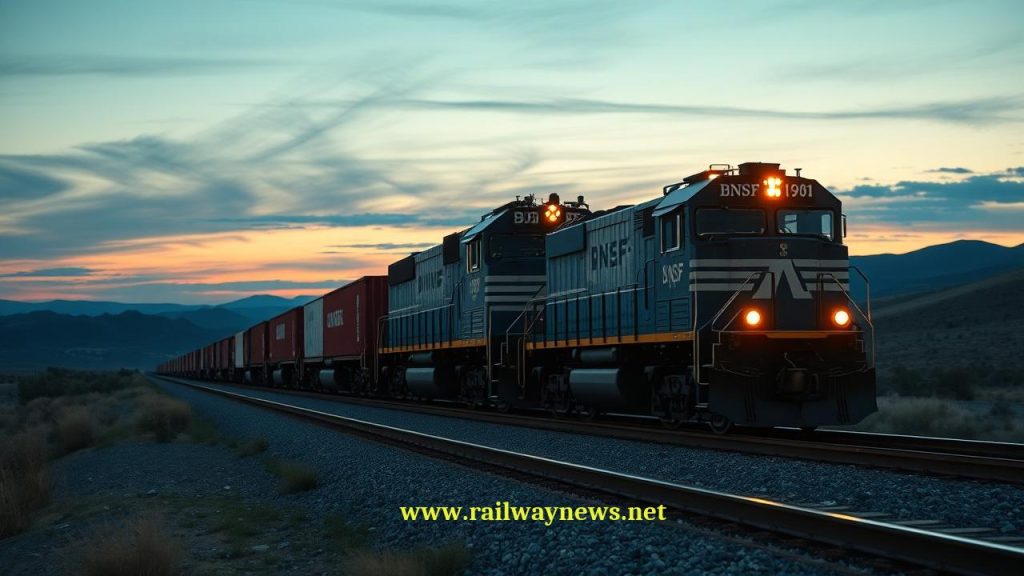
FORT WORTH, TX — BNSF Railway has announced a record-breaking year for safety in 2025, achieving its lowest-ever employee injury frequency rate and surpassing its targets for reducing equipment incidents. This internal milestone, however, arrives amidst a challenging industry landscape where federal regulators face criticism for failing to implement dozens of key safety recommendations from the National Transportation Safety Board (NTSB), some of which have previously cited BNSF for track-related defects.
| Category | Details |
|---|---|
| Company | BNSF Railway |
| Reporting Year | 2025 |
| Employee Injury Rate | Record low; 10% improvement over previous 2023 record |
| Rail Equipment Incidents | 13% decrease, surpassing 2025 target |
| Regulatory Context | 81 NTSB recommendations (2015-2024) issued to federal regulators, most unimplemented |
| Network Size | 32,500 miles |
BNSF Railway, which employs 35,000 people across its 32,500-mile network, reported that its 2025 employee injury frequency rate was 10% lower than its previous record set in 2023. The Class I railroad also noted a significant 13% decrease in rail equipment incidents. Chad Sundem, BNSF’s Vice President of Safety, attributed the success to “strong collaboration between labor and management, and a shared belief that safety is a value and guides every decision we make.” The company’s safety policy is built on the principle that every accident is preventable, focusing on continuous process examination, providing proper resources, detailed training, and empowering employees to take responsibility for safety.
Despite BNSF’s internal progress, the broader U.S. rail industry continues to grapple with systemic safety issues highlighted by federal investigators. An analysis of NTSB data reveals that federal railroad regulators failed to implement most of the 81 safety recommendations issued between 2015 and 2024. These recommendations often stem from major accidents, including incidents where NTSB investigations have specifically blamed “worn-down rail and other defects in the tracks owned by BNSF Railway” as contributing factors. The NTSB noted in one such case that defects were likely missed due to an inspector’s workload, pointing to deeper operational challenges.
The consequences of these unresolved, industry-wide issues are significant. According to an analysis of Federal Railroad Administration (FRA) data, track defects have been blamed for nearly 15,000 main-line accidents over the last 45 years, resulting in 44 deaths and 2,300 injuries. Additionally, crew fatigue remains a critical concern, with fatigue-related accidents killing at least nine people and injuring over 300 in the decade from 2015 to 2024. This context underscores the ongoing tension between individual railroad safety performance and the need for detailed federal oversight to address root causes of accidents across the national network.
Key Takeaways
- BNSF has successfully reduced its internal employee injury and equipment incident rates to historic lows in 2025.
- The achievement is juxtaposed with significant external criticism of federal regulators for slow implementation of NTSB safety mandates.
- Persistent industry challenges, including track defects and crew fatigue, remain a major focus for safety advocates, with past incidents linked to BNSF infrastructure.
Editor’s Analysis
BNSF’s announcement highlights a critical divergence in the rail industry: individual operators can achieve significant internal safety improvements through policy and collaboration. However, these gains risk being overshadowed by systemic, industry-wide issues and regulatory inertia. This situation is a microcosm of the tension between corporate responsibility and the need for robust federal oversight to address macro-level risks like infrastructure decay and crew fatigue, which individual company policies alone cannot solve. While BNSF’s results are commendable, they also intensify the pressure on regulators to match the safety progress claimed by operators and implement long-standing NTSB recommendations that target the foundational causes of rail accidents.
Frequently Asked Questions
- What were BNSF’s key safety achievements in 2025?
- In 2025, BNSF achieved its lowest-ever employee injury frequency rate, which was 10% lower than its previous record in 2023. The railroad also saw a 13% reduction in rail equipment incidents.
- What are the broader safety concerns in the U.S. rail industry?
- Major concerns include the failure of federal regulators to implement most NTSB safety recommendations, persistent issues with track defects across the network, and the ongoing risk of accidents caused by crew fatigue.
- Has BNSF been mentioned in past federal safety investigations?
- Yes. According to NTSB reports, investigations into past accidents have cited worn-down rail and other track defects on BNSF-owned lines as contributing factors to derailments.

Railway infrastructure, rolling stock and transport technologies specialist focused on global rail industry developments, high-speed rail systems, signaling technologies and freight transportation. Covering railway investments, public transport modernization, rail operations and international mobility projects across Europe, Asia and North America.
RELATED POSTS

October 8, 2026 1:15 pm
Alstom secured a €1bn contract to build 13 automated trains,...

October 1, 2026 7:09 am
United States regulators confirmed a September 30 deadline for the...

October 8, 2026 12:18 pm
Siemens Mobility signed an agreement with VinSpeed to supply 350...

October 4, 2026 5:14 pm
Alstom secured a CA$4.7 billion order from VIA Rail Canada...

October 5, 2026 6:12 pm
AECOM and Jacobs secured a contract in September 2026 to...

October 1, 2026 12:13 am
Illinois approved $1.5 billion annually for the Northern Illinois Transit...