
BNSF Restores WA Lines After Flooding: Service Back by Dec. 19
BNSF Railway successfully restored service on four critical subdivisions in Washington state after a major atmospheric river event caused widespread flooding and significant track damage in December 2025, ensuring continuity of vital supply chains and holiday package deliveries across the Pacific Northwest.
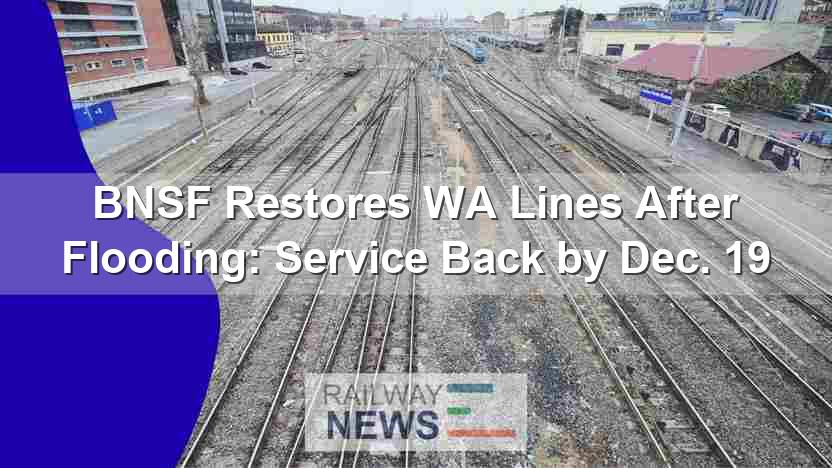
BNSF Railway has successfully restored service on four critical subdivisions in Washington state after a major atmospheric river event caused widespread flooding and significant track damage in December 2025. Engineering crews completed the complex repairs by December 19, ensuring the continuity of vital supply chains and holiday package deliveries across the Pacific Northwest.
| Category | Details |
|---|---|
| Affected Operator | BNSF Railway |
| Location | Western Washington, Cascade Range |
| Infrastructure Impacted | Four subdivisions; track, ballast shoulders, signals |
| Root Cause | Extreme precipitation from a major atmospheric river event |
| Service Fully Restored | December 19, 2025 |
Main Body:
BNSF Railway announced the full restoration of its network in western Washington following severe disruptions caused by record rainfall and flooding. The extreme weather led to rivers overflowing their banks, which washed out extensive portions of track and ballast shoulders across four separate subdivisions. In the most severe cases, hundreds of feet of track were left suspended or destroyed, halting all rail traffic. The operational challenges were compounded by strong regional winds that caused widespread power outages, forcing BNSF signal teams to deploy and maintain generators to keep critical signaling systems operational throughout the recovery effort.
The disruption was a direct result of a powerful atmospheric river that transported vast amounts of moisture from the Pacific Ocean into the region, beginning around December 8, 2025. According to data from NASA’s Goddard Earth Observing System (GEOS-FP), this weather system was responsible for the extreme cumulative precipitation that inundated Washington, Oregon, and British Columbia. The sheer volume of water overwhelmed local drainage and river systems, turning a weather event into a major infrastructure crisis for transportation networks across the Pacific Northwest.
The scale of the flooding extended far beyond the railway, prompting a significant regional emergency response. In King County, the deluge was described as “devastating,” leading officials to open Disaster Assistance Centers to provide financial aid and resources to affected residents and businesses. The successful and rapid restoration of BNSF’s lines amidst this wider crisis highlights the resilience and efficiency of its engineering and maintenance-of-way crews in safeguarding a critical economic artery for the region, particularly during the peak pre-holiday shipping season.
Key Takeaways
- Rapid Network Restoration: BNSF engineering and signal crews restored four flood-damaged subdivisions by December 19, 2025, preventing prolonged disruption to the holiday supply chain.
- Climate Resilience Tested: The incident was caused by a major atmospheric river, underscoring the increasing threat that extreme weather events pose to critical rail infrastructure.
- Detailed Damage: The flooding caused severe physical damage, including track and ballast washouts, while concurrent high winds created secondary challenges by knocking out power to signal systems.
Editor’s Analysis
The successful restoration of BNSF’s Washington network is more than a story of operational recovery; it is a critical case study in railway resilience in the face of escalating climate volatility. For the global rail market, this event demonstrates that investment in rapid-response engineering capabilities is no longer a contingency but a core operational necessity. As atmospheric rivers and other extreme weather phenomena become more frequent and intense, the ability to quickly repair and reopen primary freight corridors is what separates a manageable disruption from a catastrophic supply chain failure. This incident will undoubtedly inform future strategies for infrastructure hardening, predictive weather-based asset management, and resource deployment for Class I railroads worldwide.
Frequently Asked Questions
- What caused the BNSF line closures in Washington in December 2025?
- The closures were caused by severe flooding and track washouts resulting from an extreme atmospheric river event that brought record rainfall to the Pacific Northwest.
- How many BNSF subdivisions were affected and when was service restored?
- Four subdivisions in western Washington were impacted. BNSF engineering crews successfully restored service to all four lines by December 19, 2025.
- What specific challenges did BNSF crews face during the restoration?
- Crews dealt with significant physical damage, including washouts of track and ballast shoulders. They also had to manage widespread power outages by using generators to power essential signal systems.

Railway infrastructure, rolling stock and transport technologies specialist focused on global rail industry developments, high-speed rail systems, signaling technologies and freight transportation. Covering railway investments, public transport modernization, rail operations and international mobility projects across Europe, Asia and North America.
RELATED POSTS

October 1, 2026 7:09 am
United States regulators confirmed a September 30 deadline for the...

October 8, 2026 1:15 pm
Alstom secured a €1bn contract to build 13 automated trains,...

October 4, 2026 5:14 pm
Alstom secured a CA$4.7 billion order from VIA Rail Canada...

October 4, 2026 11:08 pm
Sound Transit confirmed the September 30 opening of Seattle Pinehurst...
October 1, 2026 10:14 am
HS2 installed a 55-metre steel span in Birmingham, completing phase...

October 5, 2026 6:12 pm
AECOM and Jacobs secured a contract in September 2026 to...