
BNSF Gains Track Access: Ballast Deal with Union Pacific Confirmed
BNSF gains trackage rights over Union Pacific lines in California, ensuring access to ballast for critical track maintenance until 2026, boosting rail safety.
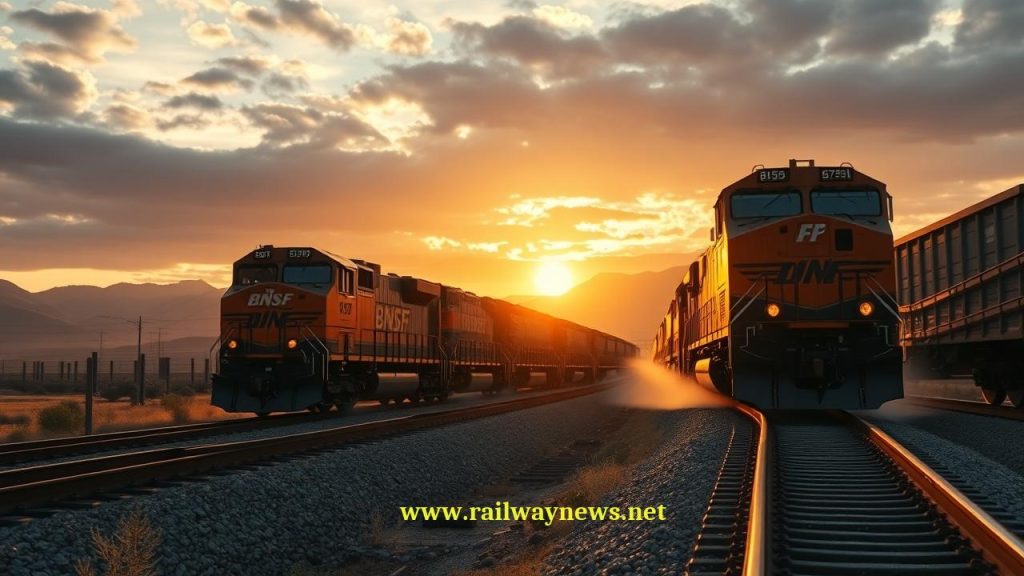
BNSF Railway has been granted temporary trackage rights over key Union Pacific (UP) rail lines in Northern California, a strategic move ensuring access to essential track maintenance materials. The agreement, approved by the Surface Transportation Board (STB), allows BNSF to operate ballast trains over UP’s Oakland and Canyon subdivisions until the end of 2026.
| Category | Details |
|---|---|
| Agreement Parties | BNSF Railway (Operator), Union Pacific Railroad (Track Owner) |
| Location | Oakland and Canyon Subdivisions, Northern California |
| Purpose | Movement of empty and loaded ballast trains to/from the Elsey ballast pit |
| Governing Body | Surface Transportation Board (STB) |
| Agreement Expiration | December 31, 2026 |
In a decision filed by the Surface Transportation Board, Union Pacific Railroad has formally agreed to grant BNSF Railway temporary trackage rights across two of its critical corridors in Northern California. The agreement specifically permits BNSF to operate its trains over portions of UP’s Oakland and Canyon subdivisions. The primary objective is to facilitate the movement of both empty and loaded ballast trains, enabling BNSF to access the strategically located Elsey ballast pit, which is situated adjacent to the UP-owned lines.
Trackage rights agreements are a common industry practice allowing one railroad to operate over the tracks of another, typically for a fee. This arrangement circumvents the need for costly construction of redundant rail lines and provides access to key industrial sites or interchanges. In this case, the focus is on ballast, the crushed rock that forms the trackbed. Ballast is fundamental to railway infrastructure, providing stability to the ties and rails, ensuring proper drainage, and distributing the immense load of passing trains. While specific details on train frequency, tonnage, or the financial terms of the agreement were not made public, the access itself is critical for BNSF’s ongoing maintenance-of-way programs in the region.
This cooperation between two of North America’s largest Class I railroad competitors highlights the pragmatic realities of maintaining a vast and interconnected rail network. Securing a reliable, geographically advantageous source of ballast is a logistical necessity for ensuring track safety and operational efficiency. The STB’s approval codifies this temporary, mutually beneficial arrangement, which is scheduled to remain in effect for just over two years, concluding on December 31, 2026. This timeframe allows BNSF to execute significant track maintenance and improvement projects within the region using materials from the Elsey pit.
Key Takeaways
- BNSF gains crucial access to the Elsey ballast pit, securing a key material for its regional track maintenance operations.
- The agreement demonstrates practical cooperation between competing Class I railroads, Union Pacific and BNSF, for infrastructure upkeep.
- The Surface Transportation Board has provided regulatory approval for the trackage rights, which are set to expire at the end of 2026.
Editor’s Analysis
While an agreement over ballast transport may not capture headlines like a major merger, it is a perfect illustration of the foundational logistics that keep the rail industry moving. This deal underscores a critical reality: even for vertically integrated giants like BNSF and UP, the sheer scale of their networks makes strategic cooperation essential. For BNSF, securing efficient access to high-quality ballast is a direct investment in safety and network velocity. For UP, it’s an opportunity to monetize an existing asset. For the industry, it’s a sign of pragmatic asset utilization, ensuring that vital maintenance materials can be moved efficiently without unnecessary capital expenditure on new track, ultimately contributing to a more resilient and well-maintained national rail system.
Frequently Asked Questions
- What are trackage rights in the rail industry?
- Trackage rights are a contractual agreement where one railroad company is permitted to operate its trains over the tracks owned by another railroad company. This is often done to access specific industries, connect network segments, or improve operational efficiency without building new infrastructure.
- Why is ballast important for a railroad?
- Ballast is the crushed stone that forms the trackbed. It plays a critical role in holding the wooden, concrete, or steel ties in place, providing proper water drainage, and distributing the load from the tracks to the underlying ground, ensuring the stability and safety of the railway.
- How long will this BNSF and Union Pacific agreement last?
- According to the decision from the Surface Transportation Board, the written agreement for these trackage rights is scheduled to expire on December 31, 2026.

Railway infrastructure, rolling stock and transport technologies specialist focused on global rail industry developments, high-speed rail systems, signaling technologies and freight transportation. Covering railway investments, public transport modernization, rail operations and international mobility projects across Europe, Asia and North America.
RELATED POSTS

October 1, 2026 7:09 am
United States regulators confirmed a September 30 deadline for the...

October 5, 2026 6:12 pm
AECOM and Jacobs secured a contract in September 2026 to...

October 1, 2026 12:13 am
Illinois approved $1.5 billion annually for the Northern Illinois Transit...

October 4, 2026 11:08 pm
Sound Transit confirmed the September 30 opening of Seattle Pinehurst...
October 5, 2026 1:13 pm
New York MTA confirmed a late 2026 DEIS release for...
October 6, 2026 9:17 am
Illinois approved $1.1M in state funds to upgrade two McHenry...