
BNSF Confirms Spearpoint Deal for $4B Barstow Rail Hub
BNSF confirmed a deal with Spearpoint Logistics to run freight warehousing at its $4 billion Barstow rail hub in California ahead of its mid-2025 launch.
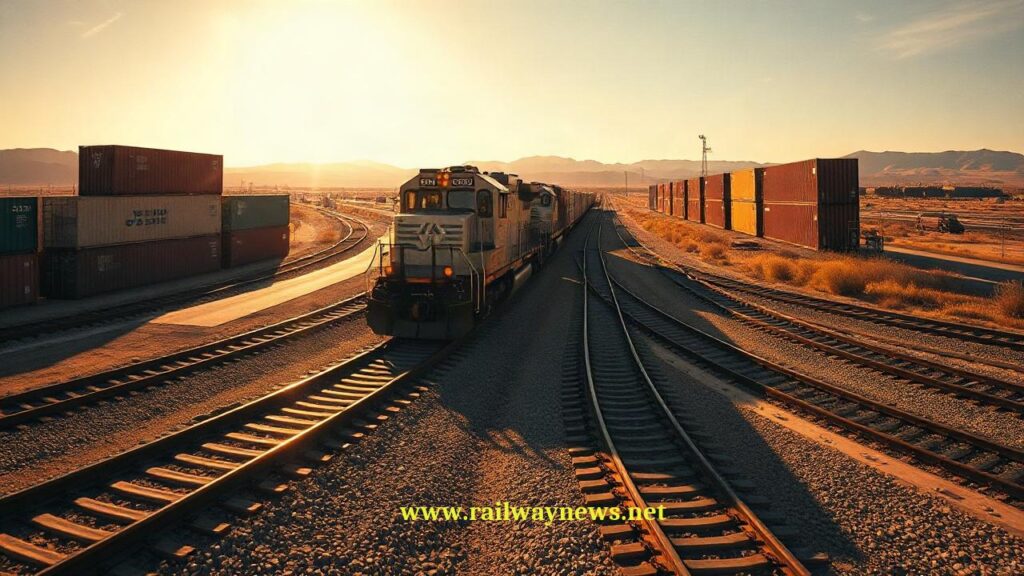
⚡ In Brief: BNSF Railway partnered with Spearpoint Logistics to provide warehousing and freight brokerage services at the planned $4 billion, 4,500-acre Barstow International Gateway intermodal rail hub in Southern California.
BARSTOW, UNITED STATES – BNSF Railway confirmed an operating agreement with Spearpoint Logistics to manage warehousing and distribution at its $4 billion Barstow International Gateway facility in California, scheduled to open in mid-2025. Spearpoint will run freight brokerage and cross-docking operations across the site to transfer import volumes from the ports of Los Angeles and Long Beach onto national rail corridors. Financial terms of the operating contract were not disclosed by either party.
What Is the Full Scope of This Project?
The Barstow International Gateway spans 4,500 acres in San Bernardino County as an inland transfer facility connecting Southern California marine terminals to transcontinental rail networks. Approved for development in June, the $4 billion master-planned logistics site will process intermodal container traffic arriving from Asia and Mexico, bypassing congested highway arteries in the Los Angeles basin. Spearpoint Logistics will provide co-located warehousing, inventory distribution, and brokerage directly inside the facility boundary, replicating the tenant model established at BNSF’s Alliance Logistics Park in Texas. Specific capital expenditures allocated to Spearpoint’s individual building plots were not disclosed.
Key Project Data
| Parameter | Value |
|---|---|
| Project / Contract Name | Barstow International Gateway (BIG) Logistics Operating Agreement |
| Total Value | $4.0 billion (overall project cost; contract value not disclosed) |
| Parties Involved | BNSF Railway, Spearpoint Logistics |
| Timeline / Completion | Mid-2025 opening |
| Country / Corridor | United States / Southern California–Transcontinental Rail Corridor |
How Does This Compare to Similar Projects?
At 4,500 acres, the Barstow International Gateway exceeds the physical footprint of rival Class I inland terminal developments in North America. Competing carrier Union Pacific added intermodal capacity through terminal modifications in Kansas City to alleviate inland interchange delays, focusing on existing network nodes rather than constructing a greenfield master-planned hub (Source: Railmarket, 2025). The Barstow hub expands upon BNSF’s Alliance Texas complex by integrating direct rail-served transloading with maritime import handling under a single site boundary. The project aligns with sector shifts: containerized and intermodal rail freight is projected to grow at a 6.23% compound annual growth rate through 2031, outpacing the 4.5% overall rail freight rate (Source: Mordor Intelligence, 2025).
Editor’s Analysis
BNSF’s integration of an on-site third-party logistics provider targets structural dwell problems at the San Pedro Bay ports by shifting sorting inland. Selecting Spearpoint Logistics ahead of the mid-2025 opening allows the railroad to secure transload volumes before competitor inland ramps complete midwestern capacity additions. This infrastructure positioning matches broader market growth, with global rail freight demand projected to rise from USD 370.0 billion in 2025 to USD 602.7 billion by 2036 (Source: Future Market Insights, 2025).
FAQ
Q: What role does Spearpoint Logistics have at the Barstow International Gateway?
A: Spearpoint Logistics will provide warehousing, transloading, distribution, and freight brokerage services for cargo transiting the terminal. These operations allow shippers to transfer containerized maritime freight directly onto domestic rail equipment.
Q: When will the Barstow International Gateway open for rail operations?
A: Commercial operations at the $4 billion terminal are scheduled to begin in mid-2025 following development approval granted in June. Specific staging dates for individual yard segments have not been publicly disclosed.
Q: How does the Barstow terminal affect highway freight traffic in California?
A: Freight unloaded at the ports of Los Angeles and Long Beach will move directly by train to Barstow, replacing long-distance drayage runs across regional highways. This rail routing eliminates commercial truck trips across Interstate 710 and Interstate 15 corridors.

Railway infrastructure, rolling stock and transport technologies specialist focused on global rail industry developments, high-speed rail systems, signaling technologies and freight transportation. Covering railway investments, public transport modernization, rail operations and international mobility projects across Europe, Asia and North America.
RELATED POSTS

October 8, 2026 1:15 pm
Alstom secured a €1bn contract to build 13 automated trains,...

October 1, 2026 7:09 am
United States regulators confirmed a September 30 deadline for the...

October 8, 2026 12:18 pm
Siemens Mobility signed an agreement with VinSpeed to supply 350...

October 4, 2026 5:14 pm
Alstom secured a CA$4.7 billion order from VIA Rail Canada...

October 5, 2026 6:12 pm
AECOM and Jacobs secured a contract in September 2026 to...

October 1, 2026 12:13 am
Illinois approved $1.5 billion annually for the Northern Illinois Transit...