
Bangladesh Rail Crisis: Political Instability’s Impact
The recent political instability in Bangladesh severely disrupted cross-border rail services between the country and India, leading to a complete halt of all operations by Indian Railways due to escalating protests and Prime Minister Sheikh Hasina’s resignation, highlighting vulnerabilities in the complex relationship between railway infrastructure and geopolitical factors.
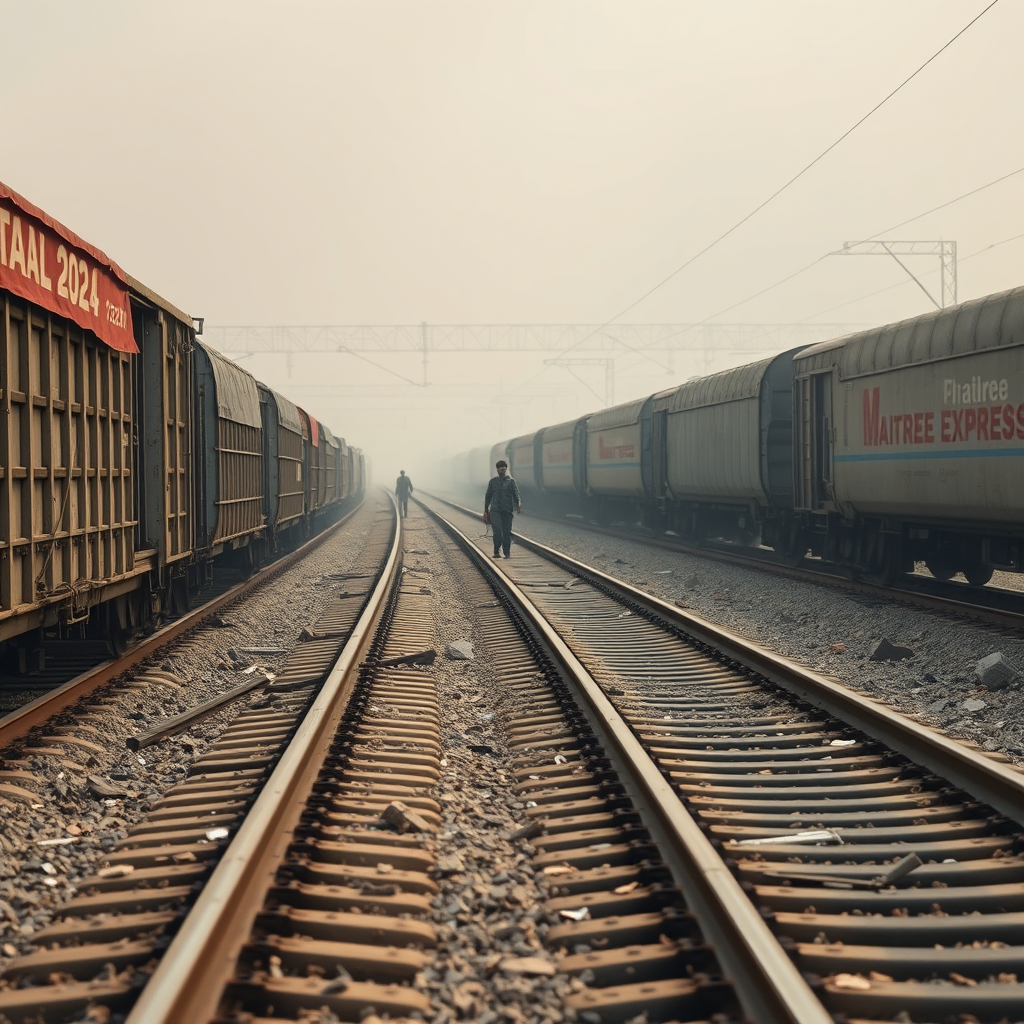
The Impact of Political Instability on Bangladesh’s Cross-Border Rail Network
This article examines the significant disruption to both passenger and freight rail services between Bangladesh and India resulting from recent political instability in Bangladesh. The intricate relationship between political climate and the efficient operation of a vital cross-border rail network will be analyzed. The Maitree Express (launched in 2008), Mitali Express, and Bandhan Express, along with numerous freight routes, form a crucial artery for trade and passenger transport between the two nations. The recent political upheaval, marked by mass protests and the resignation and subsequent departure of Prime Minister Sheikh Hasina, has severely compromised the operational capacity of this network, highlighting the vulnerability of rail infrastructure to broader geopolitical factors. We will explore the cascading effects of this instability, including the immediate suspension of cross-border services, the stranding of hundreds of freight cars, and the long-term implications for bilateral trade and regional connectivity. The analysis will consider the communication channels between Indian Railways (IR) and Bangladesh Railway (BR), and the challenges involved in managing a complex cross-border rail system during periods of intense political uncertainty.
The Disruption of Cross-Border Rail Services
The political unrest in Bangladesh, culminating in the Prime Minister’s resignation and departure on August 5th, 2024, led to the immediate suspension of all cross-border rail services by Indian Railways. This decision, while swift, was not unexpected. Months of escalating protests had already significantly impacted both passenger and freight operations. Reports indicate that Bangladeshi rail officials maintained ongoing communication with their Indian counterparts, proactively canceling services on numerous occasions as the situation deteriorated. This demonstrates a degree of proactive risk management, attempting to mitigate further problems by preventing unsafe operation in unstable conditions. The reliance on verbal communication highlights the need for improved, formalized emergency communication protocols between the two railway systems to ensure rapid and efficient response during crises.
The Human and Economic Costs of Disruption
The suspension of services has resulted in significant economic and social consequences. Hundreds of freight cars are currently stranded, either empty in India awaiting return or loaded with goods in Bangladesh unable to reach their destination. This directly impacts bilateral trade, impacting supply chains and causing potential financial losses for businesses reliant on this crucial transport link. The disruption of passenger services affects commuters, tourists, and those with family ties across the border, creating inconvenience and hardship. Beyond the immediate financial impacts, the prolonged disruption could erode confidence in the reliability of the cross-border rail network, potentially diverting traffic to alternative, less efficient modes of transport in the future, causing further long-term economic damage.
Operational Challenges and Communication Gaps
The incident highlights several critical operational challenges. The reliance on verbal communication between BR and IR, while understandable during an evolving crisis, underscores the need for robust, formalized communication protocols for emergency situations. A formalized system, potentially incorporating real-time data sharing and pre-agreed contingency plans, would ensure quicker response times and better coordination during future disruptions. Additionally, the incident demonstrates the vulnerability of cross-border rail systems to political instability, necessitating the development of more resilient operational strategies that can accommodate unforeseen political risks. This might involve diversifying transportation routes or developing contingency plans for managing disruptions caused by political events.
Conclusion: Strengthening Resilience and Cooperation
The disruption of Bangladesh-India cross-border rail services serves as a stark reminder of the interconnectedness of political stability and efficient infrastructure operations. The immediate suspension of services, the stranding of freight cars, and the inconvenience to passengers highlight the significant costs associated with political instability. While proactive communication between BR and IR helped mitigate some of the immediate impacts, the incident underscores the need for significant improvements to crisis management and communication protocols. Future preparedness should focus on establishing formalized systems for real-time information sharing, developing contingency plans that anticipate potential political disruptions, and perhaps investigating the implementation of more sophisticated communication technologies. Strengthening collaboration between BR and IR through enhanced communication systems, joint training exercises, and pre-agreed contingency plans will be crucial in improving the resilience of the cross-border rail network and mitigating the economic and social impacts of future political uncertainties. The long-term sustainability and effectiveness of this crucial transportation link depend on strengthening collaboration and improving preparedness to face future challenges. This case highlights a critical need for both political stability and resilient infrastructure management to ensure efficient and dependable cross-border rail transport. A joint strategic approach to managing political risks and implementing proactive measures can reduce the negative consequences of future crises and maintain the economic and social benefits this vital link provides.

Railway infrastructure, rolling stock and transport technologies specialist focused on global rail industry developments, high-speed rail systems, signaling technologies and freight transportation. Covering railway investments, public transport modernization, rail operations and international mobility projects across Europe, Asia and North America.
RELATED POSTS

October 8, 2026 1:15 pm
Alstom secured a €1bn contract to build 13 automated trains,...

October 1, 2026 7:09 am
United States regulators confirmed a September 30 deadline for the...

October 8, 2026 12:18 pm
Siemens Mobility signed an agreement with VinSpeed to supply 350...

October 4, 2026 5:14 pm
Alstom secured a CA$4.7 billion order from VIA Rail Canada...

October 5, 2026 6:12 pm
AECOM and Jacobs secured a contract in September 2026 to...

October 1, 2026 12:13 am
Illinois approved $1.5 billion annually for the Northern Illinois Transit...