
Baltimore Penn Station: Amtrak’s NEC Modernization
Amtrak’s $150 million overhaul of Baltimore Penn Station aims to address growing ridership demands by expanding platform capacity, improving accessibility, and integrating with regional rail services like MARC, while also enhancing infrastructure for future operations and accommodating increased passenger numbers.
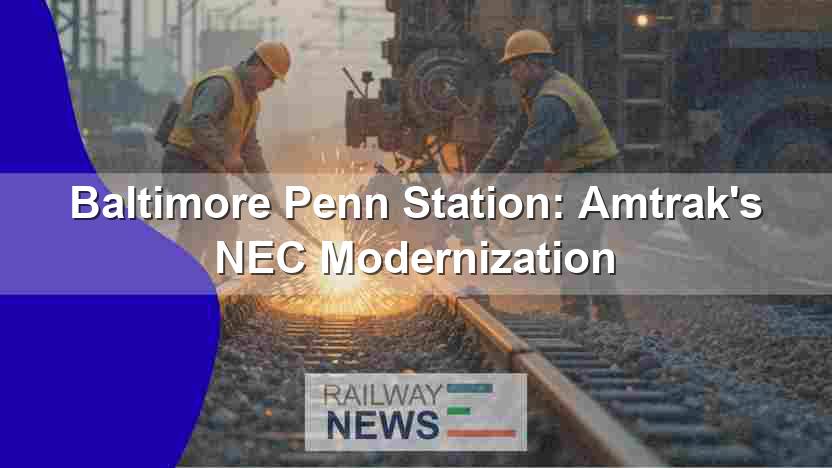
Amtrak’s Baltimore Penn Station Overhaul: A Modernization for the Northeast Corridor
This article explores the significant redevelopment underway at Baltimore Penn Station, a crucial hub on the Northeast Corridor (NEC). The project, a cornerstone of Amtrak’s $150 million investment, aims to address the increasing passenger demand and enhance the overall commuter experience. This ambitious undertaking encompasses platform expansion, accessibility improvements, infrastructure upgrades, and integration with regional rail services like the Maryland Area Regional Commuter (MARC) system. The modernization goes beyond mere cosmetic changes; it involves a complete overhaul of the station’s infrastructure to accommodate the demands of increased ridership and the introduction of Amtrak’s new Acela high-speed rail service. The project’s scale and scope reflect the critical role Baltimore Penn Station plays within the larger context of the NEC’s ongoing modernization and its commitment to providing efficient and accessible rail transportation.
Addressing Growing Ridership and Future Demands
Prior to the COVID-19 pandemic, Baltimore Penn Station, originally constructed in 1911 and last significantly overhauled in 1984 as part of the Northeast Corridor Improvement Project, handled over three million Amtrak and MARC passengers annually. This substantial ridership underscores the need for the current expansion and modernization. The redevelopment, spearheaded by Amtrak and Penn Station Partners (a consortium including Beatty Development Group and Cross Street Partners), directly addresses this growth by expanding platform capacity and improving passenger flow. The project’s strategic importance lies in its ability to accommodate not only current passenger numbers but also anticipate future ridership increases, ensuring the station remains a viable and efficient transportation hub for decades to come.
Infrastructure Improvements for Enhanced Operations
Beyond expanding platform capacity, the project focuses on critical infrastructure improvements. These include the construction of a new ADA-compliant low-level platform, enhancing accessibility for passengers with disabilities. Additionally, the upgrade of the overhead electrical system, coupled with track improvements along the 48-kilometer stretch between Baltimore and Washington Union Station, will enable higher operating speeds and improved on-time performance for the Acela high-speed trains. These improvements aim to not only increase speed but also provide operational flexibility, allowing for more efficient train management and reduced delays. The enhanced track capacity supports higher train frequencies and improved overall operational efficiency.
Acela Integration and High-Speed Rail Readiness
The introduction of Amtrak’s new Acela high-speed trains in 2022 necessitates significant upgrades to the station’s infrastructure. Baltimore Penn Station is strategically positioned along the Acela corridor, and the improvements ensure seamless integration with this high-speed service. The project includes platform enhancements specifically designed to accommodate the Acela’s operational requirements, emphasizing the project’s forward-looking approach to accommodating evolving technological advancements in rail transportation. This integration underscores Amtrak’s commitment to investing in high-speed rail technology and enhancing the overall passenger experience along the NEC.
Phased Construction and Long-Term Vision
The Baltimore Penn Station redevelopment is a multi-year undertaking, executed in phases to minimize disruption to passenger services. While platform improvements are already underway, façade renovations are scheduled to commence later. This phased approach demonstrates a careful balance between infrastructure improvement and maintaining operational efficiency. The project’s completion signifies more than just a renovation; it represents a long-term investment in the future of rail transportation in Baltimore and the entire Northeast Corridor. The successful completion of this project, coupled with the ongoing Baltimore and Potomac Tunnel replacement project, underscores Amtrak’s commitment to modernizing its infrastructure and ensuring the continued viability and efficiency of rail transit in the region for years to come.
Conclusion
The redevelopment of Baltimore Penn Station represents a significant investment in the future of the Northeast Corridor (NEC). Amtrak’s $150 million commitment demonstrates a proactive approach to addressing the challenges of increasing ridership and integrating advanced rail technologies. The project’s scope extends beyond mere aesthetic improvements; it encompasses detailed infrastructure upgrades, addressing critical issues such as accessibility (ADA compliance), operational efficiency (track and overhead system upgrades), and high-speed rail integration (Acela readiness). The phased construction strategy mitigates disruption to passenger service while ensuring a thorough and effective modernization. The successful completion of this project will not only enhance the commuter experience at Baltimore Penn Station but will also play a pivotal role in bolstering the overall efficiency and capacity of the NEC, positioning it to meet future transportation demands and further solidifying its role as a vital transportation artery in the northeastern United States. The integration of the Acela high-speed rail service will further improve travel times and overall connectivity within the region, underscoring the long-term vision and strategic importance of this significant undertaking. The successful execution of this project serves as a model for future infrastructure upgrades on other heavily trafficked rail corridors across the country.

Railway infrastructure, rolling stock and transport technologies specialist focused on global rail industry developments, high-speed rail systems, signaling technologies and freight transportation. Covering railway investments, public transport modernization, rail operations and international mobility projects across Europe, Asia and North America.
RELATED POSTS

October 8, 2026 1:15 pm
Alstom secured a €1bn contract to build 13 automated trains,...

October 1, 2026 7:09 am
United States regulators confirmed a September 30 deadline for the...

October 8, 2026 12:18 pm
Siemens Mobility signed an agreement with VinSpeed to supply 350...

October 4, 2026 5:14 pm
Alstom secured a CA$4.7 billion order from VIA Rail Canada...

October 5, 2026 6:12 pm
AECOM and Jacobs secured a contract in September 2026 to...

October 4, 2026 11:08 pm
Sound Transit confirmed the September 30 opening of Seattle Pinehurst...