
Austria’s New Servicejet: Revolutionizing Rail Rescue
The Austrian Federal Railways (ÖBB) has introduced 18 new Servicejet rescue trains equipped with advanced firefighting systems and hybrid-electric technology, significantly enhancing safety protocols and emergency response capabilities on Austria’s extensive rail network.
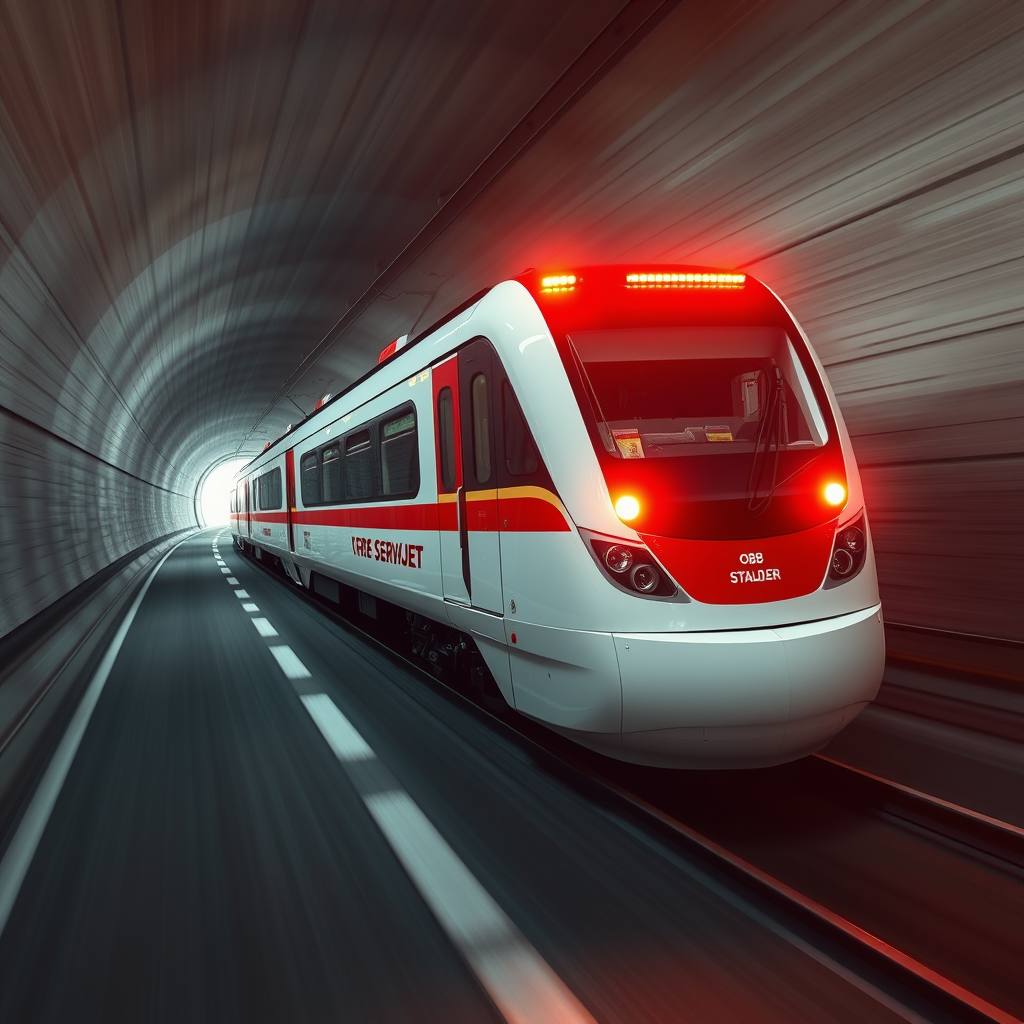
This article explores the significant advancements in Austrian railway safety with the introduction of a new fleet of Servicejet rescue trains. The Austrian Federal Railways (ÖBB) and Stadler, a leading rolling stock manufacturer, have collaborated to develop and deploy 18 state-of-the-art rescue vehicles designed for rapid response and efficient operation within Austria’s extensive network of rail tunnels. The project represents a substantial investment in enhancing safety protocols and emergency response capabilities, replacing an older fleet with a more technologically advanced and efficient system. This upgrade not only improves response times but also increases capacity for passenger evacuation and fire suppression, significantly bolstering overall rail safety across the Austrian network. We will delve into the technological specifications of these new trains, analyze the operational improvements they provide, and assess the broader implications for railway safety and efficiency.
Technological Advancements in the Servicejet Design
The new Servicejet trains represent a significant leap forward in railway emergency response technology. Each 68-meter-long, three-car unit boasts a maximum speed of 160 km/h (approximately 99 mph), enabling rapid deployment to incident sites throughout Austria’s extensive rail network. Crucially, the trains incorporate a hybrid-electric trimodal system, enhancing operational efficiency and reducing the overall number of rescue vehicles required. The fleet’s reduction from 21 to 18 units reflects this enhanced capability. Additionally, the integration of advanced firefighting systems is a major improvement. Each train is equipped with dual extinguishing systems, capable of deploying 40,000 liters of water and 1,200 liters of foam concentrate. Powerful jet fans assist in the dispersion of water mist, maximizing fire suppression effectiveness. Advanced vision systems, including searchlights and thermal imaging cameras, ensure optimal visibility even in smoke-filled environments. The trains also feature substantial passenger capacity exceeding 300 individuals, facilitating efficient evacuation during emergencies.
Operational Efficiency and Strategic Deployment
The strategic deployment of the Servicejet fleet is a key aspect of its effectiveness. The trains will be stationed at tunnel portals across Austria’s rail network, ensuring swift response times to incidents within tunnels. This optimized positioning minimizes response times, allowing for quicker intervention and potentially saving lives. The increased power and efficiency of the new hybrid-electric trains allow for a smaller, more strategically positioned fleet, leading to cost savings and improved operational efficiency compared to the previous generation of Servicejets. ÖBB-Infrastruktur AG (ÖBB’s infrastructure management company) will manage the operation of this strategically vital fleet, ensuring seamless integration with existing emergency response protocols.
Collaboration and Technological Partnerships
The successful development and deployment of the new Servicejet fleet highlight the importance of collaboration between industry leaders. The partnership between ÖBB and Stadler exemplifies a commitment to innovative solutions in railway safety. Stadler’s expertise in rolling stock manufacturing has been instrumental in delivering a train that precisely meets ÖBB’s demanding specifications. The agreement for the Servicejet fleet builds upon a pre-existing strong relationship between the two organizations, underscored by other significant contracts, such as the 2022 agreement for 41 KISS (City Intercity Stadler) double-decker units. This successful partnership underscores the importance of collaborative innovation in driving advancements within the rail industry.
Conclusion
The introduction of the new Servicejet fleet represents a transformative step forward for railway safety in Austria. The advanced technological features, including the hybrid-electric drivetrain, enhanced firefighting capabilities, and improved passenger evacuation capacity, significantly augment emergency response capabilities within Austria’s rail tunnels. The reduction in the overall number of trains required while simultaneously enhancing capabilities demonstrates the efficiency and effectiveness of this innovative solution. The strategic placement of these vehicles at critical points within the network, coupled with the advanced on-board technology, ensures a faster and more effective response to incidents, potentially minimizing damage and saving lives. The collaboration between ÖBB and Stadler underscores the vital role of partnership in driving innovation and enhancing safety within the railway industry. The first public demonstration during the opening of the Koralm Railway in 2025/2026 will provide a further opportunity to showcase the capabilities of this impressive fleet and highlight the commitment of both organizations to maintaining the highest safety standards on Austria’s rail network. The successful implementation of this project serves as a model for other railway operators worldwide seeking to enhance their emergency response systems and improve overall safety within their rail networks. The project highlights the benefits of investing in advanced technology and strategic partnerships to create a safer and more efficient railway system for passengers and personnel alike.

Railway infrastructure, rolling stock and transport technologies specialist focused on global rail industry developments, high-speed rail systems, signaling technologies and freight transportation. Covering railway investments, public transport modernization, rail operations and international mobility projects across Europe, Asia and North America.
RELATED POSTS

October 8, 2026 1:15 pm
Alstom secured a €1bn contract to build 13 automated trains,...

October 1, 2026 7:09 am
United States regulators confirmed a September 30 deadline for the...

October 8, 2026 12:18 pm
Siemens Mobility signed an agreement with VinSpeed to supply 350...

October 4, 2026 5:14 pm
Alstom secured a CA$4.7 billion order from VIA Rail Canada...

October 5, 2026 6:12 pm
AECOM and Jacobs secured a contract in September 2026 to...

October 4, 2026 11:08 pm
Sound Transit confirmed the September 30 opening of Seattle Pinehurst...