
Australia & NZ Rail: SFCs Power Efficiency & Sustainability
Static Frequency Converters (SFCs) boost Australian and New Zealand rail efficiency, sustainability, and capacity. SFCs improve power quality and reduce costs, key to net-zero goals.
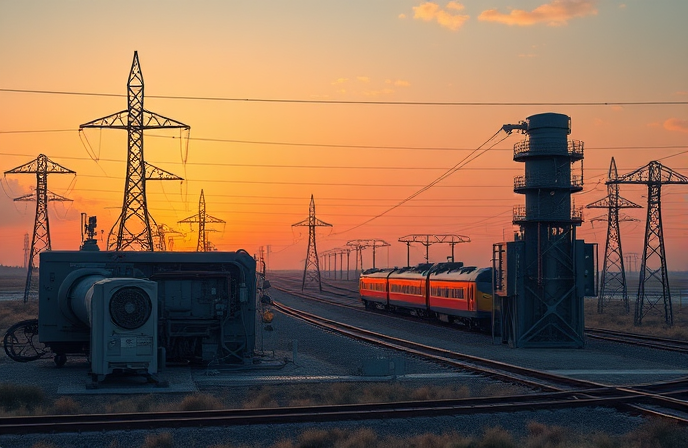
Static Frequency Converters: Powering the Future of Rail in Australia and New Zealand
As the railway industry in Australia and New Zealand undergoes a significant evolution, driven by the need for enhanced efficiency, sustainability, and capacity, the reliable and effective planning of electrification infrastructure is paramount. This article explores the transformative role of Static Frequency Converters (SFCs), a critical technology that is revolutionizing power delivery within rail networks, and offering significant advantages over traditional methods. We explore what SFCs are, how they function, and why they are becoming the preferred solution for modernizing and stabilizing power systems across the region. Through insights from industry experts, this piece examines the benefits SFCs provide, including increased capacity, reduced costs, and a move toward greener operations, making them vital components in achieving net-zero strategies. This technology ensures a balanced load on the three-phase supply network, improving power quality and operational efficiency.
Unveiling Static Frequency Converters
At its core, an SFC acts as a crucial interface within the traction power supply system. Traditionally, rail networks have drawn power from two phases, creating an imbalanced load on the electrical grid. An SFC solves this by converting the three-phase inputs into a single-phase current, thus creating a balanced load for the three-phase power supply network. This balance ensures high power quality back to the network provider. This eliminates the need for harmonic filters and output transformers, further lowering carbon footprints and simplifying the infrastructure required for modern rail systems. An SFC consists of a single converter that directly couples two networks, converting three-phase AC voltage into single-phase AC at the required voltage and frequency for the rail network. As Peter Wagner, Engineering Project Manager at Siemens Mobility Australia and New Zealand, explains, the use of SFCs results in “cost savings for the operator.”
The MMDC Advantage: A Technological Leap
A significant advancement in SFC technology is the Modular Multi-level Direct Converter (MMDC). This innovative approach utilizes Insulated Gate Bipolar Transistors (IGBTs), power semiconductor devices acting as high-speed switching elements within electronic circuits. Leo Beyers, Head of Rail Electrification at Siemens Mobility Australia and New Zealand, points out that the move towards MMDC technology has been driven by grid operator demands to manage the load more efficiently. These IGBTs have lower losses than the thyristors used in older SFCs, translating into substantial cost savings and a reduced carbon footprint. The self-healing technology of MMDCs enhances system reliability; if one IGBT module fails, it can be bypassed without interrupting power delivery, allowing for maintenance to be scheduled without operational disruption. This modular approach makes for easier and quicker replacement.
Benefits of SFCs: Efficiency, Cost Savings, and Sustainability
SFCs offer operators a streamlined and efficient process. The distance between SFC substations can be increased, and there is a significant improvement in volt drop over the line length. With conventional systems, managing the power transfer arrangements can be exhaustive. However, as Beyers explains, “The beauty of SFCs is, you don’t have to worry about that. It’s really simple to manage with the power industry.” SFCs also remove the need for additional monitoring equipment, as well as a cubicle that is shared with local power authorities, and enable a smaller substation footprint. Operators can save time and money on maintenance due to having fewer assets that can fail and backup systems. This makes for improved energy efficiency, and MMDCs can lead to up to a 10% increase in energy efficiency. The use of reactors instead of transformers also reduces carbon emissions.
Implementation and Industry Impact
Siemens Mobility has already demonstrated the efficacy of SFC technology through successful deployments across several international projects, including those in Germany and the United Kingdom. Wagner cites that in the UK, “we were able to boost efficiency on the network by using SFCs to create a balanced load. This project has had considerable cost savings for the rail operator.” Beyers anticipates a continued industry shift towards SFCs, driven by growing demand for efficient, reliable, and sustainable rail operations. He emphasizes that “SFCs require an initial investment, but then you really reap the benefits with savings over the entire life cycle of the asset.”
Conclusion
To summarize, static frequency converters represent a pivotal advancement in the electrification of rail networks across Australia and New Zealand. They offer substantial benefits in terms of power quality, operational efficiency, and long-term cost savings. The transition towards MMDC technology further enhances the resilience and sustainability of these systems. The increasing adoption of SFCs, supported by the global expertise of companies like Siemens Mobility, signals a clear trend towards modernizing railway infrastructure. The shift is being driven by factors such as the drive toward net-zero carbon emission goals, grid operator requirements, and the need for scalable capacity. As the industry embraces the use of SFCs, rail operators can expect to improve their asset management over the entire lifecycle, increase availability of their traction supply networks, and contribute to a greener and more efficient transport sector. This will enable operators to deliver improved service reliability, cost efficiency, and reduced environmental impact, solidifying the future of rail transport.

Railway infrastructure, rolling stock and transport technologies specialist focused on global rail industry developments, high-speed rail systems, signaling technologies and freight transportation. Covering railway investments, public transport modernization, rail operations and international mobility projects across Europe, Asia and North America.
RELATED POSTS

October 8, 2026 1:15 pm
Alstom secured a €1bn contract to build 13 automated trains,...

October 1, 2026 7:09 am
United States regulators confirmed a September 30 deadline for the...

October 8, 2026 12:18 pm
Siemens Mobility signed an agreement with VinSpeed to supply 350...

October 4, 2026 5:14 pm
Alstom secured a CA$4.7 billion order from VIA Rail Canada...

October 5, 2026 6:12 pm
AECOM and Jacobs secured a contract in September 2026 to...

October 1, 2026 12:13 am
Illinois approved $1.5 billion annually for the Northern Illinois Transit...