
Auckland’s Southern Rail Expansion: Drury Stations & Beyond
The recent approval of two new stations, Drury Central and Paerata, under fast-track legislation highlights New Zealand’s commitment to accelerating essential infrastructure projects in response to projected population growth in Auckland’s southern suburbs, demonstrating a prioritization of public transport accessibility amidst rapid urban expansion.
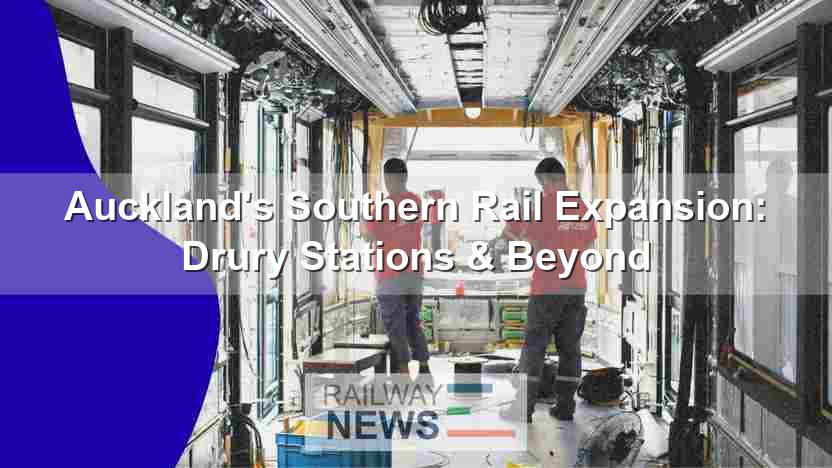
This article examines the significant expansion of Auckland’s Southern railway network, focusing on the recent approval of two new stations, Drury Central and Paerata, and the broader implications for the region’s transportation infrastructure. The project, spearheaded by KiwiRail (New Zealand’s state-owned railway company), represents a crucial step in addressing the growing transportation demands of Auckland’s rapidly expanding southern suburbs. The approval, expedited through Covid-19 recovery legislation, highlights the urgency and importance placed on this infrastructure development. This analysis will delve into the planning process, funding mechanisms, projected impacts on the community, and the wider context of Auckland’s ongoing railway modernization efforts. We will explore the integration of these new stations with broader transportation networks, the environmental benefits, and the long-term vision for sustainable and efficient public transport in the region. The integration of bus interchanges, bicycle infrastructure, and park-and-ride facilities illustrates a commitment to multimodal transport solutions, crucial for reducing car dependency and promoting environmentally friendly travel options.
Planning and Approval Process
The approval of Drury Central and Paerata stations under the fast-track provisions of the Covid-19 recovery legislation signifies the New Zealand government’s commitment to accelerating essential infrastructure projects. KiwiRail, acting as the lead agency in collaboration with Auckland Transport (AT) and Waka Kotahi (NZ Transport Agency), submitted planning applications in October of the previous year. This collaborative approach highlights the importance of inter-agency cooperation in managing complex infrastructure developments. The streamlined approval process underscores the prioritization of this project in response to the projected population growth in Southern Auckland, estimated at over 100,000 people in the next 30 years. This rapid expansion necessitates proactive measures to enhance public transport accessibility and mitigate potential congestion issues.
Funding and Project Scope
The three new stations (Drury Central, Paerata, and Drury West) are part of KiwiRail’s substantial NZ$1.5 billion (approximately US$993 million) investment in Auckland’s rail network upgrade. This significant financial commitment underscores the government’s long-term vision for upgrading the region’s transport infrastructure. Funding is provided under the New Zealand Upgrade Programme, reflecting a commitment to nationwide infrastructural improvements. The project goes beyond the construction of new stations, encompassing wider network enhancements, including the electrification of the Papakura-Pukekohe line and the construction of a third main track to alleviate congestion between Wiri and Westfield. These improvements aim to boost passenger service capacity and support the City Rail Link (CRL) project, a crucial element of Auckland’s urban rail network development.
Station Features and Community Integration
The design of the new stations incorporates features promoting multimodal transport and community integration. Bus interchanges, dedicated bicycle parking areas, walking and cycling paths, and park-and-ride facilities will be implemented. This approach reflects a broader shift towards sustainable transportation solutions, encouraging the use of public transport and active travel modes. The inclusion of park-and-ride facilities aims to cater to commuters arriving by car, offering a seamless transition to rail services. The integration of these various modes of transportation is crucial for maximizing accessibility and attracting a wider range of commuters to utilize the improved rail network.
Environmental and Economic Impacts
The project’s impact extends beyond improved transport accessibility. The electrification of the Papakura-Pukekohe line, coupled with increased passenger rail capacity, is expected to significantly reduce carbon emissions in the Auckland region. By promoting the shift from private vehicles to public transport, the project directly contributes to environmental sustainability goals. Additionally, the construction and operation of these stations will generate employment opportunities and stimulate economic activity in the Southern Auckland region, supporting local businesses and fostering economic growth.
Conclusions
The approval and subsequent development of Drury Central and Paerata stations, along with Drury West, mark a significant milestone in Auckland’s railway modernization strategy. This project, a key component of KiwiRail’s broader NZ$1.5 billion investment, showcases a commitment to improving public transport infrastructure to meet the needs of a rapidly growing population. The strategic use of fast-track planning processes, collaborative partnerships between KiwiRail, Auckland Transport, and Waka Kotahi, and the integration of multimodal transportation options demonstrate a forward-thinking approach to sustainable urban development. The project’s emphasis on community integration, through features like bus interchanges, cycling paths, and park-and-ride facilities, underscores a commitment to enhancing accessibility and attracting a wide range of commuters. The environmental benefits, primarily through the reduction of carbon emissions facilitated by the shift to electric trains and increased rail capacity, are substantial. Ultimately, this project contributes not only to improved transport solutions for Southern Auckland but also to the broader goals of sustainable economic growth and environmental responsibility. The completion of these stations by early 2025 (Drury Central and Paerata) and later in 2025 (Drury West) will significantly enhance the accessibility and connectivity of Southern Auckland, setting a precedent for future railway development projects in other high-growth areas of New Zealand.

Railway infrastructure, rolling stock and transport technologies specialist focused on global rail industry developments, high-speed rail systems, signaling technologies and freight transportation. Covering railway investments, public transport modernization, rail operations and international mobility projects across Europe, Asia and North America.
RELATED POSTS

October 8, 2026 1:15 pm
Alstom secured a €1bn contract to build 13 automated trains,...

October 1, 2026 7:09 am
United States regulators confirmed a September 30 deadline for the...

October 8, 2026 12:18 pm
Siemens Mobility signed an agreement with VinSpeed to supply 350...

October 4, 2026 5:14 pm
Alstom secured a CA$4.7 billion order from VIA Rail Canada...

October 5, 2026 6:12 pm
AECOM and Jacobs secured a contract in September 2026 to...

October 4, 2026 11:08 pm
Sound Transit confirmed the September 30 opening of Seattle Pinehurst...