
Ankara Rail Signaling: Future Trends in Railway Technology
Here’s a voiceover-friendly excerpt for railway professionals:
**Modern railway signaling is evolving. Explore how advancements in technologies like ATP and ERTMS are boosting safety and efficiency across the network. Learn the secrets!**
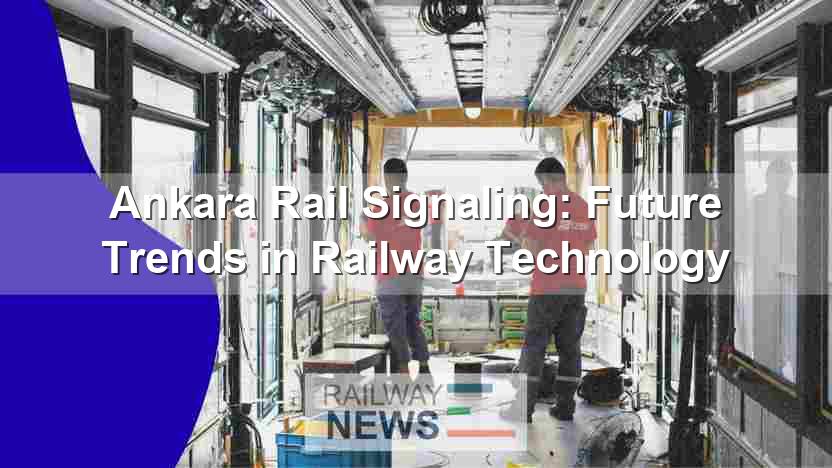
Unlocking the Future: Advancements in Railway Signaling Technology
The evolution of railway systems has always been intrinsically linked to advancements in signaling technology. From the semaphore signals of the 19th century to the sophisticated, computer-based systems of today, signaling has been the cornerstone of railway safety, efficiency, and capacity. This article explores the critical role of signaling in modern railway operations, exploring the key technologies that drive its effectiveness, the challenges faced in its implementation, and the future trends shaping the industry. We will examine how these technologies contribute to optimizing train movements, enhancing safety protocols, and ultimately, improving the overall performance of railway networks worldwide. This exploration will cover various aspects, including the integration of automation, communication systems, and the constant pursuit of more reliable and efficient operational practices.
The Core Pillars of Modern Railway Signaling
Modern railway signaling relies on a complex interplay of technologies designed to ensure the safe and efficient operation of trains. Central to these systems are interlocking systems, which prevent conflicting movements by controlling the switches and signals along a track. These systems have evolved from mechanical levers to computerized systems that offer greater flexibility and control. Another critical component is the train detection system, which uses track circuits or axle counters to identify the location of trains, providing real-time information to the signaling system. Additionally, communication systems play a vital role, transmitting data between the control center, trackside equipment, and the trains themselves. Radio-based communication systems, such as GSM-R (Global System for Mobile Communications – Railway), are increasingly prevalent, enabling continuous communication and the implementation of advanced train control systems. These systems, in essence, form the backbone of modern railway operations, allowing for the safe and efficient movement of trains.
Enhancing Safety and Efficiency Through Advanced Signaling
Advanced signaling technologies have significantly improved both safety and operational efficiency in railway systems. The implementation of Automatic Train Protection (ATP) systems, for example, is crucial in preventing collisions by automatically stopping a train if the driver fails to respond to a signal. Additionally, Automatic Train Operation (ATO) systems allow for automated train operation, optimizing train speeds and spacing, thereby increasing line capacity. These systems enhance safety by removing the potential for human error and improve efficiency by optimizing train movements and reducing headways. Data analytics also plays a crucial role, with real-time data from signaling systems used to monitor train performance, identify potential issues, and optimize maintenance schedules. This data-driven approach helps to improve the reliability and availability of railway infrastructure, ultimately leading to a more efficient and safer railway network.
You might be interested in:
Last November 2018, we published an article about hypersonic rail. Click here to read – Hypersonic Rail: CASIC & Geely’s Revolution
The Future of Railway Signaling: Trends and Innovations
The future of railway signaling is poised for further innovation, driven by the need for increased capacity, improved safety, and enhanced operational efficiency. The European Rail Traffic Management System (ERTMS), an example of a unified signaling and control system, is becoming increasingly widespread, promoting interoperability across different railway networks. The integration of digital technologies, such as the Internet of Things (IoT) and artificial intelligence (AI), is also expected to play a significant role. Predictive maintenance, based on data from sensors and signaling systems, will allow for proactive maintenance, minimizing downtime and improving asset management. Additionally, the development of autonomous train control systems, enabled by advanced signaling technologies and communication systems, will revolutionize railway operations, leading to greater efficiency and safety. The implementation of all these technologies is crucial to modernize and advance the railway infrastructure.
Conclusion: Paving the Way for a Safer and More Efficient Railway Network
To summarize, the advancements in railway signaling technology are fundamental to the ongoing evolution of railway systems. From the fundamental principles of interlocking and train detection to the sophisticated systems of ATP, ATO, and ERTMS, each technological step has been pivotal in increasing safety, enhancing operational efficiency, and expanding the capacity of rail networks. The integration of data analytics, IoT, and AI promises to further optimize railway operations, enabling predictive maintenance, improving train control, and leading to a more resilient and responsive infrastructure. The implementation of the **Ankara rail signaling** system, as with other modern implementations, demonstrates the importance of investing in these cutting-edge technologies to create a safer, more efficient, and more sustainable transportation solution. The future of rail is intrinsically tied to the continuous advancement of signaling technology, promising a railway network that is not only safer and more efficient but also more adaptable to the evolving demands of the 21st century. The consistent evolution and development of this field guarantees the expansion of rail transportation around the world.

Railway infrastructure, rolling stock and transport technologies specialist focused on global rail industry developments, high-speed rail systems, signaling technologies and freight transportation. Covering railway investments, public transport modernization, rail operations and international mobility projects across Europe, Asia and North America.
RELATED POSTS

October 8, 2026 1:15 pm
Alstom secured a €1bn contract to build 13 automated trains,...

October 1, 2026 7:09 am
United States regulators confirmed a September 30 deadline for the...

October 8, 2026 12:18 pm
Siemens Mobility signed an agreement with VinSpeed to supply 350...

October 4, 2026 5:14 pm
Alstom secured a CA$4.7 billion order from VIA Rail Canada...

October 5, 2026 6:12 pm
AECOM and Jacobs secured a contract in September 2026 to...

October 1, 2026 12:13 am
Illinois approved $1.5 billion annually for the Northern Illinois Transit...