
Ancala Partners Acquires Hector Rail: Shaping European Rail’s Future
This article analyzes the strategic acquisition by Ancala Partners’ European Infrastructure Fund II from EQT Infrastructure II, highlighting how this deal underscores the growing importance of sustainable transportation solutions and private equity investment in shaping the future of Europe’s rail freight industry.
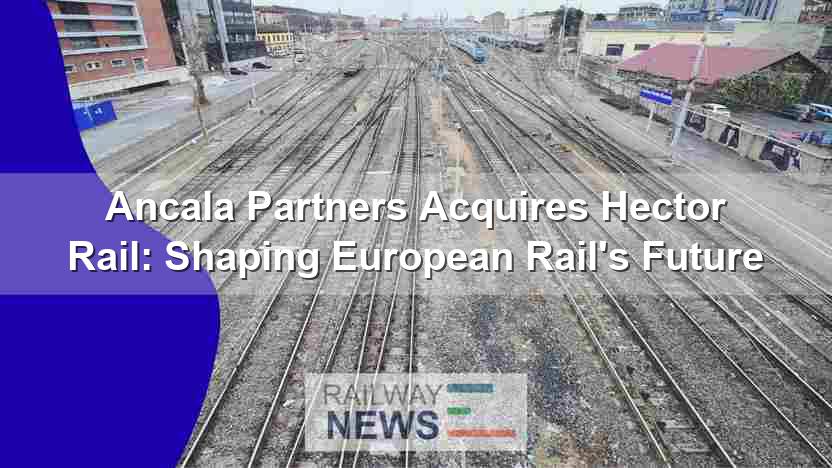
This article analyzes the acquisition of Hector Rail Group, a significant Scandinavian freight rail operator, by Ancala Partners’ European Infrastructure Fund II from EQT Infrastructure II. The transaction highlights several key aspects of the European rail freight market, including the increasing demand for sustainable transportation solutions, the importance of strategic acquisitions in fostering growth, and the role of private equity in shaping the future of the rail industry. We will explore the business rationale behind this acquisition, examining the strategic implications for both Ancala Partners and Hector Rail, considering the competitive landscape of the European rail freight sector, and discussing the potential future directions for Hector Rail under its new ownership. The analysis will also touch upon the broader trends within the European rail industry, encompassing issues of sustainability, efficiency, and infrastructure development.
The Hector Rail Acquisition: A Strategic Move for Ancala Partners
Ancala Partners’ acquisition of Hector Rail represents a strategic investment in a growing sector of the European economy. Hector Rail’s established presence in Scandinavia and its corridor traffic between Germany and Scandinavia provide Ancala with immediate access to a key transportation network. The company’s focus on environmentally friendly and sustainable freight transport aligns perfectly with Ancala’s investment strategy, which prioritizes businesses demonstrating a commitment to sustainability. This acquisition strengthens Ancala’s portfolio in the infrastructure sector, adding a stable and profitable entity with significant growth potential. The existing management team’s expertise and the strong market demand for rail freight services are additional factors contributing to the deal’s attractiveness for Ancala.
Hector Rail’s Growth Trajectory and Future Prospects
Under EQT’s ownership, Hector Rail experienced significant growth, expanding its service offerings and strengthening its position in the Scandinavian and German rail markets. The company’s success is a testament to its robust business model and its ability to adapt to market dynamics. The acquisition by Ancala signifies a new chapter in Hector Rail’s evolution. Ancala’s commitment to supporting the management team and fostering growth suggests a continuation of Hector Rail’s success story. Ancala’s broader experience in infrastructure investments could bring valuable expertise in areas such as operational efficiency, network optimization, and technological upgrades, further enhancing Hector Rail’s competitiveness.
The European Rail Freight Market: Challenges and Opportunities
The European rail freight market presents both challenges and opportunities. Increasing competition, evolving regulatory landscapes, and the need for continuous infrastructure investment are all factors that influence the profitability and growth of rail freight operators. However, the growing demand for sustainable transportation, coupled with the European Union’s commitment to decarbonizing the transportation sector, presents significant opportunities for businesses like Hector Rail. The ongoing investment in rail infrastructure across Europe, alongside a focus on interoperability and efficiency improvements, provides a favorable environment for further market expansion. Hector Rail’s established network and commitment to sustainability position it favorably to capture a larger share of this growing market.
The Role of Private Equity in Shaping the Rail Industry
Private equity firms, like Ancala Partners and EQT, are playing an increasingly significant role in shaping the European rail industry. Their investments provide vital capital for expansion, modernization, and technological upgrades, contributing to the overall efficiency and sustainability of the sector. The expertise brought by private equity firms in areas such as operational improvement and strategic planning can be transformative for rail companies. This influx of capital and expertise not only benefits individual companies but also contributes to the broader modernization and growth of the European rail network. Private equity’s focus on maximizing returns also incentivizes companies to achieve optimal performance, leading to greater efficiency and competitiveness.
Conclusions
The acquisition of Hector Rail by Ancala Partners is a significant event in the European rail freight sector. This transaction highlights the attractiveness of sustainable and efficient rail transportation within a broader context of private equity investment in European infrastructure. Ancala’s strategic investment in Hector Rail reflects a belief in the company’s growth potential and its ability to capitalize on the increasing demand for sustainable freight solutions. Hector Rail’s existing strong market position, combined with Ancala’s resources and expertise, positions the company for further expansion and success within the dynamic European rail freight market. The deal underscores the importance of strategic acquisitions in driving growth and innovation within the sector, and the significant role private equity plays in facilitating this transformation. The future for Hector Rail under Ancala’s ownership appears promising, driven by the company’s commitment to sustainability, its efficient operations, and the increasing demand for reliable and environmentally friendly freight transportation across Europe. The transaction provides a compelling case study for the ongoing consolidation and evolution of the European rail freight industry, setting a precedent for future investments and shaping the future of rail transport on the continent.

Railway infrastructure, rolling stock and transport technologies specialist focused on global rail industry developments, high-speed rail systems, signaling technologies and freight transportation. Covering railway investments, public transport modernization, rail operations and international mobility projects across Europe, Asia and North America.
RELATED POSTS

October 8, 2026 1:15 pm
Alstom secured a €1bn contract to build 13 automated trains,...

October 1, 2026 7:09 am
United States regulators confirmed a September 30 deadline for the...

October 8, 2026 12:18 pm
Siemens Mobility signed an agreement with VinSpeed to supply 350...

October 4, 2026 5:14 pm
Alstom secured a CA$4.7 billion order from VIA Rail Canada...

October 5, 2026 6:12 pm
AECOM and Jacobs secured a contract in September 2026 to...

October 4, 2026 11:08 pm
Sound Transit confirmed the September 30 opening of Seattle Pinehurst...