
Amsterdam GVB: Sustainable Rail Expansion & Enhanced Passengers
Amsterdam’s GVB awarded public transport concession, boosting services and sustainability. Increased frequency, improved metro, and new sustainability initiatives.
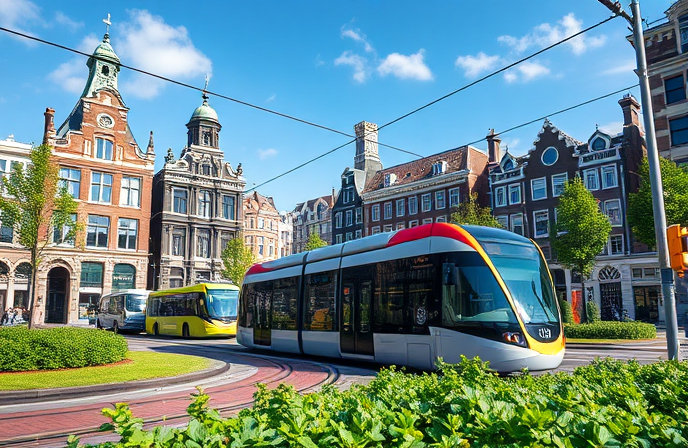
GVB Awarded Amsterdam Public Transport Concession: Expanding Services and Embracing Sustainability
Amsterdam’s public transport network is poised for significant expansion and modernization. In a move signaling continued commitment to accessible and sustainable mobility, the Amsterdam Transport Region has directly awarded GVB, the city’s longstanding public transport operator, the concession contract to manage bus, tram, and metro services. This award, effective July 1st, 2024, but with service changes commencing March 29th, 2026, guarantees a 4% increase in on-street public transport availability. The decision underscores GVB’s crucial role in serving a population of 900,000 in Amsterdam, including its metropolitan area, ensuring the city’s continued growth and liveability. This article explores the details of the new concession, examining the planned service expansions, the sustainability goals, and the future of Amsterdam’s integrated public transport system.
Service Expansion and Enhanced Frequency
The cornerstone of the new concession is the ambitious expansion of Amsterdam’s public transport network. From March 2026, passengers will experience an immediate uplift in service frequency, with buses, trams, and metros running more often. This initial boost is just the beginning. In 2027, the focus will shift to optimizing metro service frequencies, aiming to accommodate increasing passenger numbers comfortably. The ultimate goal is to transform high-demand routes into high-quality public transport (HOV) lines, which are characterized by exceptionally frequent services, dedicated right-of-way, and high operational reliability, thereby enhancing the overall passenger experience.
Sustainability at the Forefront
GVB’s renewed concession places a strong emphasis on environmental sustainability. Key objectives include significantly reducing energy consumption across all operational aspects, fostering a circular economy through optimized resource utilization, and enhancing the network’s resilience to extreme weather events driven by climate change. These measures align with the broader European Union and Dutch national environmental targets, underlining Amsterdam’s commitment to becoming a leading sustainable city. Detailed plans for implementing these sustainability initiatives are expected to be revealed in the coming months.
Detailed Network Overview
GVB operates a detailed public transport network in Amsterdam. The metro network, comprising five lines and spanning 42.7 km with 39 stations, is a crucial component of the city’s transit infrastructure. The tram system is equally extensive, covering the majority of Amsterdam with a 200 km network and 500 stops, excluding the Amsterdam-Noord and Zuidoost districts. In addition to these services, GVB provides extensive bus services throughout the metropolitan area, including a free ferry service across the IJ waterway connecting Amsterdam Centraal station with Amsterdam-Noord, which provides a vital link to the region. These various services are integral to maintaining Amsterdam’s high standard of public transport.
Technological and Operational Considerations
The successful implementation of the concession requires significant technological and operational adjustments. These include investments in rolling stock, such as modern low-floor trams and energy-efficient buses; enhancements to signaling and communication systems to facilitate increased frequencies and improve operational efficiency; and the integration of smart ticketing and real-time passenger information systems. Additionally, GVB must address the challenges posed by aging infrastructure, ensuring the long-term reliability and safety of the network. This will likely involve adopting predictive maintenance strategies, which use data analytics to anticipate and mitigate potential failures before they occur. The concession presents an opportunity for GVB to leverage technological advancements and best practices.
Conclusion
The direct award of the public transport concession to GVB marks a pivotal moment for Amsterdam’s public transit landscape. This renewed commitment ensures service expansion, prioritizes sustainability, and enhances the overall passenger experience. The upcoming increase in transport availability and the long-term focus on improved metro frequencies position Amsterdam’s public transport system for continued growth and enhanced accessibility, supporting the city’s future. The industry implications are far-reaching, with other cities facing similar challenges potentially considering the Dutch model of directly awarding concessions as a successful strategy. The ongoing development also underlines a growing focus on public transportation’s essential role in urban development. The future outlook is promising, with the ambition to elevate the city’s network to the status of a globally recognized and highly efficient transit system, improving connectivity and promoting sustainable mobility.

Railway infrastructure, rolling stock and transport technologies specialist focused on global rail industry developments, high-speed rail systems, signaling technologies and freight transportation. Covering railway investments, public transport modernization, rail operations and international mobility projects across Europe, Asia and North America.
RELATED POSTS

October 8, 2026 1:15 pm
Alstom secured a €1bn contract to build 13 automated trains,...

October 1, 2026 7:09 am
United States regulators confirmed a September 30 deadline for the...

October 4, 2026 5:14 pm
Alstom secured a CA$4.7 billion order from VIA Rail Canada...

October 5, 2026 6:12 pm
AECOM and Jacobs secured a contract in September 2026 to...

October 4, 2026 11:08 pm
Sound Transit confirmed the September 30 opening of Seattle Pinehurst...

October 1, 2026 12:13 am
Illinois approved $1.5 billion annually for the Northern Illinois Transit...