
Amazon’s Green Logistics Revolution: Rail, Sea & Sustainability
Amazon’s significant expansion of rail and sea freight in Europe aims to reduce carbon emissions and operational costs by doubling utilization through new routes, highlighting the company’s sustainability goals and strategic shift towards more efficient intermodal solutions.
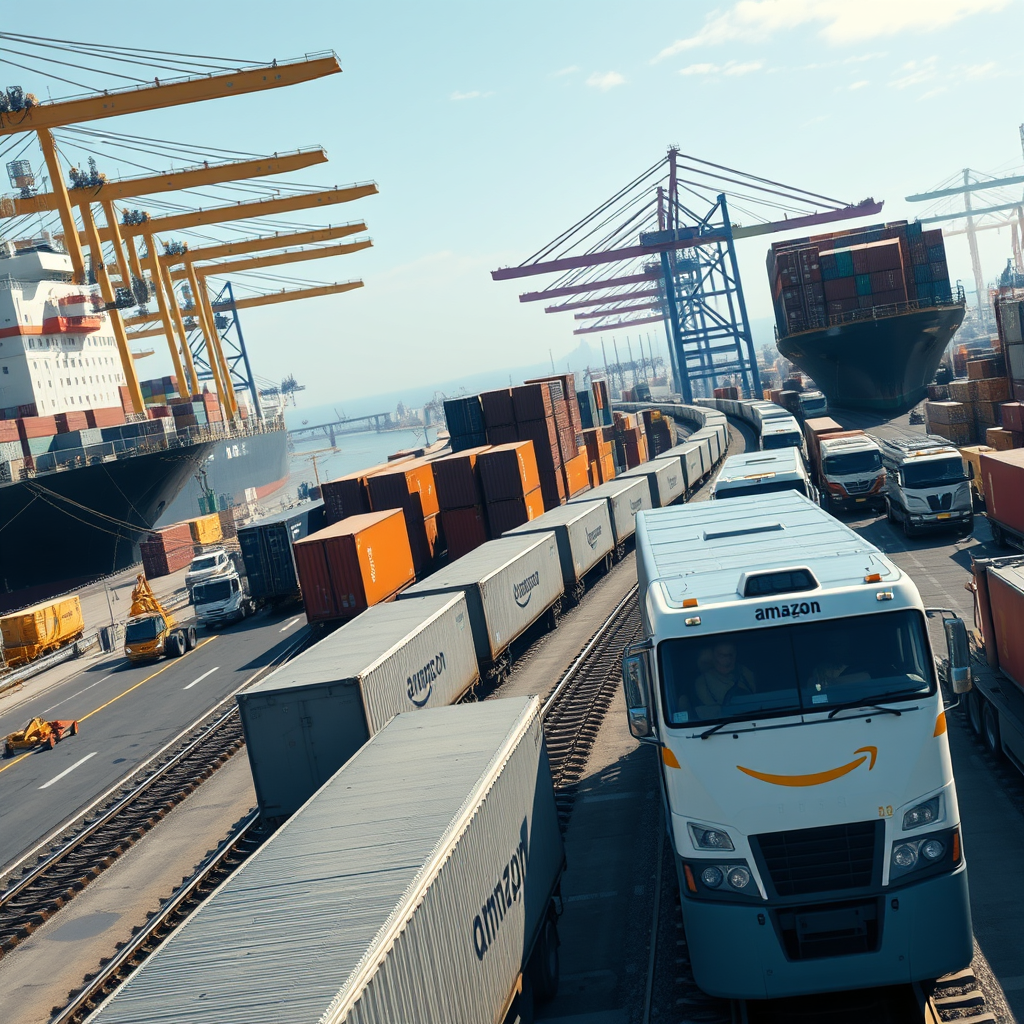
This article examines Amazon’s significant expansion of rail and sea freight transport across Europe, a strategic move driven by environmental sustainability goals and operational efficiency. The company’s ambitious plan involves a 50% increase in rail and sea transport utilization in 2023, achieved through the addition of over 100 new rail routes and 300 shipping routes. This substantial shift away from road-based transportation represents a major undertaking in the logistics sector, highlighting the growing importance of intermodal solutions (combining different modes of transport) in reducing carbon emissions and optimizing supply chains. The implications for the European railway industry, the environmental impact, and the operational challenges involved in such a large-scale modal shift will be explored in detail. The analysis will delve into the partnerships forged with various European rail and shipping carriers, the technological considerations, and the long-term sustainability of this approach.
Amazon’s Intermodal Transportation Strategy
Amazon’s decision to significantly increase its reliance on rail and sea freight is a strategic response to both environmental concerns and the increasing cost and efficiency challenges of road transport. The company’s stated goal of reducing its carbon footprint by nearly 50% underscores the environmental imperative driving this change. By shifting long-haul transport from road to rail and sea, Amazon leverages the inherent efficiency gains associated with these modes. Rail transport, in particular, offers significant advantages in terms of capacity, energy efficiency (especially when electric locomotives are utilized), and reduced congestion compared to road networks. This modal shift is not simply about replacing trucks; it represents a carefully orchestrated integration of various modes, utilizing rail and sea for long-distance haulage and road transport for the “first and last mile” operations (delivery to and from rail/sea terminals).
Partnerships and Operational Logistics
The success of Amazon’s ambitious transportation plan hinges on strong collaborations with key players in the European rail and shipping industries. The company has partnered with a diverse range of carriers, including Cargo Beamer, VIIa, Mercitalia Group, Grimaldi, Stena Line, and DFDS, demonstrating a commitment to building a robust and geographically diverse intermodal network. Effective coordination between these partners is crucial for seamless operations, ensuring timely and efficient transfer of goods between different modes of transport. This requires sophisticated logistics planning, real-time tracking systems, and robust communication channels to manage the complexities of intermodal transport.
Technological Advancements and Sustainability
The expansion of Amazon’s rail and sea freight operations is intertwined with advancements in Intelligent Transportation Systems (ITS). The use of real-time tracking, predictive analytics, and optimized route planning are all crucial components of efficient intermodal transport. Additionally, the increasing adoption of electric locomotives in rail freight transport enhances the environmental benefits of this modal shift. Electric traction significantly reduces greenhouse gas emissions compared to diesel locomotives, aligning with Amazon’s sustainability goals. However, challenges remain in terms of infrastructure development and the availability of electrified rail lines across the entire transport network.
Challenges and Future Outlook
While Amazon’s initiative represents a significant step towards a more sustainable and efficient logistics model, several challenges remain. The “first and last mile” delivery problem, requiring trucks for the final stages of transportation, continues to pose a significant hurdle in completely eliminating road transport’s carbon footprint. Additionally, the integration of diverse rail and sea networks across Europe necessitates close collaboration with infrastructure providers and regulatory bodies to ensure smooth operations and minimize delays. Infrastructure limitations, including the availability of sufficient rail capacity and suitable port facilities, need to be addressed to support the continued growth of Amazon’s intermodal transport system. Future success will depend on continuous investment in infrastructure, technological advancements, and ongoing collaboration with partners across the transportation ecosystem. The ongoing development of advanced ITS solutions, the wider adoption of electric and alternative fuel locomotives, and the improvement of cross-border logistics processes will be critical in optimizing efficiency and minimizing the environmental impact of this innovative strategy.
Conclusions
Amazon’s 50% increase in rail and sea freight in 2023 marks a pivotal moment in the European logistics landscape, demonstrating a significant commitment to sustainability and operational efficiency. The strategic shift away from road transport, facilitated through collaborations with multiple carriers and leveraging technological advancements in ITS, represents a large-scale application of intermodal solutions. While the complete elimination of road transport’s environmental footprint remains a challenge due to the persistent necessity of “first and last mile” delivery, Amazon’s initiative paves the way for a greener and more efficient future for e-commerce logistics. The success of this ambitious undertaking hinges on ongoing investment in infrastructure, technological improvements, and sustained cooperation across the entire transportation ecosystem. The expansion of electrified rail networks, improved port infrastructure, and the continued development of innovative logistics technologies will be essential to further enhance efficiency and minimize the environmental impact of the supply chain. This initiative serves as a potent example for other large-scale enterprises, encouraging a broader shift towards environmentally responsible and operationally optimized intermodal transport strategies across the European Union and beyond. The long-term success of Amazon’s approach will serve as a benchmark for the wider adoption of sustainable logistics practices within the e-commerce and freight industry.

Railway infrastructure, rolling stock and transport technologies specialist focused on global rail industry developments, high-speed rail systems, signaling technologies and freight transportation. Covering railway investments, public transport modernization, rail operations and international mobility projects across Europe, Asia and North America.
RELATED POSTS

October 8, 2026 1:15 pm
Alstom secured a €1bn contract to build 13 automated trains,...

October 1, 2026 7:09 am
United States regulators confirmed a September 30 deadline for the...

October 4, 2026 5:14 pm
Alstom secured a CA$4.7 billion order from VIA Rail Canada...

October 8, 2026 12:18 pm
Siemens Mobility signed an agreement with VinSpeed to supply 350...

October 5, 2026 6:12 pm
AECOM and Jacobs secured a contract in September 2026 to...

October 4, 2026 11:08 pm
Sound Transit confirmed the September 30 opening of Seattle Pinehurst...