
Ozinga Opens 1M-Ton Slag Cement Mill in East Chicago
Ozinga launched a 1-million-ton slag cement mill in East Chicago, connecting to the Indiana Harbor Belt Railroad to reach all six Class I freight railroads.
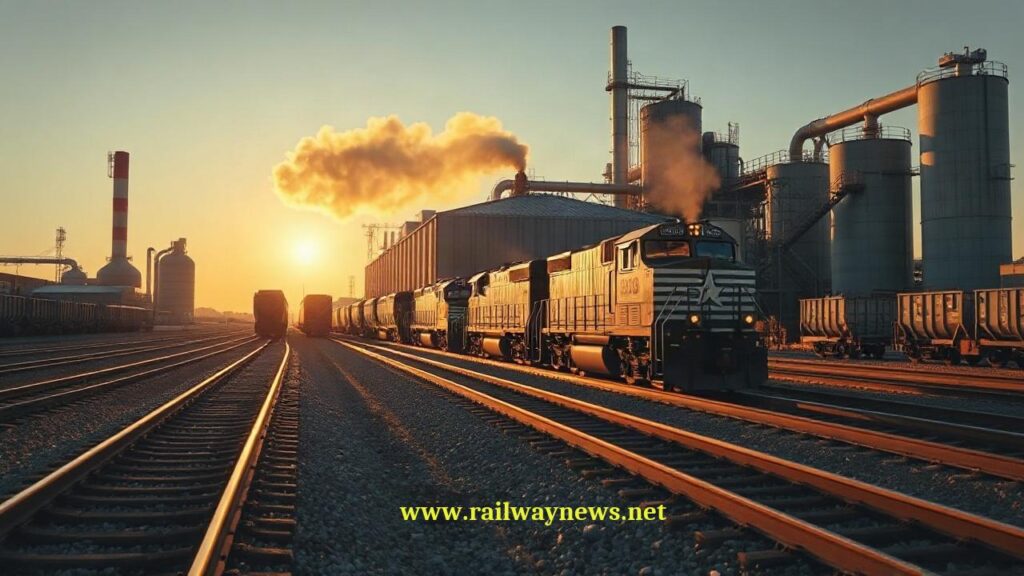
⚡ In Brief: Ozinga has commissioned a new slag cement mill in East Chicago, Indiana, generating 1 million tons annually with direct interchange to all North American Class I railroads via the Indiana Harbor Belt Railroad.
EAST CHICAGO, UNITED STATES – Materials producer Ozinga commissioned a 1-million-ton annual capacity low-carbon slag cement grinding facility in East Chicago, Indiana, in early 2025. The plant connects directly to the Indiana Harbor Belt Railroad network to provide neutral switching access across all six North American Class I rail carriers. Production operations at the site are projected to eliminate over 700,000 metric tons of carbon dioxide emissions annually through slag recycling (Source: PR Newswire, 2025).
What Is the Full Scope of This Project?
The East Chicago facility operates as a dedicated slag cement manufacturing mill engineered to output 1 million tons of finished product per year. The facility converts industrial blast furnace slag into supplementary cementitious materials, directly displacing carbon-intensive Portland cement clinker for regional infrastructure projects. Rail connectivity forms the backbone of the inbound and outbound logistics chain, relying on the Indiana Harbor Belt Railroad (IHB) to route carloads to BNSF Railway, Union Pacific, Norfolk Southern, CSX, Canadian National, and Canadian Pacific Kansas City. Total financial investment for the facility’s construction was not disclosed by Ozinga.
Key Project Data
| Parameter | Value |
|---|---|
| Project / Contract Name | East Chicago Slag Cement Mill |
| Total Value | Not disclosed |
| Parties Involved | Ozinga, Indiana Harbor Belt Railroad (IHB) |
| Timeline / Completion | Operational (Commissioned 2025) |
| Country / Corridor | United States / Chicago Rail Hub (East Chicago, Indiana) |
How Does This Compare to Similar Projects?
Comparable capital expenditure data for this specific grinding plant was not publicly available at time of publication. However, heavy manufacturing facilities across the Midwest are increasingly utilizing rail to bypass highway congestion, as demonstrated by materials producer GOEX moving 74% of its inbound bulk inventory via freight rail lines in 2025 (Source: GOEX, 2025). Connecting to the 54-mile IHB mainline gives the East Chicago site equal terminal access to Class I interchanges, contrasting with single-carrier captive cement terminals that experience higher localized tariff volatility. On an environmental scale, the facility’s verified offset of 700,000 metric tons of CO₂ matches broader decarbonization efforts across the heavy construction sector (Source: PR Newswire, 2025).
Editor’s Analysis
Securing direct access to the Indiana Harbor Belt Railroad allows Ozinga to mitigate truck driver capacity shortages while positioning itself to ship bulk materials nationwide at lower per-ton-mile freight rates. By anchoring low-carbon slag production within the premier switching nexus of North America, the company gains strategic leverage as domestic infrastructure projects mandate lower embodied carbon. The move aligns with wider transportation shifts as industrial manufacturers locate major processing plants on short-line trackage to capture flexible Class I routing options (Source: Business Research Insights, 2025).
FAQ
Q: Which railway network directly serves the new Ozinga cement plant?
A: The mill is served directly by the Indiana Harbor Belt Railroad, an intermediate switching line that provides interchange connections to all six Class I freight railroads operating in North America.
Q: What is the total production output of the East Chicago facility?
A: The facility is designed to manufacture 1 million tons of low-carbon slag cement per year. The total capital expenditure required to construct the mill was not disclosed.
Q: How much carbon dioxide does the new facility offset?
A: The East Chicago plant is projected to offset more than 700,000 metric tons of CO₂ emissions annually by recycling blast furnace slag into construction-grade cement.

Railway infrastructure, rolling stock and transport technologies specialist focused on global rail industry developments, high-speed rail systems, signaling technologies and freight transportation. Covering railway investments, public transport modernization, rail operations and international mobility projects across Europe, Asia and North America.
RELATED POSTS

October 8, 2026 1:15 pm
Alstom secured a €1bn contract to build 13 automated trains,...

October 1, 2026 7:09 am
United States regulators confirmed a September 30 deadline for the...

October 4, 2026 5:14 pm
Alstom secured a CA$4.7 billion order from VIA Rail Canada...
October 8, 2026 12:18 pm
Siemens Mobility signed an agreement with VinSpeed to supply 350...

October 1, 2026 12:13 am
Illinois approved $1.5 billion annually for the Northern Illinois Transit...
October 5, 2026 6:12 pm
AECOM and Jacobs secured a contract in September 2026 to...