
Alstom’s Green Rail Revolution: Canada’s Innovation Hub
Alstom establishes a new innovation center in Canada focused on developing green propulsion technologies for the North American rail market, driven by strategic partnerships with leading research institutions like HRI of UQTR and McGill University’s Sustainable Growth Initiative, aiming to revolutionize green rail mobility.
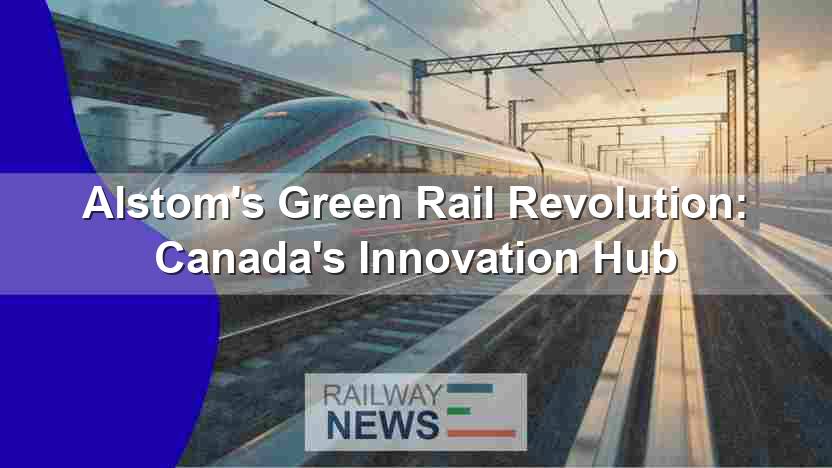
The global railway industry is undergoing a significant transformation driven by the urgent need for sustainable and environmentally friendly transportation solutions. This shift is compelling manufacturers to invest heavily in research and development of green technologies for rail vehicles. This article examines Alstom’s establishment of a new innovation center in Canada, specifically focusing on the development of green propulsion technologies for the North American rail market. We will explore the center’s strategic location, its collaborative partnerships with leading research institutions, the anticipated technological advancements, and the overall significance of this initiative within the broader context of the global transition towards sustainable rail transportation. The implications for the North American rail freight and passenger sectors, the potential for job creation, and the innovative technological approaches employed will be discussed in detail, ultimately assessing the center’s potential to revolutionize green rail mobility.
Green Propulsion Technologies for the North American Market
Alstom’s new innovation center in St-Bruno-de-Montarville, Quebec, represents a significant commitment to developing and deploying environmentally friendly rail technologies in North America. The center’s primary focus is on creating next-generation platforms utilizing hybrid, battery, and hydrogen propulsion systems. This aligns perfectly with the growing demand for reducing greenhouse gas emissions from the transportation sector and meeting increasingly stringent environmental regulations. The center’s strategic location within Quebec provides access to a robust ecosystem of research institutions and industrial partners specialized in battery and hydrogen technologies, fostering collaboration and accelerating innovation.
Collaboration and Partnerships: Fostering Innovation
The success of Alstom’s innovation center hinges on strategic collaborations. The partnership with the Hydrogen Research Institute (HRI) of the Université du Québec à Trois-Rivières (UQTR) is crucial for addressing the challenges associated with hydrogen refueling infrastructure and operational ecosystems. This collaboration will ensure the feasibility and practicality of hydrogen-powered rail systems. Additionally, Alstom’s involvement in McGill University’s Sustainable Growth Initiative further strengthens its commitment to sustainable transportation and provides access to advanced research and expertise in green technologies. These collaborations underscore the importance of academia-industry partnerships in driving technological advancements.
Technological Advancements and Expected Outcomes
The center is equipped with state-of-the-art virtual and augmented reality (VR/AR) equipment, enabling engineers to design, test, and optimize new propulsion systems efficiently. This technology significantly accelerates the development process and reduces the need for physical prototypes, contributing to cost savings and faster time-to-market. The anticipated creation of approximately 80 jobs over the coming years signifies a substantial investment in skilled labor and the growth of the Canadian green technology sector. The center’s focus on adapting technologies to the unique geographic, climatic, and regulatory conditions of North America guarantees the practical applicability and effectiveness of the developed solutions.
Economic and Environmental Impact: A Sustainable Future for Rail
The establishment of Alstom’s innovation center holds significant economic and environmental implications. The creation of high-skilled jobs contributes to regional economic growth and strengthens Quebec’s position as a leader in green technology. The development and deployment of green rail technologies will significantly reduce greenhouse gas emissions from the North American rail sector, contributing to global efforts to combat climate change. The center’s focus on hybrid, battery, and hydrogen propulsion systems offers a diversified approach to sustainable transportation, providing options tailored to different operational requirements and geographical contexts. This diverse approach allows for a more adaptable and resilient railway system capable of accommodating various operational scenarios while minimizing its environmental impact.
Conclusion
Alstom’s new innovation center in Canada marks a pivotal moment in the transition towards sustainable rail transportation in North America. The center’s focus on green propulsion technologies, coupled with its strategic partnerships with leading research institutions and access to cutting-edge VR/AR technology, positions Alstom at the forefront of innovation in the railway industry. The development of hybrid, battery, and hydrogen-powered rail systems will not only reduce greenhouse gas emissions but also create significant economic opportunities and contribute to the growth of a skilled workforce in the green technology sector. The center’s success hinges on its ability to overcome technological challenges and adapt its solutions to the specific needs of the North American market. By fostering collaboration, investing in research and development, and embracing innovative technologies, Alstom’s initiative serves as a model for other railway manufacturers seeking to build a more sustainable and environmentally responsible future for rail transportation. The long-term implications of this initiative extend beyond the immediate economic and environmental benefits; it will likely influence the future landscape of rail transportation globally, promoting a widespread shift towards sustainable practices across the industry. The center’s success will ultimately depend on the effective integration of innovative technologies, collaborative research, and a steadfast commitment to sustainability, setting a benchmark for future endeavors in the field of green rail mobility.

Railway infrastructure, rolling stock and transport technologies specialist focused on global rail industry developments, high-speed rail systems, signaling technologies and freight transportation. Covering railway investments, public transport modernization, rail operations and international mobility projects across Europe, Asia and North America.
RELATED POSTS

October 8, 2026 1:15 pm
Alstom secured a €1bn contract to build 13 automated trains,...

October 1, 2026 7:09 am
United States regulators confirmed a September 30 deadline for the...

October 8, 2026 12:18 pm
Siemens Mobility signed an agreement with VinSpeed to supply 350...

October 4, 2026 5:14 pm
Alstom secured a CA$4.7 billion order from VIA Rail Canada...

October 5, 2026 6:12 pm
AECOM and Jacobs secured a contract in September 2026 to...

October 4, 2026 11:08 pm
Sound Transit confirmed the September 30 opening of Seattle Pinehurst...