
Alstom’s €2.6B DSB Deal: Shaping European Rail
Alstom’s €2.6 billion contract with DSB for 100 Coradia Stream regional trains represents a landmark deal that underscores the company’s strategic success in securing large-scale projects and expanding its market position within Europe’s rail industry, particularly in Denmark.
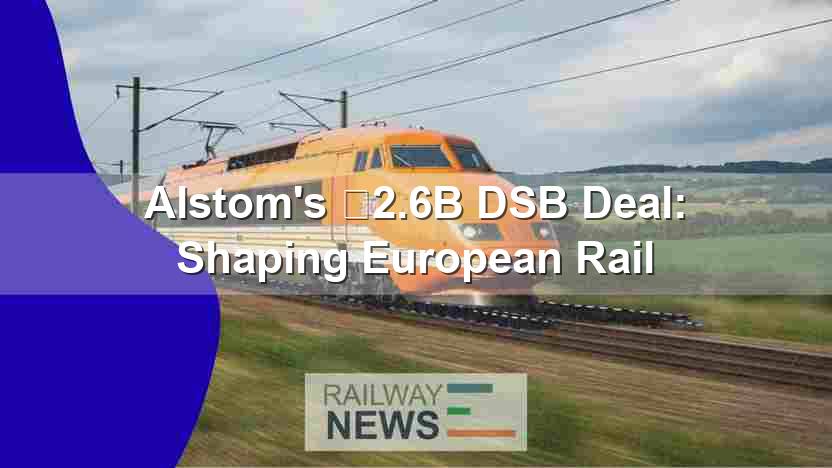
This article examines Alstom’s recent significant contract with the Danish State Railways (DSB), focusing on the implications for the company’s strategic positioning within the European rail market. The contract, valued at €2.6 billion, involves the supply of 100 Coradia Stream regional trains and a detailed 15-year maintenance agreement. This deal represents the largest train order in Danish history, highlighting Alstom’s success in securing large-scale projects and underscores the growing demand for modern, high-performance rolling stock across Europe. Beyond the DSB contract, the article will also briefly explore Alstom’s other recent successes, including the deployment of its Atlas onboard signalling system and the expansion of its manufacturing capabilities in Australia, to provide a detailed overview of the company’s strategic growth trajectory. The analysis will delve into the technological advancements incorporated into the Coradia Stream trains, the importance of long-term maintenance agreements, and the broader implications for the future of sustainable and efficient rail transportation within Denmark and beyond.
The DSB Coradia Stream Contract: A Landmark Deal
Alstom’s €2.6 billion contract with DSB for 100 Coradia Stream trains represents a significant win, not only in terms of revenue but also in terms of solidifying Alstom’s position as a leading supplier of regional trains in Europe. The Coradia Stream platform is a modular, low-floor, high-performance electric multiple unit (EMU), offering flexibility in configuration and interior design to meet specific operator requirements. This adaptability allows DSB to tailor the trains to the demands of the Danish rail network, including the specific needs of the Frederikshavn to Rødby route. The deal also includes a 15-year full-service maintenance contract (€1.4 billion), demonstrating the growing importance of long-term partnerships and service provision in the rail industry. This detailed approach minimizes DSB’s operational risk and ensures the long-term availability and reliability of the new fleet. The option for additional trainsets further highlights the success of the Coradia Stream platform and its potential for future expansion within the Danish rail network. The trains, each with a capacity of 300 passengers, will operate at a top speed of 200 km/h, significantly improving journey times and passenger comfort.
Technological Advancements and Sustainability
The Coradia Stream trains are equipped with advanced technologies, enhancing their performance and efficiency. Significantly, they are pre-equipped with Alstom’s Atlas onboard European Train Control System (ETCS) Baseline 3 and a Specific Transmission Module (STM) interface. ETCS (European Train Control System) is a crucial component of modern railway signalling systems, enhancing safety and operational efficiency. The integration of Atlas, Alstom’s latest onboard signalling solution, ensures seamless integration with the broader Danish rail infrastructure. Additionally, the modular design of the Coradia Stream platform allows for future upgrades and adaptations to incorporate emerging technologies. Alstom emphasizes the platform’s adaptability to emission-free solutions, such as battery or hydrogen power, for non-electrified lines. This forward-thinking approach aligns with the increasing focus on sustainable and environmentally friendly transportation solutions.
Strategic Implications for Alstom
The DSB contract is a pivotal achievement for Alstom, showcasing the company’s ability to secure substantial, complex projects. The contract’s value and scope underscore Alstom’s leading position in the European rail market. The success of the Coradia Stream platform, with nearly 400 trains already ordered across several European countries, further validates its effectiveness and market appeal. The deal solidifies Alstom’s long-term relationship with DSB, showcasing the company’s commitment to providing detailed solutions beyond simply supplying rolling stock. The inclusion of the extensive maintenance agreement signifies a move towards integrated service provision, a crucial element in modern rail operations, ensuring the smooth and efficient running of the entire system for years to come. This long-term perspective further secures Alstom’s revenue stream and establishes itself as a key player in the Danish rail sector.
Beyond DSB: Expanding Alstom’s Global Reach
Alstom’s recent activities extend beyond the DSB contract, illustrating a broader strategy of global expansion and technological innovation. The company secured a contract to deploy its Atlas onboard signalling system in 50 Vossloh DE 18 freight locomotives, showcasing its success in the freight sector. Additionally, the acquisition and commencement of operations at the Bellevue Metronet railcar facility in Perth, Australia, demonstrates Alstom’s commitment to expanding its global manufacturing footprint. These initiatives, alongside the DSB deal, showcase Alstom’s commitment to not only providing innovative railway technologies, but also securing long-term partnerships and strengthening its position as a global leader in the rail industry.
Conclusion
Alstom’s substantial contract with DSB for 100 Coradia Stream trains marks a significant milestone for the company. The €2.6 billion deal, representing the largest train contract in Danish history, not only showcases Alstom’s ability to secure large-scale projects but also highlights the growing demand for modern, high-performance regional trains. The inclusion of a detailed 15-year maintenance agreement underscores the increasing importance of long-term partnerships and service provision within the rail sector. The Coradia Stream platform’s technological advancements, including the integration of Alstom’s Atlas onboard signalling system and the platform’s adaptability to emission-free solutions, position Alstom at the forefront of sustainable and efficient rail transportation. Additionally, Alstom’s expansion into new markets and its success in securing contracts outside of the DSB deal, demonstrate a broader strategic expansion across various sectors and geographies. The success of this landmark contract signifies Alstom’s continued growth and its role in shaping the future of European rail transportation.

Railway infrastructure, rolling stock and transport technologies specialist focused on global rail industry developments, high-speed rail systems, signaling technologies and freight transportation. Covering railway investments, public transport modernization, rail operations and international mobility projects across Europe, Asia and North America.
RELATED POSTS

October 8, 2026 1:15 pm
Alstom secured a €1bn contract to build 13 automated trains,...

October 1, 2026 7:09 am
United States regulators confirmed a September 30 deadline for the...

October 8, 2026 12:18 pm
Siemens Mobility signed an agreement with VinSpeed to supply 350...

October 4, 2026 5:14 pm
Alstom secured a CA$4.7 billion order from VIA Rail Canada...

October 5, 2026 6:12 pm
AECOM and Jacobs secured a contract in September 2026 to...

October 4, 2026 11:08 pm
Sound Transit confirmed the September 30 opening of Seattle Pinehurst...