
Alstom Upgrades Portsmouth Line: Digital Boost for UK Commuters
Alstom completes the Portsmouth Direct Line upgrade with a EUR 57 million digital signalling system, enhancing reliability and safety for commuters.
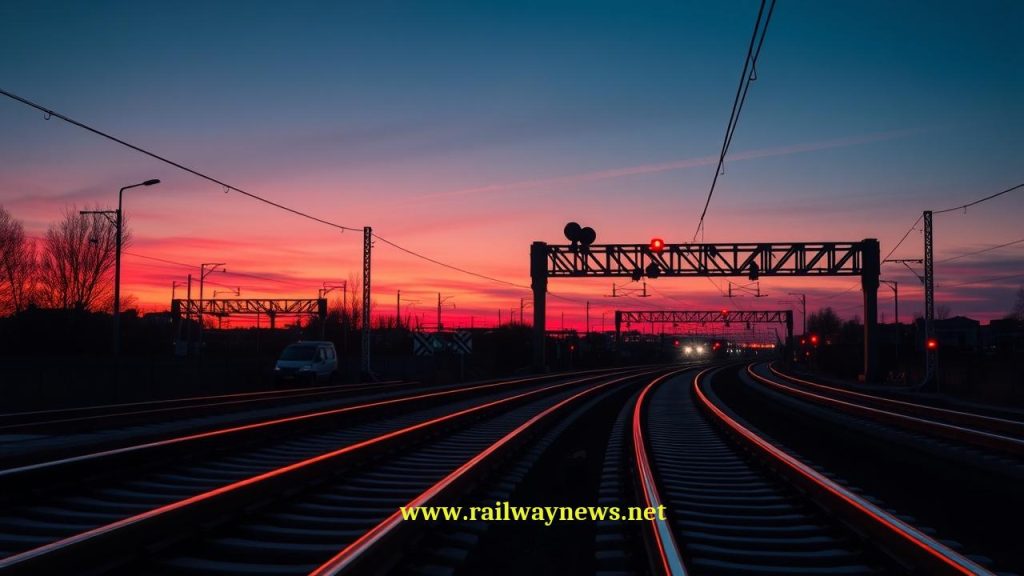
LONDON, UK – Alstom has successfully delivered a pivotal EUR 57 million digital signalling upgrade on the UK’s Portsmouth Direct line, concluding a multi-year, GBP 129 million investment program by Network Rail to modernise one of southern England’s busiest commuter routes. The project replaces 150-year-old infrastructure with cutting-edge technology, enhancing service reliability and safety for passengers travelling between London Waterloo and the south coast.
| Category | Details |
|---|---|
| Project | Portsmouth Direct Line Upgrade – Farncombe to Petersfield Signalling |
| Client | Network Rail |
| Lead Contractor | Alstom |
| Contract Value (Alstom) | EUR 57 Million |
| Total Program Investment | GBP 129 Million |
| Key Technologies | Digital Interlockings, Axle Counters, SmartIO, LED Signals, Obstacle Detection |
| Commissioning Date | November 2025 (Main) / Early December 2025 (Final Level Crossing) |
Alstom has completed the final stage of Network Rail’s Portsmouth Direct Upgrade, a detailed modernisation of the railway section between Farncombe, Surrey, and Petersfield, Hampshire. The work, commissioned during a nine-day line closure in November 2025, involved replacing life-expired equipment with a state-of-the-art digital signalling system. Control of the line has now been transferred from three local signal boxes to Network Rail’s high-tech Railway Operations Centre (ROC) in Basingstoke, centralising operations and improving efficiency. During the blockade, Alstom teams tested and commissioned 90 new LED signals, installed over 30 km of cable, and activated 17 technical buildings equipped with digital controllers.
The technical scope of the project introduces significant safety and sustainability benefits. Eleven level crossings were modernised, with seven now featuring advanced obstacle detection technology. In a key technological shift, traditional track circuits were replaced with modern axle counters, a move that improves train detection reliability and reduces the system’s energy consumption by approximately 50%. Additionally, Alstom deployed its SmartIO digital system, which connects trackside equipment to the central control system without the need for power-hungry heating or air conditioning in lineside buildings, further reducing emissions and long-term operating costs. These upgrades are designed to be “future-proof,” preparing the line for potential future integration with the European Train Control System (ETCS).
This project’s completion is a key part of Network Rail’s wider strategy of using planned, intensive engineering blockades to deliver vital infrastructure improvements with minimal long-term disruption, a tactic frequently employed during quieter periods like Christmas and New Year. “Since 2022, we have been delivering an extensive modernization program on the Portsmouth Direct line,” said Tom Desmond, Network Rail’s chief operating officer. “This £129 million investment brings the route into the modern era… and will reduce the need for future closures.” The project was delivered under the Major Signalling Framework Agreement (MSFA) for the southern region, awarded to Alstom in 2020, underscoring the long-term strategic partnership between the two organisations.
Key Takeaways
- Enhanced Reliability: The replacement of 150-year-old equipment with digital interlockings and modern components is set to significantly reduce signal failures and delays on a critical commuter line.
- Improved Safety: Modernisation of 11 level crossings with obstacle detection and CCTV, alongside the shift to more reliable axle counters, enhances safety for passengers, road users, and maintenance staff.
- Sustainable Operations: The introduction of energy-efficient technologies like axle counters and Alstom’s SmartIO system will cut energy consumption by up to 50% and lower overall operational costs.
Editor’s Analysis
The successful delivery of the Portsmouth Direct Line upgrade is more than a routine modernisation; it serves as a critical blueprint for the UK’s digital railway transition. This project demonstrates how a major network operator can partner with a technology leader like Alstom to execute a complex brownfield migration, replacing Victorian-era infrastructure with future-ready digital systems on a heavily trafficked line. The emphasis on integrated solutions that deliver tangible benefits in reliability, safety, and sustainability—particularly the significant energy reduction—aligns perfectly with global industry trends. For Alstom, this success strengthens its position within the UK’s MSFA framework and showcases its Onvia portfolio’s capability to de-risk and deliver the complex digital transformations that are essential for the future of rail transport worldwide.
Frequently Asked Questions
- What was the main purpose of the Portsmouth Direct Line upgrade?
- The primary goal was to replace 150-year-old, life-expired signalling equipment with a modern, digital system to improve service reliability, enhance safety at level crossings and for maintenance staff, and reduce long-term operational costs and energy consumption.
- How does the new technology improve the railway’s performance?
- The new digital system centralises control at the Basingstoke ROC for greater efficiency. LED signals improve visibility, axle counters are more reliable and energy-efficient than track circuits, and modernised level crossings with obstacle detection significantly boost safety.
- Who were the main partners in this project?
- The project was part of a GBP 129 million investment program by Network Rail, the UK’s railway infrastructure owner. Alstom was the lead contractor responsible for delivering the EUR 57 million signalling system upgrade.

Railway infrastructure, rolling stock and transport technologies specialist focused on global rail industry developments, high-speed rail systems, signaling technologies and freight transportation. Covering railway investments, public transport modernization, rail operations and international mobility projects across Europe, Asia and North America.
RELATED POSTS

October 1, 2026 7:09 am
United States regulators confirmed a September 30 deadline for the...

October 8, 2026 1:15 pm
Alstom secured a €1bn contract to build 13 automated trains,...

October 4, 2026 5:14 pm
Alstom secured a CA$4.7 billion order from VIA Rail Canada...

October 1, 2026 12:13 am
Illinois approved $1.5 billion annually for the Northern Illinois Transit...

October 6, 2026 2:14 am
Union Pacific launched export rail shipments with Ferromex to deliver...

October 1, 2026 6:10 am
Amtrak approved a System Expansion Committee on July 30 to...