
Alstom Delivers 52-Meter Trains Doubling Lille Metro Capacity
Alstom launched 52-meter automated trains for Lille Metro Line 1, doubling capacity starting February 2024.
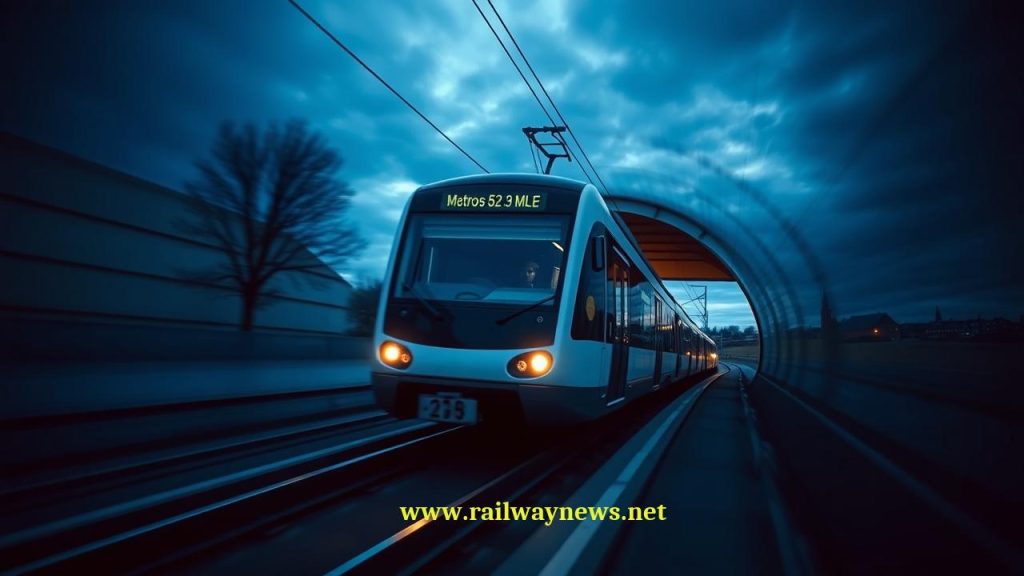
⚡ In Brief: Alstom has delivered new 52-meter automated trains for Line 1 of the Lille metro in France, a project which doubles the line’s capacity to accommodate rising passenger numbers without increasing train frequency.
LILLE, FRANCE – Operator Keolis Lille ilévia, in partnership with Alstom, has commenced commercial service of new 52-meter automated trains on Line 1 of the Lille metro network as of February 2024. This upgrade doubles the capacity of each trainset, a key part of a modernization program for one of the world’s first VAL (Véhicule Automatique Léger) systems.
What Are the Technical Specifications?
The core of the project is the introduction of 52-meter trainsets, which effectively couple two shorter units to double capacity on the existing automated infrastructure. This strategy allows the operator to manage increased passenger flows without undertaking more complex and costly upgrades to the signalling system that would be required to increase train frequency. The legacy VAL 208 trains from Line 1 are being systematically transferred to Line 2 to improve service levels across the network. The total value of the rolling stock contract was not disclosed.
Key Technical Data
| Parameter | Value |
|---|---|
| Technology / System Name | Alstom 52m automated metro trains for VAL system |
| Total Value | Not disclosed |
| Parties Involved | Métropole Européenne de Lille, Alstom, Keolis Lille ilévia |
| Timeline / Completion | In service from February 2024 |
| Country / Corridor | France / Lille Metro Line 1 |
Where Does This Technology Stand in the Market?
The upgrade of Lille’s pioneering VAL system is indicative of a wider trend in modernizing first-generation automated metros. While Alstom is the provider for this upgrade, the global market for automated metro technology is competitive. Siemens Mobility, which acquired the original VAL technology from Matra, now offers modern systems like Cityval, used in airport and urban applications. Another major competitor, Hitachi Rail, has successfully deployed its driverless metro platform in cities such as Copenhagen, Milan, and Honolulu. The Lille solution is a bespoke upgrade for a legacy system, whereas newer turnkey systems from competitors like Hitachi are often designed with modular train lengths from the outset to accommodate future growth.
Editor’s Analysis
This project in Lille demonstrates a capital-efficient strategy for scaling capacity on infrastructure built decades ago. By choosing to lengthen trains instead of increasing frequency, the operator avoids disruptive and expensive upgrades to signalling and power supply systems. This approach of maximising existing assets is a key theme in urban rail globally, as seen in projects like the MTA’s large-scale replacement of aging subway cars in New York to improve reliability and capacity on a century-old network. (Source: The New York Times).
FAQ
Q: How much does a new 52-meter train increase capacity?
A: The new 52-meter trains double the passenger capacity compared to the shorter VAL 208 trainsets previously used on Line 1. This allows the system to carry significantly more people per trip, particularly during peak demand.
Q: What was the total cost of the new trains for the Lille metro?
A: The total investment value for the new Alstom trains and the associated platform modifications required for their operation has not been publicly disclosed by the project partners.
Q: What happens to the old trains from Line 1?
A: The older VAL 208 trains are not being retired but are being redeployed to Line 2 of the Lille metro. This redistribution of assets allows for service enhancements and a better balance of resources across the entire network.

Railway infrastructure, rolling stock and transport technologies specialist focused on global rail industry developments, high-speed rail systems, signaling technologies and freight transportation. Covering railway investments, public transport modernization, rail operations and international mobility projects across Europe, Asia and North America.
RELATED POSTS

October 8, 2026 1:15 pm
Alstom secured a €1bn contract to build 13 automated trains,...

October 1, 2026 7:09 am
United States regulators confirmed a September 30 deadline for the...

October 8, 2026 12:18 pm
Siemens Mobility signed an agreement with VinSpeed to supply 350...

October 4, 2026 5:14 pm
Alstom secured a CA$4.7 billion order from VIA Rail Canada...

October 5, 2026 6:12 pm
AECOM and Jacobs secured a contract in September 2026 to...

October 1, 2026 12:13 am
Illinois approved $1.5 billion annually for the Northern Illinois Transit...