
Alicante Tram-Train Project: Spain, Integrated Rail Transit
Alicante’s Tram-Train system, a successful integrated rail project, seamlessly connects urban trams with regional lines, boosting mobility and economic growth. Railway sector news.
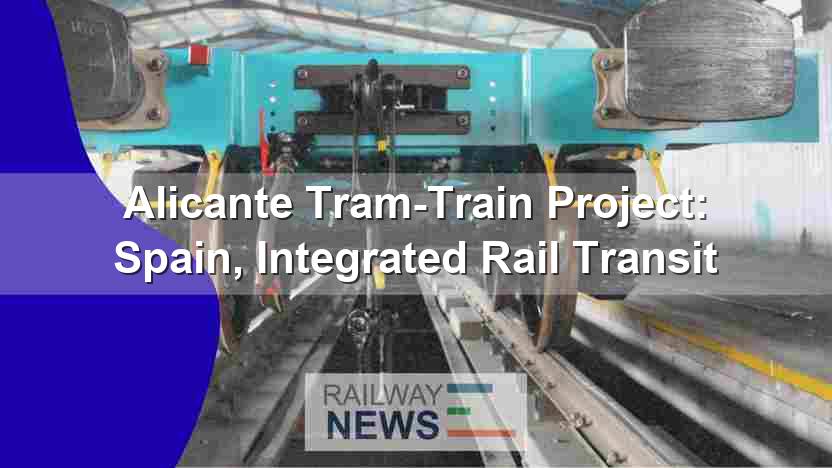
This article explores the development and implementation of the Alicante Tram-Train system, operated by Ferrocarriles de la Generalitat Valenciana (FGV) in Spain. The project represents a significant advancement in integrated public transport, seamlessly connecting urban tram services with regional rail lines. The ambitious undertaking aimed to improve mobility within Alicante, enhance accessibility to surrounding areas, and stimulate economic development along the corridor. We will analyze the various phases of the project, from its initial conception and infrastructure development to the introduction of modern rolling stock and the ongoing expansion plans. This examination will highlight both the successes and challenges encountered during the implementation of this innovative tram-train system, providing valuable insights for future similar projects globally. A key focus will be on the operational and technological aspects, encompassing electrification strategies, signaling systems, and the integration of different rail technologies to achieve efficient and seamless passenger journeys.
Phase 1: Initial Development and Electrification
The Alicante Tram-Train project commenced in 1999 with the initial installation of a tram line along Alicante’s seafront, operating from the city center to Alacant-Puerta del Mar. This initial phase, utilizing leased trams, served as a precursor to the larger-scale integration planned. A crucial step in 2001 was the approval of a €500 million masterplan that involved extending the tram line to connect with the existing Alicante to Denia railway line. The project also incorporated the electrification of the existing metre-gauge railway line to Altea (51km), enabling through-running of the tram-train service. The electrification of the 2.5km Alicante to La Albufereta seafront route, completed in March 1999 at 750V DC, exemplified the initial infrastructure improvements. This section was subsequently extended by 700m to Alacant-Puerta del Mar. The existing line from Albufereta to Altea underwent upgrades to support a maximum speed of 100km/h (60mph), maintaining the 750V DC electrification.
Phase 2: Rolling Stock and Infrastructure Expansion
The project’s second phase focused on the procurement of new rolling stock and significant infrastructure expansion. FGV ordered nine dual-mode light rail vehicles (LRVs) from Alstom, designed to operate at 70km/h (45mph) on tram lines and 100km/h (60mph) on the upgraded railway sections. These bi-directional LRVs, each 37m long with three articulated sections and four bogies (three powered), offer high passenger capacity (303 passengers, 99 seated). Alstom’s Valencia plant assembled the trains, sourcing mechanical parts and bogies locally, while traction equipment came from their Charleroi, Belgium facility. Additionally, the existing seafront tram line between La Marina and El Campello was reconstructed (2002-2003), and the initial 9.3km (5.8-mile) section to El Campello opened in spring 2004. Phase 2, costing €33.7 million, also involved the construction of underground stations at Museo Arqueológico and Mercado, built with marble finishes.
Phase 3: Underground Extensions and Intermodal Integration
This phase focused on extending the tram line underground and creating an intermodal transport hub. A significant aspect of this phase was the underground extension from La Goteta to a new multi-modal interchange at the RENFE (Red Nacional de Ferrocarriles Españoles – Spanish National Railway Network) main line station. Both the tram terminus and the RENFE station were built underground, with the surrounding area redeveloped as a major transport interchange. The third phase also involved extending the underground line from Mercado to the redeveloped RENFE main line station interchange using a cut-and-cover tunnel beneath Avenida de Alfonso el Sabio and Avenida General Marva, including an intermediate station at Plaza de los Luceros. This enhanced intermodal connectivity was designed to optimize passenger transfers between tram and mainline rail services.
Ongoing Development and Future Plans
The Alicante Tram-Train system continues to evolve. From 2005, tram-train services operated between Mercado and Villajoyosa, sharing tracks with Line 1 trams in the city but with limited stops before integrating with the upgraded metre-gauge railway. A shuttle service linked Mercado with the remaining seafront route to Puerta del Mar. Current plans focus on extending tram-train services from Villajoyosa to Altea, completing the initial vision of a detailed regional connection. Further extensions are being considered, including lines serving the city’s main hospital and university. These developments further highlight the ongoing commitment to expand the system’s reach and enhance its effectiveness in serving the region’s transport needs.
Project Summary
| Project Parameter | Details |
|---|---|
| Project Name | Alicante Tram-Train |
| Operator | Ferrocarriles de la Generalitat Valenciana (FGV) |
| Total Project Cost (approx.) | €500 million |
| Line Length (Phase 1 – initial completion) | 9.3km (5.8 miles) to El Campello; 51km (32 miles) to Altea (after upgrades) |
| Number of Stations (Phase 1) | 11 (with additional stations in subsequent phases) |
| Cities Connected | Alicante, El Campello, Altea, and others |
| Rolling Stock Supplier | Alstom (dual-mode LRVs), Siemens (Combino trams) |
Conclusions
The Alicante Tram-Train project stands as a successful example of integrated urban and regional rail transport. The project’s phased implementation, starting with the initial seafront tram line and culminating in the extensive integration with the regional railway network, demonstrates a strategic approach to building a robust and adaptable transit system. The integration of different rail technologies, including the use of dual-mode LRVs, has significantly improved connectivity within Alicante and its surrounding areas. The creation of underground sections and the establishment of intermodal transfer points at the RENFE station have greatly enhanced passenger convenience and efficiency. The project’s success is further reflected in the substantial increase in ridership, demonstrating the effectiveness of providing integrated and accessible public transport. The significant investment in infrastructure, including electrification, track upgrades, and station construction, showcases the commitment to improving regional mobility. The ongoing expansion plans, aiming to extend the system’s reach and serve new areas, highlight the project’s continuing evolution and its ongoing contribution to the economic and social development of the region. While challenges were certainly encountered during implementation, the successful outcome underscores the feasibility and benefits of adopting a detailed tram-train approach to public transport planning. The Alicante Tram-Train project serves as a valuable case study and offers practical lessons for developing similar integrated transit systems in other urban and regional settings worldwide.
Company Information:
Ferrocarriles de la Generalitat Valenciana (FGV): The regional railway operator of the Valencian Community in Spain.
Alstom: A global leader in the design, manufacture, and maintenance of rolling stock, signaling, and other railway technologies.
Siemens: A multinational conglomerate with a significant presence in the transportation sector, including the production of trams and other rail vehicles.
RENFE (Red Nacional de Ferrocarriles Españoles): The Spanish National Railway Network.

Railway infrastructure, rolling stock and transport technologies specialist focused on global rail industry developments, high-speed rail systems, signaling technologies and freight transportation. Covering railway investments, public transport modernization, rail operations and international mobility projects across Europe, Asia and North America.