Smart stations should therefore be treated as connected digital environments with different security requirements. Not every station system is safety-critical, and a compromise of a passenger-facing application does not automatically mean that train control has been affected. However, poorly protected connections between station systems, corporate networks, operational technology and external service providers can create pathways through which an incident may spread.
1. What Is a Smart Railway Station?
A smart railway station uses digital technologies to manage passenger services, station facilities, information, security and operational activities. These technologies may operate independently or exchange information with railway infrastructure managers, railway undertakings, public authorities, service providers and central control platforms.
Depending on the station’s size and technical architecture, a smart station may include:
- Passenger information display systems (PIDS).
- Public address and voice announcement systems.
- Automatic ticket vending and validation systems.
- Ticketing servers and payment interfaces.
- Public Wi-Fi and passenger internet services.
- Closed-circuit television (CCTV) and video management systems.
- Electronic access control and identity management.
- Building management systems (BMS).
- Heating, ventilation and air conditioning (HVAC) controls.
- Lighting and energy management systems.
- Fire detection and emergency communication interfaces.
- Passenger counting and people-flow monitoring systems.
- Digital signage and advertising platforms.
- Station maintenance and asset management applications.
- Network infrastructure connecting local systems to central services.
The precise configuration varies considerably between stations. A large metropolitan interchange may have a complex, centrally managed digital environment, while a smaller station may depend on a limited number of remotely managed systems.
1.1 Why station cybersecurity is different
Station environments combine public access, commercial services, operational activities and technical infrastructure. This creates several challenges:
- Public exposure: Passenger-facing systems are located in accessible areas and may be physically reachable by unauthorised individuals.
- Multiple operators: Different organisations may operate ticketing, retail, telecommunications, security and building services within the same station.
- Legacy equipment: Some systems have long service lives and may not support modern security features.
- External connectivity: Station services may depend on cloud platforms, telecommunications providers and remote maintenance connections.
- Operational dependencies: A failure in information, communications or access systems can complicate station management even when train operations continue normally.
- Personal data: Ticketing, payment, CCTV and passenger applications may process personal or commercially sensitive information.
These characteristics make station cybersecurity a multidisciplinary responsibility involving IT, OT, engineering, station management, physical security, procurement and external service providers.
2. Understanding the Digital Architecture of a Railway Station
Before selecting cybersecurity controls, railway organisations need to understand which systems exist, how they communicate and which services depend on them.
2.1 Passenger information systems
Passenger information display systems communicate train arrivals, departures, platform changes, delays, cancellations, safety announcements and other service information.
These systems may receive information from central traffic management platforms, station servers or railway information services. Their architecture can include central applications, local controllers, communication networks and display devices distributed throughout the station.
Cybersecurity risks include:
- Unauthorised changes to passenger information.
- Compromise of display management accounts.
- Manipulation of information distributed from central platforms.
- Malware affecting local display controllers.
- Loss of availability caused by network or server disruption.
- Insecure remote administration and software updates.
Passenger information integrity is particularly important. Incorrect platform information, misleading departure messages or unauthorised announcements can create confusion and may contribute to unsafe passenger behaviour.
Passenger information systems should not be assumed to have direct control over signalling or train movement. Their operational importance and dependencies must be assessed according to the actual station architecture.
2.2 Public address and announcement systems
Public address systems provide routine announcements and may also support emergency communication. Depending on the design, they can be connected to station management platforms, passenger information systems and emergency communication infrastructure.
Potential cybersecurity concerns include:
- Unauthorised access to announcement management interfaces.
- Manipulation of recorded announcements.
- Disruption of network-connected audio controllers.
- Insecure administrator accounts.
- Unauthorised changes to emergency announcement configurations.
Emergency announcement functions should receive particular attention because availability and integrity may be important during evacuation, service disruption or other emergency situations.
Where emergency communication systems have safety-related functions, their cybersecurity requirements should be assessed alongside applicable safety and emergency-management requirements.
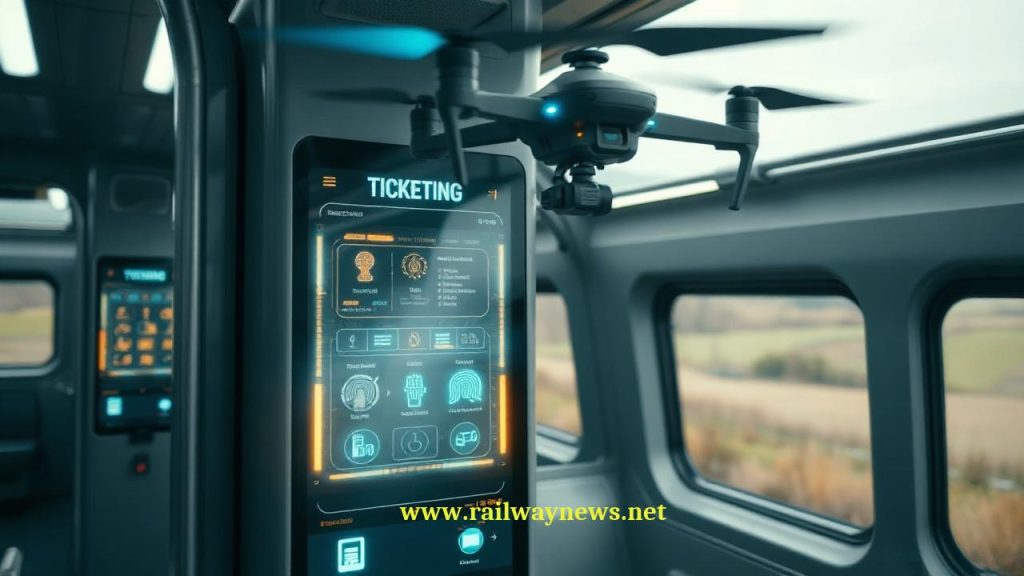
2.3 Ticketing and payment systems
Modern railway ticketing environments may include ticket vending machines, validators, ticket offices, mobile applications, reservation platforms, payment gateways and central ticketing databases.
These systems can involve multiple organisations, including railway operators, payment service providers, technology suppliers and ticket distribution platforms.
Typical cybersecurity risks include:
- Compromise of ticketing application accounts.
- Unauthorised access to customer or transaction information.
- Manipulation of ticket vending machine software.
- Payment fraud and abuse of payment interfaces.
- Ransomware affecting ticketing services.
- Availability problems caused by attacks against external service providers.
- Weak security in interfaces between ticketing platforms and third-party services.
Payment systems should be protected according to their actual processing and storage arrangements. Where payment card data is involved, relevant payment security requirements, including the Payment Card Industry Data Security Standard (PCI DSS), may apply to the entities and environments within its scope.
Railway organisations should also distinguish between the availability of ticket sales and the availability of train operations. A ticketing outage may seriously disrupt passenger services without necessarily affecting train control.
2.4 Public Wi-Fi and passenger internet services
Public Wi-Fi is a common feature of modern railway stations. It provides internet connectivity to passengers and may be operated by the station manager, railway operator, telecommunications provider or an external service company.
Public Wi-Fi introduces several cybersecurity considerations:
- Unauthorised access to network management interfaces.
- Weak administrator authentication.
- Insecure configuration of wireless access points.
- Insufficient separation between passenger and internal networks.
- Compromised captive portals and login pages.
- Exposure of user information through poorly protected applications.
- Misuse of legitimate third-party administrator accounts.
A passenger Wi-Fi network should be separated from internal corporate systems and station operational networks. The exact architecture should be based on risk assessment, business requirements and the security functions of the connected systems.
Public Wi-Fi should never be treated as a convenient extension of an internal railway network.
2.5 CCTV and video management systems
CCTV systems support station security, incident investigation, crowd monitoring and protection of passengers and railway assets. Modern installations commonly use network-connected cameras, video recorders, management servers and remote monitoring platforms.
Cybersecurity risks may include:
- Default or weak passwords on cameras and recording devices.
- Unpatched firmware and outdated management software.
- Unauthorised access to live video streams.
- Compromise of video management servers.
- Manipulation or deletion of recorded footage.
- Exposure of surveillance systems through insecure remote access.
- Inadequate separation between CCTV networks and other station systems.
CCTV security is not only a technical issue. Video surveillance may involve personal data and privacy rights. Organisations should establish appropriate access permissions, retention periods, audit trails and data protection procedures.
2.6 Access control and physical security systems
Electronic access control systems manage entry to restricted areas such as technical rooms, control facilities, equipment rooms, staff offices and maintenance areas.
These systems may use electronic cards, biometric readers, PIN codes, central identity platforms and network-connected door controllers.
Potential risks include:
- Unauthorised changes to access permissions.
- Compromise of administrator accounts.
- Misuse of lost or stolen access cards.
- Insecure communication between controllers and management servers.
- Failure to revoke access after an employee or contractor leaves.
- Loss of access control availability during a network disruption.
Access control should be integrated with personnel and contractor management procedures. Physical access permissions should be reviewed periodically and removed when no longer required.
Cybersecurity controls must not interfere with legally required emergency exits, evacuation arrangements or other life-safety functions.
3. Building Management Systems and Station Operational Technology
Building management systems monitor and control technical services within a station. They may integrate heating, ventilation, air conditioning, lighting, energy monitoring, lifts, escalators and other building-related functions.
Although these systems are not necessarily railway signalling systems, they may be important for station availability, passenger comfort, accessibility and safe facility management.
3.1 HVAC and environmental control
Heating, ventilation and air conditioning systems may use network-connected controllers, sensors, management servers and remote maintenance interfaces.
A cybersecurity incident affecting these systems could cause loss of environmental control, incorrect settings, unavailable monitoring or disruption to station facilities.
Security measures should include appropriate network separation, controlled administration, secure configuration, software maintenance and monitoring of unusual system activity.
3.2 Lighting, lifts and escalators
Lighting control systems, lifts and escalators may include digital controllers and remote monitoring functions. Their cybersecurity requirements depend on system architecture, manufacturer design and the relationship between digital controls and safety-related functions.
Railway organisations should avoid treating all connected building equipment as ordinary office IT. Some systems have specialised engineering and safety requirements that must be respected during cybersecurity assessment and maintenance.
3.3 Fire detection and emergency systems
Fire detection, emergency lighting, evacuation announcements and other emergency-related systems may exchange information with station management platforms.
These systems require particular care because cybersecurity measures must not undermine their intended emergency functions.
Organisations should identify which components have safety-related or legally mandated emergency functions, determine their dependencies and apply security controls in coordination with the relevant safety and engineering teams.
4. Common Cyber Threats Affecting Smart Railway Stations
Smart stations can be exposed to many of the same threats affecting other connected environments. However, the consequences may be different because stations combine public-facing services, physical infrastructure and railway operational dependencies.
4.1 Ransomware
Ransomware can affect ticketing applications, station management servers, passenger information platforms, office systems and other connected services.
Depending on the architecture, an incident may disrupt ticket sales, information displays, administrative processes or the availability of station services.
Protection should include secure backups, endpoint security, access controls, network segmentation, vulnerability management and tested recovery procedures.
4.2 Denial-of-service attacks
Distributed denial-of-service (DDoS) attacks attempt to make online services unavailable by overwhelming network or application resources.
Potential targets include passenger Wi-Fi portals, ticketing websites, mobile applications, online information services and externally accessible station platforms.
Railway organisations should understand which services depend on external connectivity and establish appropriate resilience and service restoration arrangements.
4.3 Account compromise and credential theft
Attackers may obtain legitimate user credentials through phishing, password reuse, malware or compromised third-party services.
Stolen credentials can be used to access administrative platforms, remote maintenance systems, CCTV management interfaces or ticketing applications.
Individual accounts, multi-factor authentication, privileged access management and monitoring of unusual login activity can reduce these risks.
4.4 Supply chain and third-party compromise
Station systems are often supplied, installed and maintained by external organisations. These suppliers may have access to software platforms, remote management services, network equipment or sensitive technical information.
A supplier compromise can therefore affect station services even when the railway organisation’s own internal systems have not been directly breached.
Supplier security requirements should cover remote access, account management, software updates, incident reporting, vulnerability disclosure and subcontractor arrangements.
For further information, see Railway Supply Chain Cybersecurity.
4.5 Physical access and device manipulation
Publicly accessible areas can create opportunities for physical interference with digital equipment.
Examples include unauthorised access to network cabinets, exposed communication ports, tampering with display controllers, theft of portable equipment and attempts to connect unauthorised devices.
Physical protection should be proportionate to the function and importance of each asset. Critical network equipment and management interfaces should be located in appropriately protected areas.
5. Real-World Example: The 2024 Network Rail Public Wi-Fi Incident
A publicly reported incident involving Network Rail’s station Wi-Fi service illustrates why passenger-facing digital services also require strong cybersecurity controls.
In 2024, unauthorised content appeared on the public Wi-Fi login pages used at 19 major railway stations in the United Kingdom. The incident involved an unauthorised change to the Wi-Fi landing page through a legitimate administrator account associated with a third-party service arrangement.
The affected Wi-Fi service was taken offline while the incident was investigated. Network Rail’s public statements and reporting at the time indicated that the incident did not result in evidence of passenger data being taken.
The incident demonstrated several important cybersecurity lessons:
- A passenger-facing service can be compromised without a direct attack on railway signalling or train control systems.
- Legitimate administrator accounts can be misused if access controls and monitoring are inadequate.
- Third-party service providers can introduce risks into station digital environments.
- Public information systems can be manipulated even when the underlying railway operation remains available.
- Service isolation and rapid suspension can help limit the impact while an investigation takes place.
The incident should not be described as a confirmed compromise of railway signalling or train control. It was an incident involving the public Wi-Fi service and its login environment.
Sources: Reuters reporting on the Network Rail Wi-Fi incident and Network Rail Board minutes, September 2024.
6. Network Segmentation for Smart Stations
One of the most important cybersecurity principles for smart stations is the separation of systems according to their function, risk and operational requirements.
A station may contain networks for passenger services, corporate IT, CCTV, building automation, access control, ticketing and operational communications. Connecting all these systems to a single unrestricted network can increase the consequences of a compromise.
6.1 Separate passenger and internal networks
Public Wi-Fi and passenger-facing services should be separated from internal railway systems. Passengers should not be able to reach administrative interfaces, CCTV management platforms or operational devices through the public network.
6.2 Protect management interfaces
Administrative interfaces should be accessible only to authorised personnel through controlled management paths. Direct internet exposure of management consoles should be avoided unless a properly assessed and protected architecture explicitly requires it.
6.3 Apply least privilege
Users and systems should receive only the access necessary to perform their assigned functions. A supplier responsible for maintaining passenger displays should not automatically receive access to unrelated station systems.
6.4 Control communication between zones
Where different station systems need to exchange information, communication should be restricted to approved services and destinations. Firewalls, access control lists, secure gateways and monitored interfaces can help enforce these boundaries.
6.5 Monitor connections and changes
Network monitoring should identify unexpected connections, unusual administrator activity, configuration changes and communication patterns that differ from normal operation.
Segmentation should be based on a documented understanding of system dependencies. Excessive or poorly planned separation can also disrupt legitimate services, so network design must involve system owners and engineering teams.
7. Protecting Passenger Information and Personal Data
Railway stations process different categories of passenger and employee information. These may include ticketing records, payment-related information, CCTV footage, access logs, Wi-Fi registration data and information collected through passenger applications.
The cybersecurity programme should consider confidentiality, integrity and availability, as well as the applicable data protection requirements.
7.1 Data minimisation
Organisations should collect and retain only the information necessary for clearly defined purposes. Unnecessary data collection increases the amount of information that may be exposed during a security incident.
7.2 Access control and accountability
Access to passenger information and CCTV footage should be restricted according to job responsibilities. Access logs should support the investigation of inappropriate or unauthorised use.
7.3 Secure data transfer and storage
Appropriate encryption and secure communication protocols should be used to protect sensitive information during transmission and storage, taking account of system capabilities and operational requirements.
7.4 Retention and deletion
Retention periods should be defined for different categories of information. CCTV recordings, ticketing data and Wi-Fi records may be subject to different operational, legal and privacy requirements.
7.5 Privacy by design
Privacy should be considered when designing new station services, surveillance systems and passenger applications. Where applicable, data protection impact assessments and other legal obligations should be addressed before deployment.
8. Securing Smart Station IoT Devices
Internet of Things (IoT) technologies are increasingly used in railway stations. Sensors and connected devices can monitor environmental conditions, energy consumption, equipment status, passenger flows and facility performance.
Examples include:
- Environmental and air-quality sensors.
- Occupancy and passenger counting devices.
- Smart lighting controllers.
- Energy monitoring equipment.
- Connected maintenance sensors.
- Digital signage controllers.
- Connected facility management devices.
Each connected device can introduce software, communication and physical security considerations.
8.1 IoT asset inventory
Railway organisations should maintain an inventory of connected devices, including their location, function, manufacturer, software or firmware version, network connection and responsible owner.
8.2 Secure configuration
Default credentials should be replaced, unnecessary services disabled and device administration restricted to authorised personnel.
8.3 Firmware and vulnerability management
Device manufacturers should provide information about software updates, security vulnerabilities and support periods. Updates should be assessed and tested before deployment, especially where devices interact with operational or safety-related systems.
8.4 Device lifecycle management
Organisations should consider security requirements during procurement, installation, maintenance and decommissioning. Devices that no longer receive security support should be assessed for replacement, isolation or other compensating measures.
9. Remote Maintenance and Third-Party Access
Remote maintenance is often necessary for station systems, particularly when equipment is distributed across multiple locations or supplied by specialist manufacturers.
However, remote access can create a pathway into station networks and connected services if it is not properly controlled.
Recommended controls include:
- Individual accounts for external personnel.
- Multi-factor authentication where supported and appropriate.
- Time-limited access based on approved maintenance activities.
- Access through controlled remote gateways.
- Session logging and monitoring.
- Restrictions on file transfers and software installation.
- Formal approval of changes to station systems.
- Immediate revocation of access when it is no longer required.
Remote maintenance arrangements should identify the systems that suppliers are permitted to access. A supplier’s access to one station service should not automatically provide unrestricted connectivity to the wider railway environment.
For a broader discussion of these controls, see Railway Remote Access Security.
10. Monitoring and Incident Detection in Smart Stations
Railway organisations should monitor station systems according to their operational importance and risk exposure.
Monitoring may cover:
- Unusual login attempts and administrator activity.
- Unexpected changes to passenger information displays.
- Changes to Wi-Fi landing pages and network configurations.
- Unusual network traffic between station systems.
- Malware alerts on servers and workstations.
- Unexpected changes to CCTV or access control configurations.
- Failures or unusual behaviour in building management systems.
- Unusual remote access sessions involving suppliers.
Logs should be collected and protected in a way that supports investigation. The monitoring architecture should take account of the performance and compatibility requirements of operational systems.
10.1 Coordinating station and central monitoring
Large railway organisations may operate central security operations centres (SOCs) or use external managed security services. Station systems should be integrated into these monitoring arrangements where technically appropriate.
However, not every station device can support conventional endpoint security or continuous active scanning. Monitoring methods should be selected according to the device type, manufacturer guidance and operational constraints.
10.2 Incident classification
Incidents should be classified according to their actual impact and potential consequences. For example:
- A manipulated public Wi-Fi login page may primarily affect passenger internet services and public trust.
- A ticketing platform compromise may affect sales, payments or customer information.
- A CCTV management compromise may affect surveillance availability, privacy or incident investigation.
- A building management incident may affect station facilities and environmental controls.
- An incident involving an interface with operational railway systems may require additional escalation and safety assessment.
This distinction helps prevent both underestimation and exaggerated claims about the operational impact of a station cybersecurity incident.
11. Business Continuity and Recovery
Cybersecurity planning should consider how a station will operate when digital services become unavailable.
Depending on the station and service, continuity arrangements may include:
- Alternative methods for providing passenger information.
- Manual ticketing or ticket inspection procedures where authorised.
- Alternative communication channels for station personnel.
- Backup configurations for essential station platforms.
- Documented recovery procedures for CCTV and access control.
- Alternative arrangements for station management during BMS outages.
- Supplier escalation and restoration agreements.
Recovery priorities should be determined through business impact analysis and operational risk assessment. Systems that support emergency functions, passenger safety or essential station operations may require different recovery targets from advertising displays or other non-essential services.
Backup arrangements should be tested. A backup that cannot be restored within the required time does not provide effective resilience.
12. Standards and Regulatory Considerations
Smart station cybersecurity is influenced by railway-specific guidance, general information security standards, industrial control system security principles and data protection requirements.
12.1 ENISA Railway Cybersecurity Good Practices
The European Union Agency for Cybersecurity (ENISA) published Railway Cybersecurity: Good Practices in Cyber Risk Management in November 2021. Its railway-specific guidance identifies a broad range of railway assets and technologies, including passenger services, CCTV, public Wi-Fi, ticketing infrastructure, station systems and operational technologies.
The report is useful for building a railway asset inventory and understanding how different station technologies fit into the wider railway cybersecurity environment.
12.2 CLC/TS 50701:2023
CLC/TS 50701:2023 provides railway-specific cybersecurity guidance aligned with the railway RAMS lifecycle defined in EN 50126-1. Its scope covers railway communications, signalling and processing, rolling stock and fixed installations.
Station infrastructure should be considered within the wider railway system and its interfaces. The technical specification should not be treated as a standalone certification or as a replacement for applicable functional safety requirements.
12.3 IEC 62443
The IEC 62443 series provides cybersecurity principles and requirements for industrial automation and control systems.
Its concepts, including zones, conduits, risk assessment, system security requirements and secure component development, can be useful when assessing building management systems, connected facility equipment and other station OT environments.
Not every passenger-facing IT service is an industrial control system. The relevant parts of the series should be applied according to the technology and risk involved.
12.4 ISO/IEC 27001 and ISO/IEC 27002
ISO/IEC 27001 provides requirements for establishing and maintaining an information security management system. ISO/IEC 27002 offers guidance on information security controls.
These standards can support station asset management, access control, supplier security, incident management, information protection and organisational responsibilities.
12.5 NIS2 Directive
Directive (EU) 2022/2555, commonly known as NIS2, identifies rail transport as a highly critical sector. ENISA describes railway undertakings and infrastructure managers as key parts of the railway ecosystem covered by the Directive’s sectoral framework.
However, the presence of a station system does not by itself determine the legal status of every station operator, service provider or supplier. The applicable obligations depend on the entity’s legal classification, national implementation and relevant scope criteria.
Where an entity is within scope, cybersecurity risk-management measures may need to address areas such as incident handling, business continuity, supply chain security, access control and the security of network and information systems.
12.6 GDPR and passenger data
The General Data Protection Regulation (GDPR) applies to personal data processing within its territorial and material scope. Railway organisations and relevant service providers should consider data protection requirements when operating CCTV, ticketing, passenger applications, Wi-Fi registration and other services involving personal information.
Cybersecurity measures should support the confidentiality, integrity and availability of personal data and help organisations meet their applicable data protection obligations.
13. A Practical Cybersecurity Roadmap for Smart Railway Stations
Railway organisations can improve station cybersecurity through a structured programme that considers technology, suppliers, operations and passenger services.
- Inventory station assets: Identify passenger information, ticketing, Wi-Fi, CCTV, access control, BMS, IoT and supporting network infrastructure.
- Identify system owners: Establish which department, operator or supplier is responsible for each system.
- Map connections: Document communication links between station networks, central platforms, corporate IT, operational systems and external providers.
- Assess criticality: Evaluate the impact of loss of confidentiality, integrity and availability for each service.
- Review network architecture: Separate passenger-facing services from internal and operational networks according to risk.
- Strengthen identity and access: Apply individual accounts, least privilege, multi-factor authentication where appropriate and periodic access reviews.
- Secure supplier connections: Define remote maintenance, software update and incident reporting requirements.
- Improve monitoring: Collect relevant logs and monitor suspicious changes, access and communication patterns.
- Establish continuity arrangements: Define alternative operating procedures and test recovery capabilities.
- Review and improve: Reassess risks after major system changes, incidents, supplier changes and security assessments.
Implementation should be prioritised according to risk and available resources. A large station with extensive interconnected services may require a different approach from a small station with limited digital infrastructure.
14. Common Mistakes in Smart Station Cybersecurity
Several weaknesses can undermine station cybersecurity programmes:
- Treating the station as a single network: Connecting passenger services, CCTV, building automation and internal systems without appropriate separation.
- Ignoring third-party responsibilities: Assuming that supplier-operated services are automatically secure.
- Exposing management interfaces: Allowing administrative systems to be reached through unnecessary or insufficiently protected connections.
- Using default credentials: Leaving devices with manufacturer default accounts or weak passwords.
- Ignoring legacy equipment: Continuing to operate unsupported devices without risk assessment or compensating controls.
- Focusing only on train control: Overlooking passenger-facing services and station infrastructure that may be important for continuity and public confidence.
- Neglecting physical security: Protecting network systems logically while leaving cabinets, ports or equipment rooms accessible.
- Failing to test recovery: Having backup procedures without verifying whether services can actually be restored.
- Overlooking privacy: Treating CCTV, ticketing and Wi-Fi data only as technical assets without considering personal data obligations.
15. Frequently Asked Questions (FAQ)
What is railway station cybersecurity?
Railway station cybersecurity is the protection of digital systems and connected infrastructure used in railway stations. It includes passenger information, ticketing, Wi-Fi, CCTV, access control, building management, IoT devices and the networks connecting these services.
Are passenger information displays safety-critical systems?
Not necessarily. Their classification depends on their function and integration with other systems. However, incorrect or unavailable passenger information can create operational disruption and may contribute to unsafe passenger behaviour. Their integrity and availability should therefore be assessed.
Can public Wi-Fi affect railway operations?
A properly separated public Wi-Fi service should not provide direct access to internal or operational railway networks. However, weak network segmentation, compromised administrator accounts or insecure third-party management arrangements can create wider risks.
Why is CCTV cybersecurity important at railway stations?
CCTV systems support security monitoring and incident investigation. A compromise can expose video footage, interrupt surveillance, manipulate recordings or provide unauthorised access to sensitive information. CCTV systems should be protected through access control, secure configuration, network separation and monitoring.
Are building management systems part of railway OT?
Building management systems are commonly classified as operational technology because they monitor or control physical processes and equipment. Their cybersecurity requirements should reflect their actual functions, technical architecture and operational impact.
Should ticketing systems be separated from station operational networks?
Yes, appropriate network separation is generally an important security measure. Ticketing services should communicate with other systems only through approved and controlled interfaces. The exact design depends on business and technical requirements.
Does NIS2 apply to every railway station?
No. NIS2 establishes requirements for entities within its scope, including relevant railway undertakings and infrastructure managers. The legal obligations of individual station operators, service providers and suppliers depend on their classification and applicable national implementation.
What is the most important first step in securing a smart station?
Establish an accurate inventory of station systems, their owners, network connections and dependencies. Without this information, organisations cannot reliably assess risks or determine which cybersecurity controls are required.
16. Conclusion: Protecting the Digital Railway Station
Smart railway stations are important components of the digital railway ecosystem. Passenger information, ticketing, Wi-Fi, CCTV, access control, building automation and connected sensors all contribute to modern station services. Their increasing connectivity creates new cybersecurity responsibilities for infrastructure managers, railway operators, station managers and technology suppliers.
Effective station cybersecurity requires more than protecting individual devices. Organisations need to understand system dependencies, separate networks according to risk, secure administrative access, manage suppliers, protect passenger information and prepare for service disruption.
Most importantly, station cybersecurity should be integrated into the wider railway cybersecurity architecture. Passenger-facing services may not directly control trains, but their compromise can affect passengers, station operations, public confidence and, through poorly protected interfaces, other railway systems.
A secure smart station is therefore not simply a station with connected technology. It is a station where digital services are designed, operated and maintained with clear security responsibilities and appropriate resilience measures.
References and Further Reading
- ENISA – Railway Cybersecurity: Good Practices in Cyber Risk Management (2021).
- ENISA – Cybersecurity of the Transport Sector.
- Reuters – UK Police Investigating Wi-Fi Incident at Railway Stations (2024).
- Network Rail – Board Minutes, September 2024.
- European Union – Directive (EU) 2022/2555 (NIS2 Directive).
- European Union – Regulation (EU) 2016/679 (General Data Protection Regulation).
- BSI – CLC/TS 50701:2023, Railway Applications: Cybersecurity.
- International Electrotechnical Commission – IEC 62443 Series.
- ISO/IEC 27001 – Information Security Management Systems.
- PCI Security Standards Council – Payment Card Industry Data Security Standards.
- European Union – Regulation (EU) 2021/782 on Rail Passengers’ Rights and Obligations.