
Burlington Junction Expands Le Mars Transload Center
Burlington Junction Railway expanded the Le Mars Transload Center in Iowa, adding bulk rail cargo capacity for a hub that processes 2,000 railcars per year.
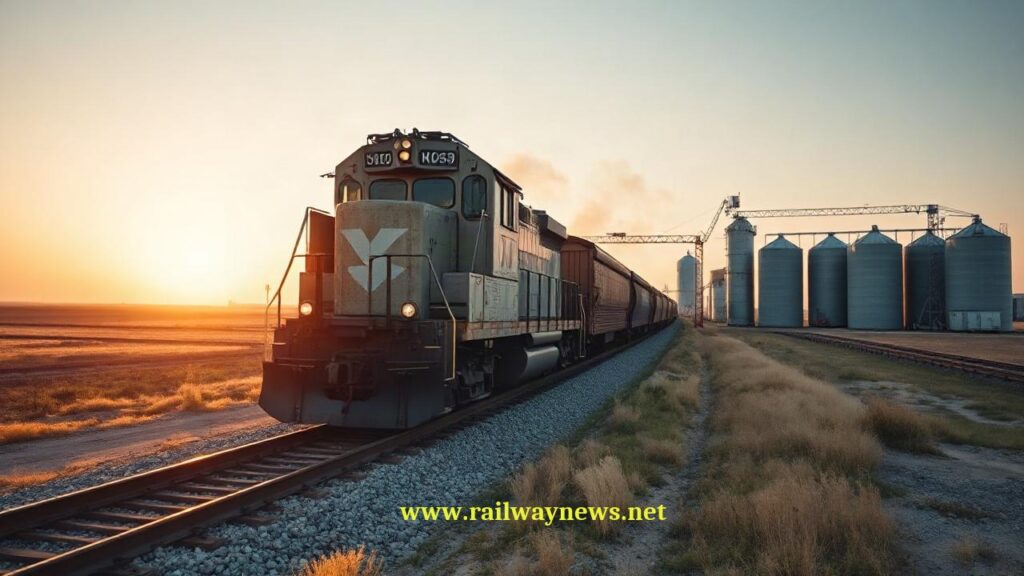
⚡ In Brief: Burlington Junction Railway completed an expansion of the Le Mars Transload Center in Iowa, utilizing state revolving loans to expand freight access for an industrial complex handling nearly 2,000 railcars annually.
LE MARS, UNITED STATES – Burlington Junction Railway has completed an expansion project at the Le Mars Transload Center in Iowa, increasing capacity for an industrial hub that processes nearly 2,000 railcars each year. The facility provides non-rail-served shippers with intermodal transfers between Canadian National rail lines and U.S. Highway 75. Financial assistance was supplied through a state infrastructure loan program to accommodate growing local freight demand.
What Is the Full Scope of This Project?
The Le Mars Transload Center expansion adds freight handling capacity and third-party logistics capability within the City of Le Mars Industrial Park. Operational since 2015 as a joint development between the City of Le Mars, Burlington Junction Railway, and Canadian National, the facility provides bulk transfer services to regional industrial and agricultural businesses lacking direct track sidings. Financing for the construction phase was secured in part through a zero-percent interest loan via the Iowa Department of Transportation’s Railroad Revolving Loan and Grant Program. The precise acreage added, track mileage constructed, and total capital expenditure were not disclosed by the participating entities.
Key Project Data
| Parameter | Value |
|---|---|
| Project / Contract Name | Le Mars Transload Center (LMTC) Expansion |
| Total Value | Not disclosed |
| Parties Involved | Burlington Junction Railway, City of Le Mars, Canadian National (CN), Iowa Department of Transportation |
| Timeline / Completion | Completed (Facility originally opened in 2015) |
| Country / Corridor | United States / CN rail line and U.S. Highway 75 corridor |
How Does This Compare to Similar Projects?
Transload facilities processing approximately 2,000 railcars annually represent the backbone of secondary freight aggregation feeding North American Class I rail networks. On a broader scale, domestic rail cargo constitutes 72.63% of the global rail freight market, which was valued between USD 325.0 billion and USD 370.0 billion in 2025 (Source: Grand View Research, 2025; Future Market Insights, 2025; SNS Insider, 2025). While multi-commodity terminals in major metropolitan regions often handle upwards of 10,000 carloads annually, short-line-managed rural hubs rely heavily on state financing programs like Iowa’s revolving loan fund to absorb localized trucking demand. Comparable capital expenditure benchmarks for equivalent municipal transload expansions in Iowa were not publicly available at time of publication.
Editor’s Analysis
Short-line terminal expansions highlight how regional switching carriers leverage public-private financing to secure freight that would otherwise move exclusively via highway corridors. With domestic freight capturing 72.63% of rail shipping volumes globally (Source: SNS Insider, 2025), transload nodes allow Class I operators like Canadian National to capture non-rail-adjacent shippers without assuming the capital risk of direct spur construction. Sustained industrial demand in rural sectors indicates that first-mile/last-mile transloading facilities will remain primary targets for state infrastructure loan allocations.
FAQ
Q: What functions does the expanded Le Mars Transload Center provide?
A: The center transfers freight between truck carriers and Canadian National rail lines, providing non-rail-served businesses with third-party logistics and warehousing access. The site serves industrial clients across the City of Le Mars Industrial Park and northwest Iowa.
Q: How much did the Le Mars Transload Center expansion cost?
A: The specific dollar amount of the expansion was not disclosed by the city or Burlington Junction Railway. Funding was supported by a 0% interest loan from the Iowa Department of Transportation’s Railroad Revolving Loan and Grant Program.
Q: How many railcars does the Le Mars facility handle each year?
A: The transload facility and its surrounding industrial park process nearly 2,000 railcars annually. Specific traffic increases resulting from the new expansion have not been officially confirmed.

Railway infrastructure, rolling stock and transport technologies specialist focused on global rail industry developments, high-speed rail systems, signaling technologies and freight transportation. Covering railway investments, public transport modernization, rail operations and international mobility projects across Europe, Asia and North America.
RELATED POSTS
October 8, 2026 1:15 pm
Alstom secured a €1bn contract to build 13 automated trains,...
October 1, 2026 7:09 am
United States regulators confirmed a September 30 deadline for the...

October 8, 2026 12:18 pm
Siemens Mobility signed an agreement with VinSpeed to supply 350...
October 4, 2026 5:14 pm
Alstom secured a CA$4.7 billion order from VIA Rail Canada...
October 5, 2026 6:12 pm
AECOM and Jacobs secured a contract in September 2026 to...
October 4, 2026 11:08 pm
Sound Transit confirmed the September 30 opening of Seattle Pinehurst...