
Amtrak Completes 9-Day First Street Tunnel Upgrade in DC
Amtrak confirmed the October 27 reopening of the First Street Tunnel in DC after crews replaced eight electric switch machines across 1,000 feet of rail.
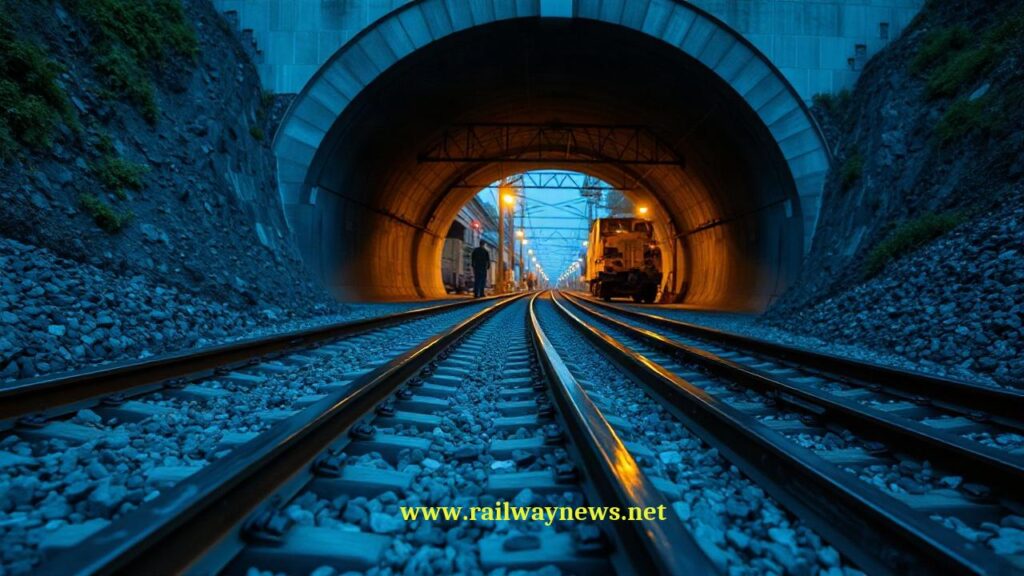
⚡ In Brief: Amtrak completed its scheduled nine-day infrastructure renewal inside the First Street Tunnel in Washington, D.C., installing modern electric switches, track base, and signaling to restore rail operations ahead of seasonal travel peaks.
WASHINGTON, UNITED STATES – Amtrak completed its nine-day “Pause for Progress” rehabilitation program inside the First Street Tunnel south of Washington Union Station, resuming regular passenger operations on October 27 following track closures from October 16 to October 26. Track crews overhauled the critical A-Interlocking junction, replacing eight electric switch machines, 1,000 feet of rail, and 215 ties to stabilize operations across the capital’s southern throat. The intervention targeted a primary bottleneck shared by intercity services and Virginia Railway Express commuter lines.
What Is the Full Scope of This Project?
The First Street Tunnel renewal modernized the A-Interlocking plant, replacing aging mechanical track components with modern electric systems while structurally rehabilitating 350 feet of subterranean track bed. Engineering teams installed two double-slip switches, one crossing diamond, 550 tons of ballast, and 2,500 feet of signal and power cabling. Total project expenditure was not disclosed by Amtrak. The renewed section controls train movements south of Washington Union Station toward Alexandria, Virginia, serving as the sole conduit connecting the Northeast Corridor to southeastern passenger rail networks.
Key Project Data
| Parameter | Value |
|---|---|
| Project / Contract Name | First Street Tunnel “Pause for Progress” / A-Interlocking Rehabilitation |
| Total Value | Not disclosed |
| Parties Involved | Amtrak, Virginia Railway Express (VRE) |
| Timeline / Completion | October 16–26 (Completed on time) |
| Country / Corridor | United States / Washington Union Station–Alexandria Corridor |
How Does This Compare to Similar Projects?
Northeast Corridor infrastructure managers are increasingly utilizing short, full-closure maintenance blocks over extended single-tracking regimens to control project risk. Amtrak used a comparable multi-agency funding approach for its Dock Bridge rehabilitation contract in New Jersey, partnering with NJ TRANSIT and PATH to refurbish major legacy movable bridge components (Source: Railway News, 2024). In New York, the $7.5 million Moodna Viaduct bridge timber tie renewal awarded to RailPros and J-Track on the Port Jervis Line reflects a similar shift toward rapid-deployment, high-density track component replacements to prevent prolonged commuter disruptions (Source: RT&S, 2025). Independent verification of unit-cost metrics for the First Street Tunnel interlocking overhaul was not available at time of publication.
Editor’s Analysis
The execution of A-Interlocking renewals underscores how passenger authorities are prioritizing targeted capital overhauls at single-point-of-failure bottlenecks. With North America capturing 32.0% of the $343.8 billion global railroad market in 2025, operators are directing funds toward interlocking reliability to support higher service frequencies (Source: IMARC Group, 2025). Eliminating recurring switch failures at this specific junction prevents delay propagation between the electrified Northeast Corridor and regional diesel services running into Virginia.
FAQ
Q: Which passenger rail operators utilize the First Street Tunnel?
A: The tunnel is utilized by Amtrak intercity trains and Virginia Railway Express (VRE) commuter services connecting Washington Union Station with Northern Virginia. The recent work temporarily curtailed rail services through the bore between October 16 and October 26.
Q: What specific hardware was replaced during the First Street Tunnel shutdown?
A: Infrastructure teams installed eight electric switch machines, two double-slip switches, one crossing diamond, and 2,500 feet of signal cabling. Structural work included replacing 1,000 feet of rail, 215 ties, and 550 tons of track ballast across 350 feet of tunnel base.
Q: What was the capital budget allocated for the First Street Tunnel project?
A: The specific contract value for this project was not disclosed by Amtrak. Total expenditures for this outage were integrated into Amtrak’s broader capital infrastructure renewal appropriations.

Railway infrastructure, rolling stock and transport technologies specialist focused on global rail industry developments, high-speed rail systems, signaling technologies and freight transportation. Covering railway investments, public transport modernization, rail operations and international mobility projects across Europe, Asia and North America.
RELATED POSTS
October 8, 2026 1:15 pm
Alstom secured a €1bn contract to build 13 automated trains,...
October 1, 2026 7:09 am
United States regulators confirmed a September 30 deadline for the...
October 4, 2026 5:14 pm
Alstom secured a CA$4.7 billion order from VIA Rail Canada...
October 5, 2026 6:12 pm
AECOM and Jacobs secured a contract in September 2026 to...
October 4, 2026 11:08 pm
Sound Transit confirmed the September 30 opening of Seattle Pinehurst...
October 1, 2026 12:13 am
Illinois approved $1.5 billion annually for the Northern Illinois Transit...