
FRA Awards $416M for Florida Rail Safety and Cocoa Station
FRA awarded $416 million in rail grants to upgrade 910 Florida grade crossings and construct a new Brightline passenger station in the city of Cocoa.
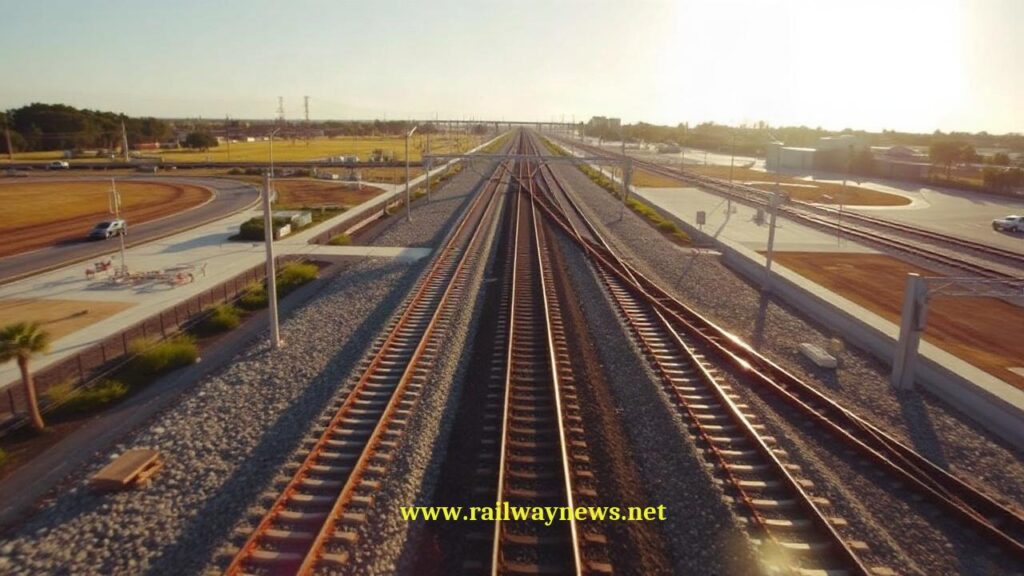
⚡ In Brief: The Federal Railroad Administration awarded $416 million in federal grants, supplemented by $100 million in state funding, to upgrade 910 grade crossings and construct a new Brightline passenger rail station in Cocoa, Florida.
WASHINGTON, United States – The Federal Railroad Administration (FRA) designated $416 million in federal funds in August to advance Florida rail safety and expand passenger access along the Space Coast. Backed by an additional $100 million state contribution, the combined $516 million program targets safety works at 910 highway-rail grade crossings and finances civil works for an infill passenger station. The federal share stems from a broader $5.3 billion national rail program that reallocated $2 billion from terminated California high-speed rail grants.
How Is the Funding Structured?
The $516 million financing program combines federal infrastructure awards with state co-financing across two public agencies. The Florida Department of Transportation (FDOT) receives $356 million in federal capital to install physical barriers, upgraded illumination, and active warning systems across 910 grade crossings statewide. The City of Cocoa secures a $57 million federal grant to build a new Brightline commuter and intercity station, construct a dedicated multi-use access roadway, and lay an operational segment of double track. Matching these federal commitments, the State of Florida is contributing $100 million to complete the capital package.
Key Funding Data
| Parameter | Value |
|---|---|
| Fund / Programme Name | FRA Rail Infrastructure Investment Program (FDOT / City of Cocoa Allocations) |
| Total Value | $516 million ($416 million federal, $100 million state) |
| Parties Involved | Federal Railroad Administration (FRA), Florida Department of Transportation (FDOT), City of Cocoa, Brightline |
| Timeline / Completion | Not disclosed |
| Country / Corridor | United States / Florida East Coast Corridor (Space Coast) |
How Does This Compare to Similar Funding Programs?
Targeted federal grade-crossing and station grants reflect a rising share of discretionary funding within the overall United States rail portfolio. By comparison, the FRA requested over $3.2 billion in its 2025 budget specifically for Amtrak corridor development and national passenger rail modernization programs (Source: Federal Railroad Administration, 2024). Comparable data for a combined municipal infill station and statewide grade-crossing safety grant was not publicly available at time of publication. The funding reallocation also aligns with international passenger market expansion, where the global railroad sector is projected to register a 5.57% compound annual growth rate through 2034, pushed by capital modernization of existing rights-of-way (Source: Market Data Forecast, 2024).
Editor’s Analysis
The grant structure signals a pragmatic redistribution of federal passenger rail capital away from troubled greenfield megaprojects toward operational, revenue-generating corridors. Channeling $356 million into crossing barriers along Florida’s higher-speed line directly mitigates Brightline’s primary operational hazard: high-frequency vehicle collisions at level junctions. With intercity passenger rail leading global transport sector expansion amid rising regional urban density, prioritizing safety mitigations on active mixed-traffic lines provides an immediate return on capital that long-delayed greenfield programs have struggled to match (Source: Market Data Forecast, 2024).
FAQ
Q: What is the total funding amount committed to the Florida rail projects?
A: The combined investment equals $516 million, which incorporates $416 million from the Federal Railroad Administration and $100 million from the state of Florida.
Q: What is the construction schedule for the Brightline Cocoa station?
A: A formal groundbreaking schedule and targeted completion date have not been officially disclosed by project authorities.
Q: What economic impact is expected from the new station in Cocoa?
A: Regional economic models project the Cocoa facility will generate up to $350 million in annual economic impact and support 3,500 jobs along Florida’s Space Coast.

Railway infrastructure, rolling stock and transport technologies specialist focused on global rail industry developments, high-speed rail systems, signaling technologies and freight transportation. Covering railway investments, public transport modernization, rail operations and international mobility projects across Europe, Asia and North America.
RELATED POSTS

October 1, 2026 7:09 am
United States regulators confirmed a September 30 deadline for the...

October 8, 2026 1:15 pm
Alstom secured a €1bn contract to build 13 automated trains,...

October 4, 2026 5:14 pm
Alstom secured a CA$4.7 billion order from VIA Rail Canada...
October 8, 2026 12:18 pm
Siemens Mobility signed an agreement with VinSpeed to supply 350...

October 1, 2026 12:13 am
Illinois approved $1.5 billion annually for the Northern Illinois Transit...

October 6, 2026 2:14 am
Union Pacific launched export rail shipments with Ferromex to deliver...