
Transreport Expands Across 41 Elizabeth Line Stations
Transreport expanded its Passenger Assistance tool across 41 Elizabeth line stations in London to help staff log live travel aid for 800,000 daily rail riders.
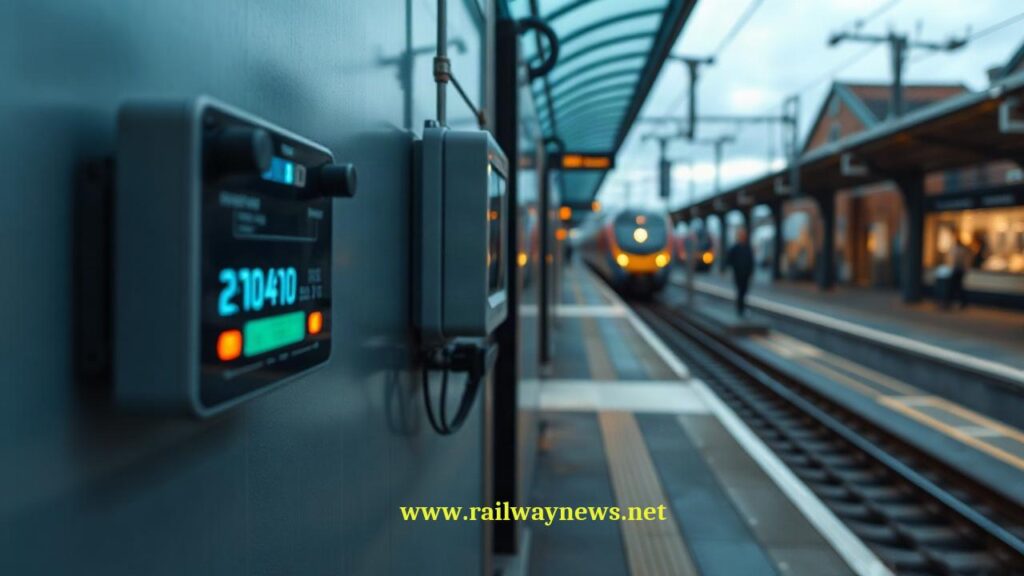
⚡ In Brief: Transreport has deployed its Passenger Assistance digital coordination platform across London’s 41-station Elizabeth line, supporting spontaneous accessible travel across a network managing approximately 800,000 daily weekday journeys.
LONDON, UNITED KINGDOM – Transreport has expanded its Passenger Assistance digital communication platform across London’s Elizabeth line network as of October 2026, targeting spontaneous travel support for passengers with reduced mobility. The implementation spans all 41 stations of the capital’s cross-city corridor, which handles roughly 800,000 customer journeys per weekday. The deployment scales software previously used on longer-distance regional networks into a high-frequency metro environment.
What Are the Technical Specifications?
Transreport’s Passenger Assistance software functions as a synchronized, multi-terminal communication platform connecting frontline station personnel across line segments in real time. Station staff log on-demand assistance requests via hand-held digital interfaces, transmitting mobility requirements, arrival timings, and boarding details to receiving personnel down the line. This digital architecture eliminates reliance on verbal telephone relays between dispatchers, enabling real-time handover updates across services that run with headway intervals as narrow as 150 seconds. Operating on a cloud-based framework, the system logs structured metrics per transaction, recording station dwell interactions, interchange handovers, and boarding assist completion timestamps. All 41 Elizabeth line stations feature street-to-platform step-free infrastructure, meaning the platform focuses primarily on staff coordination rather than physical retrofits.
Key Technical Data
| Parameter | Value |
|---|---|
| Technology / System Name | Passenger Assistance |
| Total Value | Not disclosed |
| Parties Involved | Transreport, Transport for London (Elizabeth line) |
| Timeline / Completion | Operational as of October 2026 |
| Country / Corridor | United Kingdom / Elizabeth line (Reading/Heathrow to Shenfield/Abbey Wood) |
Where Does This Technology Stand in the Market?
Transreport’s software transition to metro operations marks an operational shift from scheduled regional rail deployments to rapid-turnaround urban systems. In the United Kingdom and Japan, the platform has managed more than 12 million assistance requests across main-line networks (Source: Transreport, 2026). On the Elizabeth line, it supports an operating environment that has recorded over 850 million passenger journeys since its May 2022 opening and generated £606 million in passenger revenue across 2023 and 2024 (Source: Transport for London, 2024). To meet rising passenger volumes, Transport for London ordered 10 additional nine-car Aventra Class 345 electric multiple units from Alstom under a €430 million supply and maintenance deal (Source: Alstom, 2024).
Within the digital accessibility and station coordination market, Transreport’s rail coordination system competes with specialized operational dispatch and customer communication suites:
- HaCon (Siemens Mobility) HAFAS Assist: Offers end-to-end trip planning with integrated booking modules used by Deutsche Bahn and SBB across continental Europe, whereas Transreport emphasizes station-to-station frontline personnel handovers in high-density corridors (Source: Siemens Mobility, 2023).
- GoodMaps: Focuses on LiDAR-mapped indoor camera navigation directly on passenger smartphones across North American transit centers, compared to Transreport’s dual model of staff-facing dispatch terminals paired with passenger request tools (Source: GoodMaps, 2024).
Note: Independent verification of the exact software contract procurement value was not available at time of publication.
Editor’s Analysis
High-frequency transit authorities are discovering that physical accessibility hardware—such as platform elevators and level-boarding infrastructure—fails to deliver reliability if frontline staffing workflows remain tethered to analogue voice communication. Managing over 800,000 daily commuters across high-density subterranean junctions requires sub-minute digital handoffs to prevent dwelling penalties and network-wide timetable delays. As suburban commuter routes and heavy rail increasingly convert into high-frequency through-running urban services, digital operational tools that log real-time disability assists will become necessary baseline software investments for global transport authorities (Source: Works in Progress, 2024).
FAQ
Q: What is Transreport’s Passenger Assistance platform?
A: It is a digital operational tool that enables railway station teams to coordinate assistance for disabled passengers and travelers with reduced mobility in real time. The software allows staff to log, update, and manage handovers between stations directly from connected terminals.
Q: How much did the Elizabeth line software deployment cost?
A: The commercial terms and procurement value of the contract were not publicly disclosed by Transport for London or Transreport. The deployment covers software integration across all 41 operational stations along the corridor.
Q: Must passengers pre-book travel assistance on the Elizabeth line to use this service?
A: No, Elizabeth line passengers can request assistance spontaneously upon arrival at any station without prior notice. Frontline staff use the platform to log on-demand requests immediately and communicate transit requirements to downstream destinations.

Railway infrastructure, rolling stock and transport technologies specialist focused on global rail industry developments, high-speed rail systems, signaling technologies and freight transportation. Covering railway investments, public transport modernization, rail operations and international mobility projects across Europe, Asia and North America.
RELATED POSTS

October 1, 2026 7:09 am
United States regulators confirmed a September 30 deadline for the...

October 8, 2026 1:15 pm
Alstom secured a €1bn contract to build 13 automated trains,...

October 4, 2026 5:14 pm
Alstom secured a CA$4.7 billion order from VIA Rail Canada...

October 1, 2026 12:13 am
Illinois approved $1.5 billion annually for the Northern Illinois Transit...
October 6, 2026 2:14 am
Union Pacific launched export rail shipments with Ferromex to deliver...
October 1, 2026 6:10 am
Amtrak approved a System Expansion Committee on July 30 to...