
Canpotex Invests CA$500M in Vancouver Rail Terminal
Canpotex invested CA$500 million at Neptune Bulk Terminals in Vancouver to upgrade rail dumper pits and vessel loaders for CN potash unit trains by 2028.
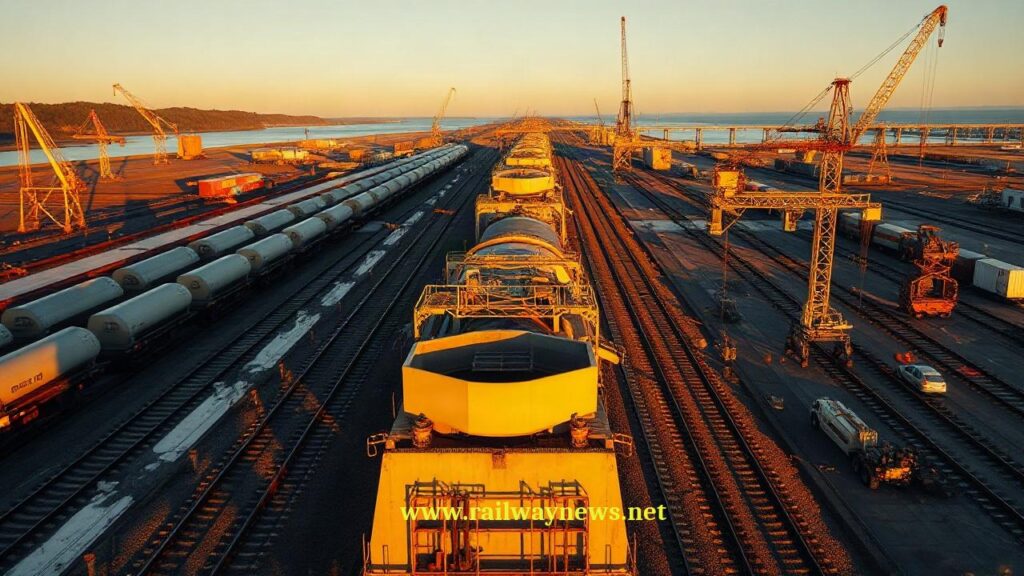
⚡ In Brief: Canpotex is investing CA$500 million to upgrade rail unloading and vessel loading systems at Neptune Bulk Terminals in Vancouver, targeting completion by 2028 to secure capacity for 15 million annual tonnes of potash exports.
VANCOUVER, Canada – Canadian potash exporter Canpotex announced a CA$500 million infrastructure modernization program at Neptune Bulk Terminals in the Port of Vancouver, targeting completion by 2028. The facility handles more than 15 million tonnes of Saskatchewan potash annually, transported across western Canada via Canadian National (CN) lines. Specific prime contractor awards and machinery suppliers were not disclosed at the time of the announcement.
What Is the Full Scope of This Project?
The CA$500 million modernization project replaces critical marine loading and rail discharge assets across Neptune Bulk Terminals. Works will install updated shiploaders, bulk conveyor systems, and an overhauled dumper pit designed to rapidly unload unit trains carrying potash from Saskatchewan mines. The initiative focuses on renewing core mechanical components to ensure long-term throughput reliability rather than expanding the physical land boundary of the terminal.
Key Project Data
| Parameter | Value |
|---|---|
| Project / Contract Name | Neptune Bulk Terminals Infrastructure Modernization |
| Total Value | CA$500 million |
| Parties Involved | Canpotex, Neptune Bulk Terminals, Canadian National (CN) |
| Timeline / Completion | 2028 completion target |
| Country / Corridor | Canada / Saskatchewan–Vancouver Bulk Export Rail Corridor |
How Does This Compare to Similar Projects?
This CA$500 million outlay marks Canpotex’s single largest supply chain allocation to date, supplementing nearly CA$1.5 billion injected into the same facility over the previous two decades (Source: Canpotex, 2025). Direct comparative spending figures for parallel bulk export terminal overhauls along the British Columbia coast were not publicly available at time of publication. Globally, the program aligns with broader expansion in fixed transport assets, with the international rail infrastructure market valued at USD 5.58 billion in 2025 and projected to reach USD 11.4 billion by 2035 (Source: Fortune Business Insights, 2025).
Editor’s Analysis
Bulk rail efficiency on the Canadian Pacific corridor depends directly on terminal turnaround velocity, as unloading bottlenecks at port dumper pits reverberate back to Saskatchewan railhead origins. By targeting mechanical railcar discharge and vessel loading equipment, Canpotex insulates its export volume against dwell-time penalties during peak international shipping seasons. This private capital commitment mirrors wider network modernization across North America, where the rail signaling sector reached USD 5.92 billion in 2025 to keep pace with heavier freight flows (Source: Straits Research, 2025).
FAQ
Q: What specific terminal infrastructure is being replaced under the CA$500 million plan?
A: The investment funds the replacement of shiploaders, conveyor transfer systems, and the bulk dumper pit used to unload arriving CN potash railcars. These elements directly link rail reception tracks to ocean berths at the Port of Vancouver.
Q: What is the targeted completion date for the Neptune Bulk Terminals project?
A: Construction is scheduled to conclude in 2028. Detailed phase-by-phase timelines for rail track possessions or installation windows have not been disclosed.
Q: How will the construction affect current Canadian potash export volumes?
A: Canpotex intends to sustain its baseline delivery rate of more than 15 million annual tonnes across the construction window. Detailed contingency routing via alternative Pacific outlets during peak works has not been officially confirmed.

Railway infrastructure, rolling stock and transport technologies specialist focused on global rail industry developments, high-speed rail systems, signaling technologies and freight transportation. Covering railway investments, public transport modernization, rail operations and international mobility projects across Europe, Asia and North America.
RELATED POSTS

October 1, 2026 7:09 am
United States regulators confirmed a September 30 deadline for the...

October 8, 2026 1:15 pm
Alstom secured a €1bn contract to build 13 automated trains,...

October 4, 2026 5:14 pm
Alstom secured a CA$4.7 billion order from VIA Rail Canada...

October 1, 2026 12:13 am
Illinois approved $1.5 billion annually for the Northern Illinois Transit...

October 6, 2026 2:14 am
Union Pacific launched export rail shipments with Ferromex to deliver...

October 1, 2026 6:10 am
Amtrak approved a System Expansion Committee on July 30 to...