
Copenhagen Opens 28-Kilometre Ring 3 Light Rail Line
Denmark launched the 28 km Ring 3 light rail line on 22 August 2026, deploying 29 Siemens Avenio trams across 29 stations from Ishøj to Lundtofte.
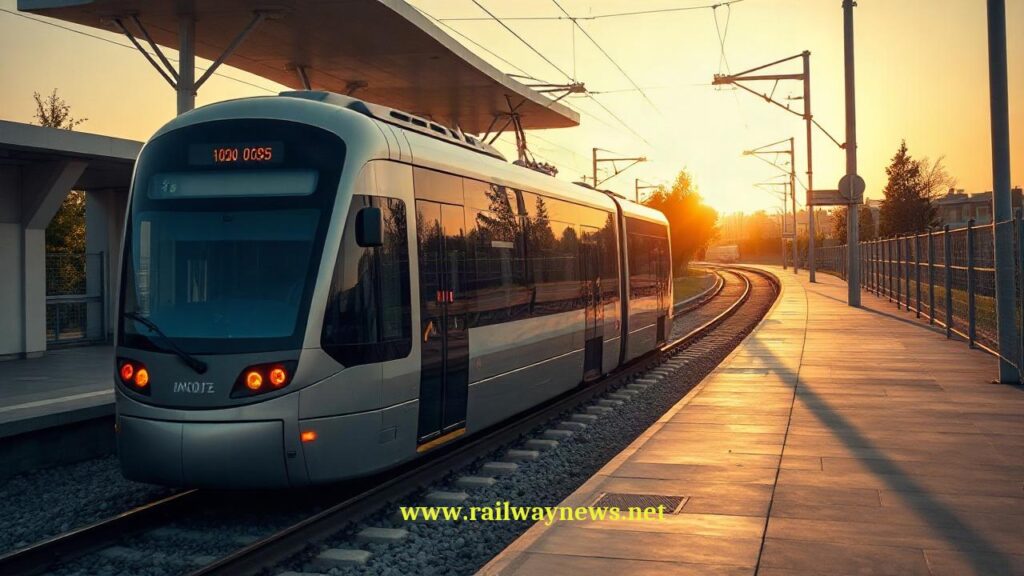
⚡ In Brief: The Greater Copenhagen Light Rail entered full commercial service on 22 August 2026, deploying 29 Siemens Avenio trams across a completed 28-kilometre orbital alignment serving 29 stations between Ishøj and Lundtofte.
COPENHAGEN, DENMARK – The turnkey consortium of Siemens Mobility and Aarsleff Rail delivered the final 14.9-kilometre northern section of the Greater Copenhagen Light Rail on 22 August 2026. This commissioning brought 17 additional stations into passenger service, completing the full 28-kilometre orbital alignment across eight municipalities. Operating along Copenhagen’s Ring 3 corridor, the line reintroduces light rail transit to the capital region after a 53-year hiatus.
What Is the Full Scope of This Project?
The Greater Copenhagen Light Rail project establishes an orbital transit link connecting Ishøj in the south to Lundtofte in the north via 29 stations. The system was delivered in two distinct phases, starting with a 12-station southern segment between Ishøj and Rødovre Nord that opened in October 2025, followed by the August 2026 northern extension. Siemens Mobility executed a turnkey scope encompassing electrification, trackside signalling, telecommunications, depot maintenance equipment, and systems integration, backed by a 15-year fleet maintenance contract. The operational fleet consists of 29 four-section Siemens Avenio low-floor light rail vehicles, each measuring 36.9 metres with capacity for 260 passengers and an operating top speed of 70 km/h. Across the corridor, the line interfaces directly with DSB’s suburban S-train network at six interchange stations, running at five- to eight-minute peak headways to project an initial volume of 12,000 daily trips and 14 million annual passengers by 2030.
Key Project Data
| Parameter | Value |
|---|---|
| Project / Contract Name | Greater Copenhagen Light Rail (Hovedstadens Letbane Ring 3) |
| Total Value | Total turnkey contract value was not disclosed in the commissioning release |
| Parties Involved | Hovedstadens Letbane, Siemens Mobility, Aarsleff Rail |
| Timeline / Completion | Phase 1 opened October 2025; Phase 2 completed 22 August 2026 |
| Country / Corridor | Denmark / Copenhagen Ring 3 Corridor (Ishøj to Lundtofte) |
How Does This Compare to Similar Projects?
Copenhagen’s orbital scheme reflects a distinct infrastructure strategy compared to standard European radial tram extensions by focusing entirely on suburban perimeter connectivity. Regionally, the expansion aligns with Denmark’s broader urban rail procurement wave, where transport authorities concurrently issued civil tenders for the automated København metro Line M5 project to expand inner-harbour capacity (Source: Railway Gazette International, 2025). In financial scale, rolling stock and systems procurement benchmarks across Europe indicate comparable capital intensity; for example, Stadler Rail secured a €263 million contract in 2025 to supply regional FLIRT electric multiple units to Greater Poland (Source: Future Market Insights, 2025). Meanwhile, other global operators face contracting constraints, such as BEML’s September 2026 high-speed rolling stock contract in India, which expanded to six times its 2024 baseline value while leaving delivery milestones and vehicle counts undisclosed (Source: Railway Supply, 2026).
Editor’s Analysis
By connecting six radial S-train branches outside the central core, the Ring 3 line shifts Copenhagen’s network topology from a hub-and-spoke model to an integrated multi-tier grid. This structural transition directly matches broader investments in modern signalling, where the Danish railway signalling sector reached USD 0.32 billion in 2025 with communications-based train control holding a 47.13% market share (Source: Straits Research, 2025). Long-term operational viability will depend on whether orbital feeder patterns can consistently hit the 14-million passenger target by 2030 without cannibalising local bus patronage.
FAQ
Q: How long is the Greater Copenhagen Light Rail line?
A: The complete route spans 28 kilometres and includes 29 passenger stations between Ishøj and Lundtofte. The final 14.9-kilometre section entered commercial service on 22 August 2026.
Q: What rolling stock is deployed on the Ring 3 corridor?
A: Services are operated by 29 Siemens Mobility Avenio trams, each measuring 36.9 metres long with a maximum design speed of 70 km/h. Siemens Mobility is also contracted to provide 15 years of maintenance for the fleet.
Q: How does the light rail connect to existing rail transit in Copenhagen?
A: Passengers can interchange between the light rail line and DSB’s suburban S-train network at six designated hub stations along the orbital corridor. Daytime peak service operates at headways between five and eight minutes.

Railway infrastructure, rolling stock and transport technologies specialist focused on global rail industry developments, high-speed rail systems, signaling technologies and freight transportation. Covering railway investments, public transport modernization, rail operations and international mobility projects across Europe, Asia and North America.
RELATED POSTS

September 6, 2026 5:19 am
Hitachi delivered Taiwan's first N700ST high-speed train from Japan in...

September 6, 2026 6:17 am
Hungary ordered a national ban on most freight trains from...

September 6, 2026 1:17 am
Hitachi Toshiba Supreme Consortium confirmed the first of 12 N700ST...

September 5, 2026 4:19 pm
CPK launched formal tender talks with four consortia to design...

September 7, 2026 8:16 am
Midea, Gree and TCL shipped air conditioners via China Railway...

September 6, 2026 4:12 am
Alstom delivered the first of 100 new G Class trams...