
Georgia Coastal Trade PAC Launches Freight Rail Advocacy
Georgia Coastal Trade PAC launched an advocacy drive in 2025 to back rail freight links, port access, and transport policy for cargo operators across Georgia.
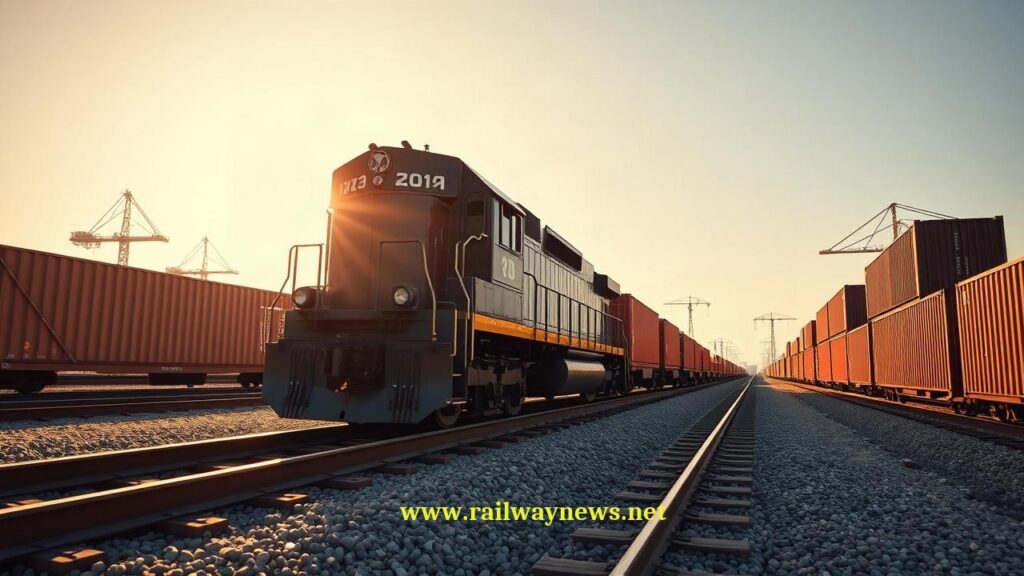
⚡ In Brief: The Georgia Coastal Trade PAC launched in 2025 to organize maritime, rail, and transport operators across Georgia, aiming to influence state logistics legislation supporting a USD 370 billion North American rail freight market.
SAVANNAH, UNITED STATES – The newly established Georgia Coastal Trade PAC launched an advocacy initiative in 2025 to mobilize maritime, logistics, and freight rail stakeholders in state legislative races and local elections. The political action committee seeks to protect freight infrastructure investments supporting a global rail freight sector valued at USD 370.0 billion in 2025 (Source: Future Market Insights, 2025). Board Chair Matt Campbell confirmed that the non-partisan coalition will endorse candidates focused on port capacity, rail links, and regional trade policy.
What Is the Full Scope of This Development?
The Georgia Coastal Trade PAC (GCT-PAC) unites maritime terminal operators, intermodal rail providers, and industrial manufacturers into a unified state-level political lobbying vehicle. The coalition aims to secure legislative backing for critical freight corridors connecting deepwater ports to inland intermodal transfer hubs. Board Chair Matt Campbell stated that direct political participation is necessary to direct transport policy and tax frameworks rather than allowing third parties to define logistics rules. Specific fundraising targets, donor contribution tiers, and initial campaign budgets were not disclosed by the organization.
Key Development Data
| Parameter | Value |
|---|---|
| Company / Organisation | Georgia Coastal Trade PAC (GCT-PAC) |
| Total Value | Not disclosed |
| Parties Involved | Georgia maritime, logistics, manufacturing, and transport stakeholders; Matt Campbell (Board Chair) |
| Timeline / Completion | Formed 2025; active for upcoming state legislative and municipal election cycles |
| Country / Corridor | United States / Georgia Atlantic Coast and Southeastern Rail Corridor |
How Does This Compare to Industry Trends?
Port and logistics coalitions increasingly mobilize political action to counter regulatory delays that impede major intermodal gateway developments. Freight operators face challenges comparable to international port disputes, such as the Roberts Bank Terminal 2 project in Delta, British Columbia, where long environmental reviews and regulatory hurdles impacted Global Container Terminals Inc. (Source: Delta Voices, 2024). Commercial rail logistics expansion demands coordinated public policy, as the rail freight market is forecast to grow from USD 370.0 billion in 2025 to USD 602.7 billion by 2036 at a 4.5% compound annual growth rate (Source: Future Market Insights, 2025). Class I carriers including BNSF Railway and Union Pacific depend heavily on state-level infrastructure coordination to maintain fluidity between sea terminals and inland destinations (Source: GM Insights, 2025).
Editor’s Analysis
Logistics operators in key shipping hubs can no longer depend solely on administrative port authorities to secure capital investments. By entering public policy and campaign finance directly, Georgia freight stakeholders are creating legislative protection for intermodal rail access, grade separation, and dock capacity. This organized advocacy positions coastal freight corridors to absorb sustained volume growth, as long-term market forecasts project global rail freight revenue to reach EUR 567.3 billion by 2035 (Source: Railmarket, 2025).
FAQ
Q: What is the Georgia Coastal Trade PAC?
A: It is a non-partisan political action committee formed by maritime, transportation, and manufacturing leaders in Georgia. The committee works to endorse candidates and pass legislation that support port infrastructure and freight corridors.
Q: How much capital has the Georgia Coastal Trade PAC raised?
A: Official financial balance sheets and contribution totals were not disclosed at the time of formation. Campaign finance filings will register contributions in accordance with state disclosure schedules.
Q: How does this political organization affect rail freight operators?
A: Coordinated policy engagement directly influences public funding for rail-served industrial parks, intermodal yards, and track clearances. Stronger legislative alignment reduces project approval bottlenecks that delay freight network expansions.

Railway infrastructure, rolling stock and transport technologies specialist focused on global rail industry developments, high-speed rail systems, signaling technologies and freight transportation. Covering railway investments, public transport modernization, rail operations and international mobility projects across Europe, Asia and North America.
RELATED POSTS

October 8, 2026 1:15 pm
Alstom secured a €1bn contract to build 13 automated trains,...

October 1, 2026 7:09 am
United States regulators confirmed a September 30 deadline for the...

October 4, 2026 5:14 pm
Alstom secured a CA$4.7 billion order from VIA Rail Canada...

October 1, 2026 12:13 am
Illinois approved $1.5 billion annually for the Northern Illinois Transit...
October 6, 2026 2:14 am
Union Pacific launched export rail shipments with Ferromex to deliver...

October 1, 2026 6:10 am
Amtrak approved a System Expansion Committee on July 30 to...