
VolkerRail Completes 22-Day Charing Cross Track Renewal
VolkerRail confirmed the end of a 22-day track renewal at London Charing Cross, replacing 16 switches and crossings on time with rail firm Quattro Plant.
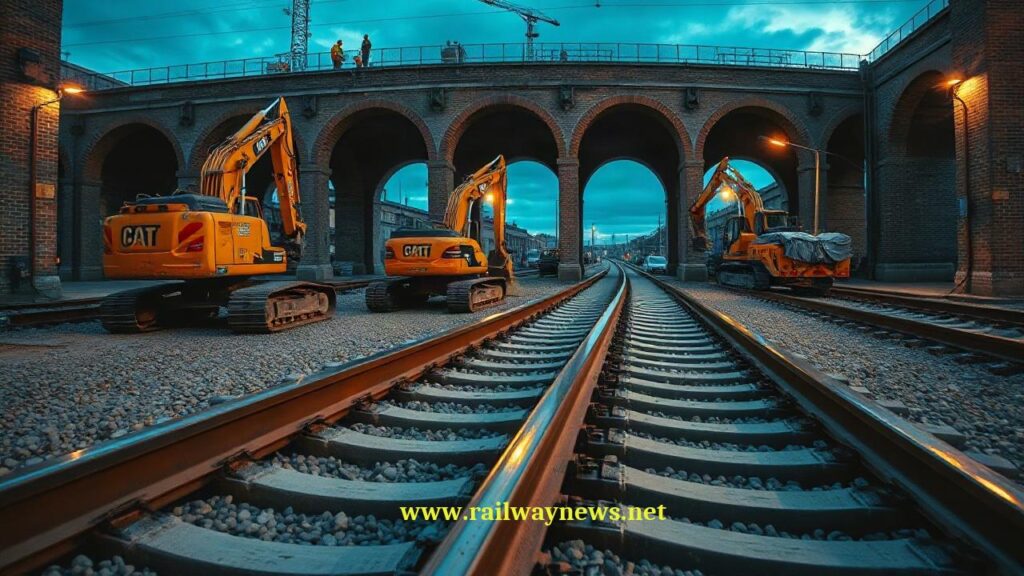
⚡ In Brief: Quattro Plant and VolkerRail completed a 22-day track and platform renewal at London Charing Cross station, replacing 16 switches and crossings using specialized tandem-lift transport and heavy excavators during an intensive summer blockade.
LONDON, United Kingdom – VolkerRail and rail plant specialist Quattro completed an intensive track renewal at London Charing Cross station, replacing 16 switches and crossings during a scheduled 22-day blockade. The operation required moving pre-assembled track panels measuring up to 3.7 meters wide and weighing up to 16 metric tons into central London under specialist police escort. Round-the-clock shifts deployed five DX140 excavators and two Komatsu dozers, completing roughly 65 ten-hour machine shifts each to deliver the site back on schedule.
What Is the Full Scope of This Project?
The Charing Cross station works entailed the complete replacement of 16 switches and crossings alongside critical substructure excavation to stabilize track geometry and address historical platform subsidence. Quattro’s road transport division moved the oversized assemblies from Kent to central London across four nights, deploying three haulage lorries per night with tandem-lifting Monster Bug cranes. Track teams excavated spent ballast, lifted old rail onto scrap trains, and prepared the formation before installing fresh ballast and pre-built panels. Fleet attachments utilized during the 22-day closure included seven-leg hydraulic sleeper bailers, panel grabs, thimbles, drag clamps, and ballast brushes.
Key Project Data
| Parameter | Value |
|---|---|
| Project / Contract Name | Charing Cross Track Renewal and Platform Works |
| Total Value | Not disclosed |
| Parties Involved | VolkerRail, Quattro Plant, Network Rail |
| Timeline / Completion | 22-day blockade (Completed on schedule) |
| Country / Corridor | United Kingdom / London Charing Cross Station |
How Does This Compare to Similar Projects?
Blockade execution within constrained urban rail terminals presents operational risks that contrast sharply with large-scale transit buildouts facing protracted delivery schedules. Metrolinx’s Eglinton Crosstown LRT in Toronto suffered multi-year schedule slippages and heavy cost overruns, exceeding the per-kilometer capital expense of the 2002 Sheppard Subway and prompting transit authorities to reassess contractual models for subsequent projects like the Ontario Line (Source: The Globe and Mail, 2025). While complex North American light rail projects have struggled with procurement alignment, focused rail renewals in the UK increasingly rely on continuous blockade delivery models to restrict passenger disruption to a predetermined window. Independent verification of the exact contract expenditure for the Charing Cross intervention was not available at time of publication.
Editor’s Analysis
The on-time completion of the Charing Cross blockade demonstrates how short-duration access possessions minimize network vulnerability compared to long-running, piecemeal weekend works. This operational model aligns with broader sector expansion, as the UK rail market is projected to grow from USD 108.15 billion in 2025 to USD 185.31 billion by 2034 at a compound annual growth rate of 6.65% (Source: Market Data Forecast, 2025). As passenger demand in urban centers rebounds, infrastructure managers will increasingly prioritize high-density machinery deployments to clear renewal backlogs under compressed timelines.
FAQ
Q: Why did the Charing Cross project require specialist road escorts?
A: The pre-assembled track panels measured up to 3.7 meters wide and weighed up to 16 metric tons, exceeding standard highway freight allowances. Quattro dispatched three specialized vehicles per night over four nights from Kent under dedicated escort to comply with UK road safety regulations.
Q: What heavy machinery was deployed during the 22-day blockade?
A: The work site utilized five Doosan DX140 road-rail excavators, two upgraded Komatsu dozers, and Quattro Monster Bug tandem-lift cranes. A team of more than 30 operators, fitters, and supervisors operated on rolling 10-hour shifts to sustain continuous site activity.
Q: What was the total capital expenditure for the track renewal?
A: Total commercial expenditure for the project was not disclosed by VolkerRail, Quattro, or Network Rail. Detailed financial allocations for individual switch and crossing packages within this blockade remain commercially confidential.

Railway infrastructure, rolling stock and transport technologies specialist focused on global rail industry developments, high-speed rail systems, signaling technologies and freight transportation. Covering railway investments, public transport modernization, rail operations and international mobility projects across Europe, Asia and North America.
RELATED POSTS

October 8, 2026 1:15 pm
Alstom secured a €1bn contract to build 13 automated trains,...

October 1, 2026 7:09 am
United States regulators confirmed a September 30 deadline for the...

October 4, 2026 5:14 pm
Alstom secured a CA$4.7 billion order from VIA Rail Canada...

October 8, 2026 12:18 pm
Siemens Mobility signed an agreement with VinSpeed to supply 350...

October 1, 2026 12:13 am
Illinois approved $1.5 billion annually for the Northern Illinois Transit...

October 5, 2026 6:12 pm
AECOM and Jacobs secured a contract in September 2026 to...