
Florida Secures $456M to Upgrade 900 Rail Crossings
FDOT secured $456 million in joint federal and state funds to deploy safety barriers, median separators, and signal upgrades at 900 rail crossings in Florida.
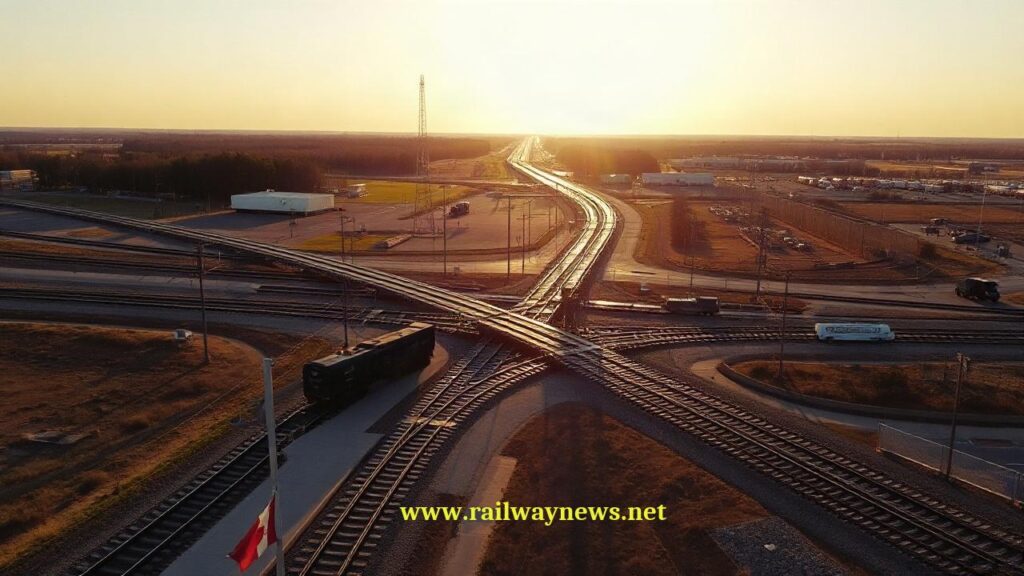
⚡ In Brief: The Florida Department of Transportation secured a $356 million Federal Railroad Administration grant alongside $100 million in state funds to upgrade safety infrastructure across 900 rail crossings.
TALLAHASSEE, USA – The Florida Department of Transportation (FDOT) secured a $356 million federal grant matched by $100 million in state capital to upgrade safety measures across more than 900 rail grade crossings. Administered under the Federal Railroad Administration’s (FRA) National Railroad Partnership Program, the joint $456 million investment targets vehicle-train conflict points on active passenger and mixed-use corridors. Work will focus on the deployment of physical protective barriers, traffic channelization, and congestion reduction around active tracks.
How Is the Funding Structured?
The $456 million grade crossing package combines $356 million in federal capital funds with a mandatory $100 million state co-investment. Federal disbursement is handled via the FRA National Railroad Partnership Program, which directs capital to intercity passenger rail routes to decrease crossing collisions. Funds will finance the physical hardening of intersections, including four-quadrant gate installations, median separators, and signal timing adjustments across statewide networks. A detailed project-by-project budget allocation and contractor procurement schedule was not disclosed by FDOT at the time of announcement.
Key Funding Data
| Parameter | Value |
|---|---|
| Fund / Programme Name | National Railroad Partnership Program (FRA) |
| Total Value | $456 million USD ($356M federal / $100M state) |
| Parties Involved | Federal Railroad Administration (FRA), Florida Department of Transportation (FDOT) |
| Timeline / Completion | Not disclosed |
| Country / Corridor | United States / Statewide Florida rail network |
How Does This Compare to Similar Funding Programs?
Statewide grade-crossing modernization programs in the United States average significantly less funding per intersection than full grade-separation projects. In comparison to Florida’s $456 million multi-site award, the North Carolina Department of Transportation secured a singular $300 million federal rail grant directed toward comprehensive corridor improvements and safety alignments (Source: Construction Equipment Guide, 2024). North American passenger rail modernization and safety investments are projected to reach $6.30 billion by 2026, supported by federal capital programs targeting passenger line protection (Source: Market Research Future, 2025). Distributing $456 million across 900 crossings yields an average of approximately $506,000 per location, confirming the program emphasizes low-cost physical barriers and traffic flow controls rather than multi-million-dollar overpass structures.
Editor’s Analysis
Florida’s passenger networks face severe operating friction from dense road networks, making street-level crossing enforcement critical to long-term operational viability. As passenger modernization spending expands toward $6.30 billion in North America by 2026 (Source: Market Research Future, 2025), federal disbursements are concentrating heavily on risk reduction at mixed-traffic interfaces. FDOT’s state match sets an operational baseline where physical channelization precedes corridor speed increases, directly insulating operators from crossing-related liability.
FAQ
Q: Which Florida rail lines will receive the safety upgrades?
A: FDOT confirmed the funding applies to 900 crossings statewide on commuter and intercity passenger routes. A comprehensive list of individual crossing locations was not disclosed at the time of publication.
Q: What is the delivery schedule for the crossing modifications?
A: A formal completion date was not disclosed by federal or state officials. Standard multi-crossing federal grant implementation cycles generally execute across three to five construction seasons.
Q: What specific hardware will be installed at the targeted crossings?
A: Planned works include physical barriers, traffic separators to prevent drivers from weaving around lowered gates, and redesigned vehicle approaches. These engineering adjustments aim to eliminate conflict points between road vehicles and fast-moving passenger trains.

Railway infrastructure, rolling stock and transport technologies specialist focused on global rail industry developments, high-speed rail systems, signaling technologies and freight transportation. Covering railway investments, public transport modernization, rail operations and international mobility projects across Europe, Asia and North America.
RELATED POSTS

September 6, 2026 5:19 am
Hitachi delivered Taiwan's first N700ST high-speed train from Japan in...

September 6, 2026 6:17 am
Hungary ordered a national ban on most freight trains from...

September 6, 2026 1:17 am
Hitachi Toshiba Supreme Consortium confirmed the first of 12 N700ST...

September 5, 2026 4:19 pm
CPK launched formal tender talks with four consortia to design...

September 6, 2026 4:12 am
Alstom delivered the first of 100 new G Class trams...
September 7, 2026 8:16 am
Midea, Gree and TCL shipped air conditioners via China Railway...