
NJDOT Launches $25M Rail Freight Assistance Program
NJDOT launched its $25 million rail freight program, offering short lines up to 90% state funding to upgrade port rail connections for fiscal year 2027.
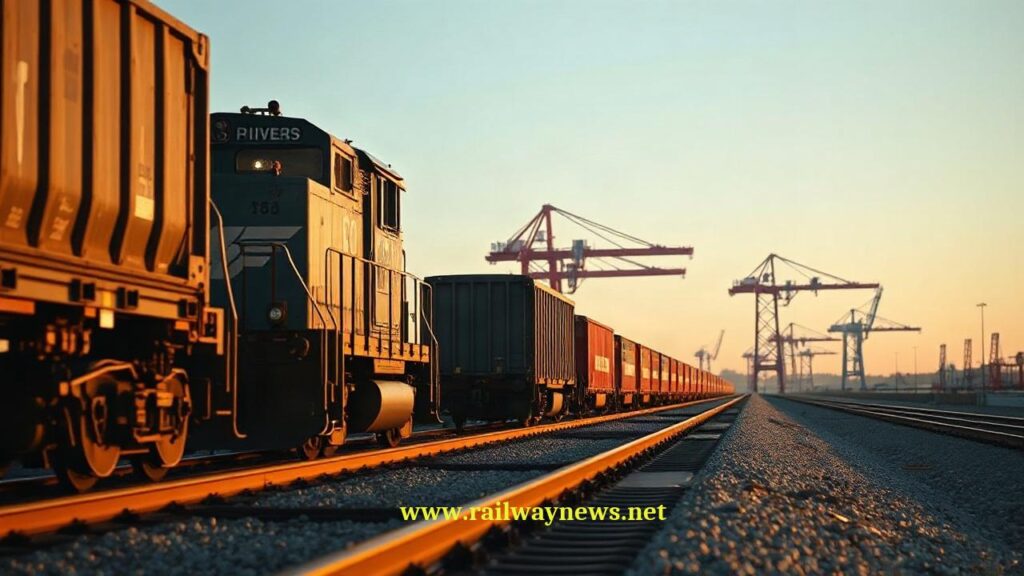
⚡ In Brief: The New Jersey Department of Transportation has opened applications for its $25 million 2027 Rail Freight Assistance Program, offering short lines up to 90% state grant funding to eliminate port bottlenecks and upgrade lines to 286,000-pound axle capacity.
TRENTON, UNITED STATES – The New Jersey Department of Transportation (NJDOT) opened the application window for its annual Rail Freight Assistance Program (RFAP) offering $25 million in capital grants for fiscal year 2027. Short line operators seeking infrastructure funding must submit their proposals by October 9, 2026, following prior clearance of an online eligibility assessment. Selected projects will receive up to 90% state co-financing to strengthen freight connectivity to maritime ports and upgrade track capacity.
How Is the Funding Structured?
The Rail Freight Assistance Program provides 90% direct state funding toward approved infrastructure work, requiring short line awardees to cover the remaining 10% of total project costs through local equity. State prioritization focuses on projects that eliminate missing rail connections to New Jersey’s commercial ports and modernize track infrastructure to the standard 286,000-pound (130-tonne) carload carrying capacity. Specific award caps per project were not disclosed by the agency in its call for applications.
Key Funding Data
| Parameter | Value |
|---|---|
| Fund / Programme Name | 2027 Rail Freight Assistance Program (RFAP) |
| Total Value | $25 million annually |
| Parties Involved | New Jersey Department of Transportation (NJDOT), short line freight railroads |
| Timeline / Completion | Applications close October 9, 2026; project completion dates not disclosed |
| Country / Corridor | United States / New Jersey Port Commerce Corridors |
How Does This Compare to Similar Funding Programs?
New Jersey’s 90-10 match structure offers higher state grant leverage than many state freight formulas, addressing severe capital deficits common among regional feeder lines. In comparison, western short lines like Oregon’s Portland & Western Railroad face major infrastructure restoration backlogs without dedicated state port-link programs of comparable leverage, contending with high-cost disruptions such as the 2024 Durkee Fire on regional corridors (Source: Oregon Department of Transportation, 2024). Furthermore, national short lines face escalating operating balance constraints; for example, the Brotherhood of Locomotive Engineers and Trainmen negotiated multi-year wage increases across operators like Carrollton Railroad through 2029 and Indiana & Ohio Railway through 2030, reducing the internal cash flow small carriers can direct to track upgrades (Source: BLET, 2024).
Editor’s Analysis
NJDOT’s emphasis on 286,000-pound track modernization reflects a critical operational necessity as Class I interchange partners refuse to accept non-compliant carloads without costly transloading delays. As the international rail freight market expands toward a projected USD 534.6 billion value by 2034, port-proximate short lines serve as the vital link for expanding bulk commodity and intermodal volumes (Source: Market.us, 2025). By absorbing 90% of capital exposure, New Jersey protects its supply chain gateways against the deferred track maintenance vulnerabilities that continue to plague capital-constrained short line operators elsewhere.
FAQ
Q: What is the application deadline for the New Jersey RFAP grant cycle?
A: Railroad operators must submit complete funding proposals by October 9, 2026. Applicants must obtain state approval on an online eligibility assessment prior to submitting the formal application.
Q: What types of track upgrades receive preference under this program?
A: NJDOT targets infrastructure projects that eliminate missing rail access links to state ports and upgrade trackage to handle 286,000-pound railcars. Grant recipients receive 90% state funding and must finance the remaining 10%.
Q: Has NJDOT specified a maximum funding allocation per rail project?
A: An individual maximum grant cap per recipient was not disclosed by NJDOT in the official solicitation. Total available funding across all selected 2027 short line projects is $25 million.

Railway infrastructure, rolling stock and transport technologies specialist focused on global rail industry developments, high-speed rail systems, signaling technologies and freight transportation. Covering railway investments, public transport modernization, rail operations and international mobility projects across Europe, Asia and North America.
RELATED POSTS

October 8, 2026 1:15 pm
Alstom secured a €1bn contract to build 13 automated trains,...

October 1, 2026 7:09 am
United States regulators confirmed a September 30 deadline for the...

October 8, 2026 12:18 pm
Siemens Mobility signed an agreement with VinSpeed to supply 350...

October 4, 2026 5:14 pm
Alstom secured a CA$4.7 billion order from VIA Rail Canada...

October 1, 2026 12:13 am
Illinois approved $1.5 billion annually for the Northern Illinois Transit...

October 5, 2026 6:12 pm
AECOM and Jacobs secured a contract in September 2026 to...