
Edmonton Expands Hyundai Rotem LRV Order to 40 Vehicles
Edmonton expanded its Hyundai Rotem LRV order to 40 vehicles, adding eight cars for Metro Line Northwest Phase 1 and Capital Line South Phase 1.
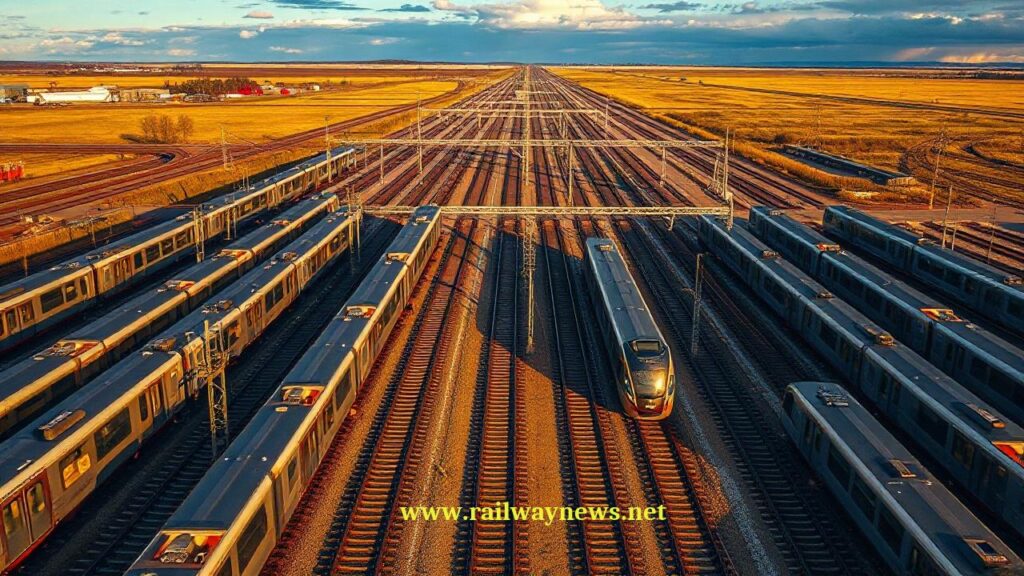
⚡ In Brief: Edmonton has purchased eight additional Hyundai Rotem high-floor LRVs, raising its 2026 order from 32 to 40 vehicles for the Metro Line Northwest Phase 1 and Capital Line South Phase 1 expansions.
EDMONTON, Alberta – The city of Edmonton signed a follow-on contract with Hyundai Rotem Co. on 31 July 2026 for eight additional high-floor light-rail vehicles (LRVs), bringing the total order to 40 vehicles. A base contract for 32 vehicles was awarded in February 2026. Deliveries are scheduled for 2029 and 2030, after design and manufacturing begin later this year.
What Does This Contract Cover?
This contract covers eight additional high-floor Hyundai Rotem LRVs intended to operate on Edmonton Transit Service’s two expansion corridors. The February 2026 base award was for 32 vehicles; the option exercised this summer makes the new-build fleet total 40. The vehicles are designed to replace the Siemens U2 LRVs that have served Edmonton for more than 45 years, and they will support Metro Line Northwest Phase 1 and Capital Line South Phase 1. No maintenance or long-term services package was confirmed in the announcement.
Key Contract Data
| Parameter | Value |
|---|---|
| Contract Name | Edmonton Transit Service Hyundai Rotem high-floor LRV procurement |
| Total Value | Not disclosed |
| Parties Involved | City of Edmonton / Edmonton Transit Service; Hyundai Rotem Co. |
| Timeline / Completion | Design and manufacturing begin in 2026; deliveries 2029–2030 |
| Country / Corridor | Canada — Metro Line Northwest Phase 1; Capital Line South Phase 1, Edmonton |
How Does This Compare to Similar Contracts?
Edmonton’s 40-car order is being placed while urban rail investment data shows strong global expansion: China’s 58 cities operated 382 urban rail lines totalling more than 13,000 km in 2025, with more than 3,125 km of high-capacity metro systems under construction (Source: East is Read, 2025). In North America, Valley Metro’s Northwest Extension Phase II in Phoenix is a relevant corridor-level benchmark, covering 1.6 miles of new track, two at-grade stations, an elevated transit center, and a bridge over Interstate 17; that project was delivered through a construction-manager-at-risk contract with Kiewit-McCarthy and Jacobs rather than through a separate vehicle procurement like Edmonton’s (Source: RT&S, 2025).
The city did not disclose the value of the eight-car option, the unit price, or the number of U2 cars to be retired, so a direct cost benchmark against Hyundai Rotem’s base order or other North American LRV contracts is not possible.
Editor’s Analysis
By exercising the option before deliveries begin, Edmonton is seeking to avoid a sequenced gap in which new track opens before sufficient high-floor rolling stock is available. Hyundai Rotem gains a larger North American reference fleet without renegotiating the original February 2026 order, while the city preserves platform compatibility with its existing high-floor LRT network. Globally, rail capital investment is accelerating — high-speed rail investment rose 24% in 2025, with Asia-Pacific accounting for 63% of high-speed rail development activity — meaning Canadian agencies may need to reserve manufacturing capacity earlier in project cycles (Source: Business Research Insights, 2025).
FAQ
Q: Does the eight-car option mean Edmonton will have 40 new LRVs in service by 2030?
A: The city has ordered 40 vehicles total, but no separate in-service completion date was given beyond deliveries in 2029 and 2030. The actual entry into service will depend on track commissioning for Metro Line Northwest Phase 1 and Capital Line South Phase 1.
Q: How much will the additional eight LRVs cost?
A: The city did not disclose the option value or the combined program cost. Hyundai Rotem and Edmonton Transit Service have not published unit pricing.
Q: Are these Hyundai Rotem LRVs compatible with Edmonton’s existing Siemens U2 fleet?
A: The new vehicles are high-floor LRVs, matching the platform height of the existing network and replacing the Siemens U2 cars that have operated for more than 45 years. The city has not confirmed specific signalling or electrical integration details beyond the procurement announcement.

Railway infrastructure, rolling stock and transport technologies specialist focused on global rail industry developments, high-speed rail systems, signaling technologies and freight transportation. Covering railway investments, public transport modernization, rail operations and international mobility projects across Europe, Asia and North America.
RELATED POSTS

October 8, 2026 1:15 pm
Alstom secured a €1bn contract to build 13 automated trains,...

October 1, 2026 7:09 am
United States regulators confirmed a September 30 deadline for the...

October 8, 2026 12:18 pm
Siemens Mobility signed an agreement with VinSpeed to supply 350...

October 4, 2026 5:14 pm
Alstom secured a CA$4.7 billion order from VIA Rail Canada...

October 5, 2026 6:12 pm
AECOM and Jacobs secured a contract in September 2026 to...

October 1, 2026 12:13 am
Illinois approved $1.5 billion annually for the Northern Illinois Transit...