
Zimbabwe Approves EUR 3 Billion Harare Light Rail Project
Zimbabwe approved the EUR 3 billion Harare Light Rail project, whose Phase 1 is a 30.4 km solar-charged viaduct line to Kuwadzana for 350,000 daily passengers.
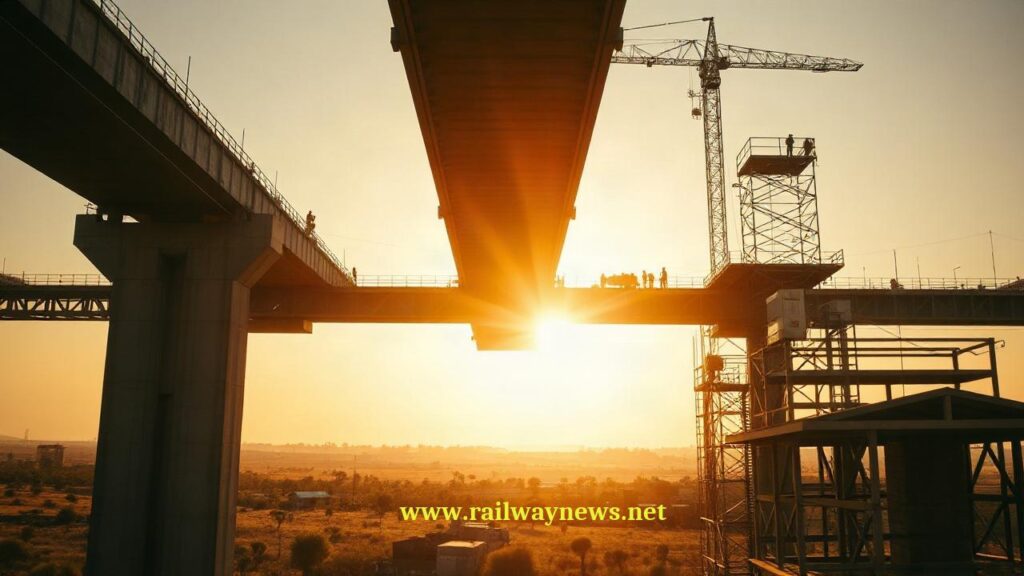
⚡ In Brief: Zimbabwe has approved a EUR 3 billion public-private light rail programme for Harare; Phase 1 is a 30.4 km solar-charged battery-powered viaduct line to Kuwadzana designed to carry over 350,000 passengers daily.
HARARE, Zimbabwe – Zimbabwe’s government has approved the EUR 3 billion Harare light rail project, developed by Harare Light Rail (Private) Limited, according to reporting published in July 2026 (Source: African Business, 2026). Phase 1 is a 30.4 km line running entirely on viaduct between the city centre and the western district of Kuwadzana, with an estimated cost of USD 775 million. Construction is expected to take roughly three years, after which four additional phases will extend service across the metropolitan area.
What Is the Full Scope of This Project?
Harare’s approved light rail network comprises five phases covering the capital’s east–west, eastern, southern and northern corridors. Phase 1 links the central business district with Kuwadzana along the densest commuter axis; later phases extend east to the airport and Mabvuku, south to Harare South and Chitungwiza, and north to Borrowdale and the new administrative centre at Mt Hampden.
The traction decision is central to the project: trains will be battery-electric, charged through solar-powered infrastructure, after hydrogen and liquefied natural gas options were evaluated during design. The developer forecasts 350,000 passengers per day on Phase 1 and more than 1 million daily passengers once the wider network is complete.
Although the project has been approved as a public-private partnership, the equity split, concession period and public guarantee structure have not been disclosed.
Key Project Data
| Parameter | Value |
|---|---|
| Project / Contract Name | Harare Light Rail – Phase 1 (CBD–Kuwadzana) plus four extension phases |
| Total Value | EUR 3 billion (full network); USD 775 million (Phase 1) |
| Parties Involved | Government of Zimbabwe; Harare Light Rail (Private) Limited |
| Timeline / Completion | Approx. 3 years for Phase 1 construction; sequential phases thereafter. Exact opening date not officially disclosed. |
| Country / Corridor | Zimbabwe / Harare – east–west corridor; later corridors to airport and Mabvuku, Harare South and Chitungwiza, Borrowdale and Mt Hampden |
How Does This Compare to Similar Projects?
Phase 1 of the Harare light rail equates to roughly USD 25.5 million per route-km, a cost level associated with fully elevated or tunnelled metro construction rather than conventional at-grade light rail; no sub-Saharan African light rail system of comparable length has previously been built entirely on viaduct. By contrast, Addis Ababa’s light rail network — one of the few sub-Saharan LRT benchmarks — uses predominantly at-grade alignment, making direct cost-per-km comparison of limited value.
Set against global spending, Zimbabwe’s EUR 3 billion programme is not exceptionally large. Italy’s 2025–2029 strategic plan allocates EUR 18 billion to national rail infrastructure (Source: RailwayPRO, 2025), while rolling stock investor RAILPOOL committed an estimated EUR 2.7 billion to the European market in 2025 — an amount equal to roughly 90% of the entire Harare programme’s headline value (Source: Railvolution, 2025). The African Development Bank’s financing agreement for an Algerian railway project in July 2026 shows that rail investment on the continent is broadening, but the Algerian scheme is intercity-focused rather than a metropolitan light rail system (Source: Railway Gazette, 2026).
One forecast deserves particular scrutiny: a single 30.4 km line carrying 350,000 passengers daily would translate to roughly 128 million passengers per year, approaching the 135 million passengers carried by Copenhagen’s entire metro network in 2025 (Source: RailwayPRO, 2025). No route-level patron age model or feasibility study underpinning the Harare forecast has been published.
Editor’s Analysis
Political approval does not resolve financial risk: with no disclosed feasibility study, concession terms or public subsidy commitment, the burden rests on private sponsors to make revenues match an aggressive ridership assumption. Battery-powered rail systems grew by 14% globally in 2025 (Source: Business Research Insights, 2025), so Harare is riding a technology trend — but a solar-charged, fully elevated battery light rail line of this scale would be a first for Africa, raising both its demonstration value and its execution risk.
FAQ
Q: Which areas will the Harare light rail connect?
A: Phase 1 runs from the city centre to the western district of Kuwadzana, entirely on a viaduct. Later phases will serve the airport and Mabvuku, Harare South and Chitungwiza, Borrowdale and Mt Hampden.
Q: Why does Phase 1 cost so much per kilometre?
A: The full 30.4 km alignment will be built on viaduct, making the cost comparable to an elevated metro rather than surface light rail. No official breakdown of civil works, systems and land acquisition costs has been released.
Q: How will the trains be powered?
A: Battery-powered trains will recharge via solar-powered charging infrastructure. Hydrogen and LNG were assessed during design but were not selected; the technical evaluation criteria have not been published.

Railway infrastructure, rolling stock and transport technologies specialist focused on global rail industry developments, high-speed rail systems, signaling technologies and freight transportation. Covering railway investments, public transport modernization, rail operations and international mobility projects across Europe, Asia and North America.
RELATED POSTS

October 8, 2026 1:15 pm
Alstom secured a €1bn contract to build 13 automated trains,...

October 1, 2026 7:09 am
United States regulators confirmed a September 30 deadline for the...

October 8, 2026 12:18 pm
Siemens Mobility signed an agreement with VinSpeed to supply 350...

October 4, 2026 5:14 pm
Alstom secured a CA$4.7 billion order from VIA Rail Canada...

October 5, 2026 6:12 pm
AECOM and Jacobs secured a contract in September 2026 to...

October 1, 2026 12:13 am
Illinois approved $1.5 billion annually for the Northern Illinois Transit...