
MBTA Completes Red Line Slow-Zone-Free Renewal in Boston
MBTA confirmed Red Line is slow zone-free for the first time in 20 years after a 10-day renewal replacing 37 floating slabs and 3,600 feet of rail in Boston.
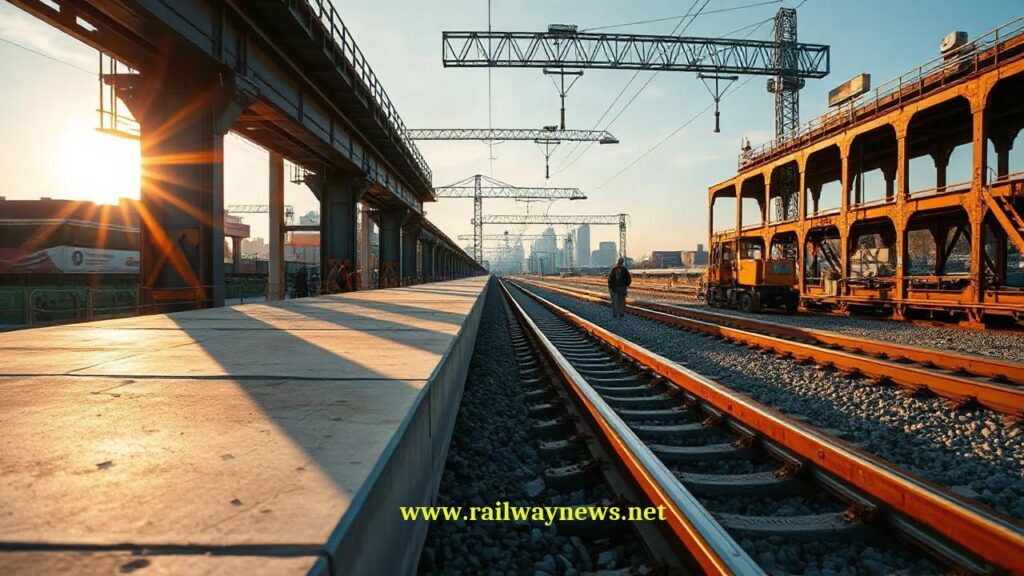
⚡ In Brief: MBTA finished a 10-day Red Line track renewal in Boston, replacing 37 floating slabs and 3,600 feet of rail, making the line slow zone-free for the first time in 20 years.
BOSTON – The Massachusetts Bay Transportation Authority (MBTA) recently completed a 10-day Red Line renewal between Alewife and Park Street stations, replacing 37 floating slabs and 3,600 feet of rail. The operator says the subway line is now slow zone-free for the first time in 20 years. MBTA also completed testing of a new digital signal system on the Red Line Ashmont branch.
What Is the Full Scope of This Project?
The renewal addressed worn base slabs, running rail, ties, and track surface in a single possession of the rail corridor. Crews replaced 24 primary and 13 secondary floating slabs — original assets about 45 years old — along with 3,600 feet of rail, 950 feet of full-depth track, and 160 ties. A further 3,290 feet of surfacing was completed on track sections described by MBTA officials as complicated. No total contract value, labour-hour figures, or signal system vendor details were disclosed in the MBTA project update.
Key Project Data
| Parameter | Value |
|---|---|
| Project / Contract Name | MBTA Red Line Track Renewal and Ashmont Digital Signal Testing |
| Total Value | Not disclosed |
| Parties Involved | MBTA; contractors not identified in the newsletter |
| Timeline / Completion | 10-day closure between Alewife and Park Street; completion date not specified |
| Country / Corridor | United States / Boston, Massachusetts — Red Line (Alewife–Park Street; Ashmont branch signal test) |
How Does This Compare to Similar Projects?
The recent renewal builds on MBTA’s 2024 Track Improvement Program, which removed 85 long-standing speed restrictions on the same corridor (Source: MBTA, 2025). Internationally, metro operators are pairing infrastructure replacement with digital signalling: Mumbai Metro Line 4 is receiving Alstom cars and CBTC signalling, while the Taipei–Keelung metropolitan MRT is being delivered with Hitachi Rail signalling and SCADA systems (Source: Future Market Insights, 2025). MBTA’s 10-day possession approach reflects a broader maintenance pattern, but the agency has not published cost-per-mile data that would allow direct benchmarking against those Asian contracts (Source: Future Market Insights, 2025).
The Red Line signalling work also fits a wider North American retrofitting trend: the railway communication network cables market is projected to grow at a compound annual rate of about 6.5% through 2035, driven in part by legacy cable replacement in European and North American metro systems (Source: IndexBox, 2025). UIC reported a 7% increase in global rail passenger traffic in 2024, supporting operator investment in corridor reliability upgrades rather than new greenfield lines (Source: UIC, 2025).
Note: Independent verification of the total project cost was not available at time of publication.
Editor’s Analysis
The slow-zone-free milestone turns a chronic passenger complaint into a measurable network achievement, but without disclosed cost or journey-time savings the Red Line renewal cannot yet be benchmarked against peer operators. Running Ashmont digital signal testing in parallel with slab and rail replacement shows MBTA prioritising corridor state-of-good-repair over expansion, a stance consistent with the North American retrofitting activity driving cable and signalling market growth (Source: IndexBox, 2025).
FAQ
Q: Is the Red Line now completely free of slow zones?
A: MBTA says yes — the Red Line is slow zone-free for the first time in 20 years. The 2024 Track Improvement Program removed 85 speed restrictions, and the recent 10-day renewal cleared the remaining restrictions, according to the authority.
Q: What is a floating slab and why did 37 need replacing?
A: A floating slab is a concrete track foundation mounted on elastomeric bearings to dampen vibration and maintain geometry. The 24 primary and 13 secondary slabs replaced on the Red Line were about 45 years old.
Q: What will the new digital signal system change for passengers?
A: The Ashmont branch system is intended to enable more precise train control and potentially support more frequent service. MBTA has not confirmed the supplier, revenue-service certification date, or the expected impact on headways.

Railway infrastructure, rolling stock and transport technologies specialist focused on global rail industry developments, high-speed rail systems, signaling technologies and freight transportation. Covering railway investments, public transport modernization, rail operations and international mobility projects across Europe, Asia and North America.
RELATED POSTS

October 8, 2026 1:15 pm
Alstom secured a €1bn contract to build 13 automated trains,...

October 1, 2026 7:09 am
United States regulators confirmed a September 30 deadline for the...

October 8, 2026 12:18 pm
Siemens Mobility signed an agreement with VinSpeed to supply 350...

October 4, 2026 5:14 pm
Alstom secured a CA$4.7 billion order from VIA Rail Canada...

October 5, 2026 6:12 pm
AECOM and Jacobs secured a contract in September 2026 to...

October 1, 2026 12:13 am
Illinois approved $1.5 billion annually for the Northern Illinois Transit...