
Wyss&Lila Opens 1,000-Square-Metre Rail Hub in Rijeka
Swiss company Wyss&Lila opened a new 1,000 sq m rail hub in Rijeka, Croatia, offering ECM-compliant services and 24/7 mobile response teams in Southeast Europe.
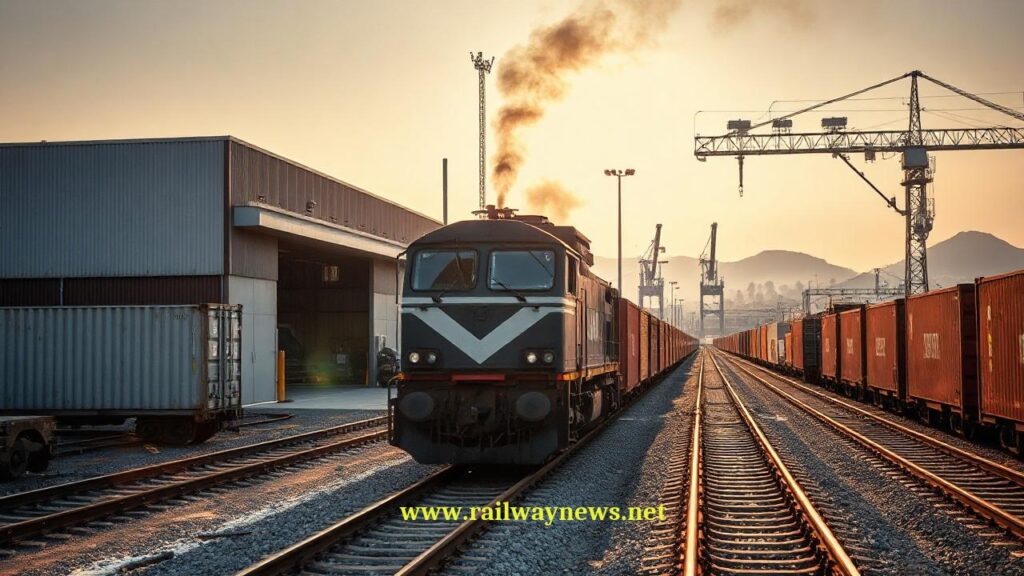
⚡ In Brief: Swiss company Wyss&Lila opened a 1,000-square-metre locomotive maintenance hub in Rijeka, Croatia, with 24/7 mobile response teams and ECM-compliant services; the investment value was not disclosed.
RIJEKA, CROATIA – Wyss&Lila has opened a rail maintenance hub in Rijeka, Croatia, anchored by a 1,000-square-metre workshop for locomotive and rolling stock maintenance. The facility supports preventive, corrective, and predictive work under ECM requirements and includes 24/7 mobile response teams serving South-East Europe. The investment value and exact opening date were not disclosed.
What Is the Full Scope of This Project?
The Rijeka hub comprises a 1,000-square-metre workshop for locomotive and rolling stock maintenance, including high-voltage test and diagnosis, electrical fault location, engineering services, technical modifications, and spare parts management. Wyss&Lila will target railway operators, leasing companies, and rolling stock manufacturers seeking to reduce vehicle downtime and increase operational reliability. The facility’s mobile response teams operate 24 hours a day, seven days a week across the South-East European region, enabling on-site work close to key freight corridors between Central Europe, the Balkans, and Adriatic ports.
Note: Independent verification of the investment value, job creation, and exact opening date was not available at time of publication.
Key Project Data
| Parameter | Value |
|---|---|
| Project / Contract Name | Wyss&Lila Rijeka railway maintenance hub |
| Total Value | Not disclosed |
| Parties Involved | Wyss&Lila; railway operators, leasing companies, rolling stock manufacturers as clients |
| Timeline / Completion | Facility opened; completion date not disclosed |
| Country / Corridor | Croatia; Rijeka, on Adriatic Sea, along European transport corridors between Central Europe, the Balkans, and Adriatic ports |
How Does This Compare to Similar Projects?
No direct comparable maintenance-hub investment value was disclosed by Wyss&Lila, but Croatia’s rail infrastructure pipeline provides the closest benchmark. Croatia is modernising the Čakovec–Varaždin–Koprivnica–Kloštar line with a €190 million upgrade and developing intermodal transport hubs in Varaždin and Ludbreg, part of HŽ Infrastructure’s planned €6 billion railway infrastructure investment by 2035 (Source: Croatia Week, 2026). This wider investment signals that the Rijeka hub is entering a market with substantial public-sector capacity expansion. By contrast, rolling stock manufacturers reported larger order volumes in 2025: Alstom’s orders reached €27.6 billion, while Stadler delivered the first nine FLIRT trains to Koleje Mazowieckie under a 75-train contract (Source: RailwayPro, 2025).
Editor’s Analysis
Rijeka’s role as a maintenance point is strengthened by Croatia’s rising rail freight ton-kilometres and the EU’s modal shift targets, which favour third-party technical services close to TEN-T corridors (Source: Statista, 2024). The absence of a disclosed investment figure makes direct scale comparisons difficult, but the 24/7 mobile component suggests Wyss&Lila is prioritising response speed over fixed workshop capacity alone. That aligns with a broader European pattern where maintenance outsourcing grows as rolling stock procurement accelerates, indicated by Alstom and Stadler order activity in 2025.
FAQ
Q: What services does the Wyss&Lila Rijeka hub provide?
A: The hub provides preventive, corrective, and predictive maintenance under ECM requirements, high-voltage testing, electrical diagnostics, fault location, engineering services, technical modifications, and spare parts management. Its 24/7 mobile response teams can work on site across South-East Europe.
Q: How much did Wyss&Lila invest in the Rijeka maintenance facility?
A: The company did not disclose the investment value. The facility covers approximately 1,000 square metres, but no financial figure or job creation number was officially confirmed.
Q: How does this hub affect rail operators using Croatia’s freight corridors?
A: Operators can carry out maintenance close to Rijeka port and European transport corridors, reducing locomotive downtime and dwell times. This supports Croatia’s broader rail strategy, including HŽ Infrastructure’s planned €6 billion investment by 2035.

Railway infrastructure, rolling stock and transport technologies specialist focused on global rail industry developments, high-speed rail systems, signaling technologies and freight transportation. Covering railway investments, public transport modernization, rail operations and international mobility projects across Europe, Asia and North America.
RELATED POSTS

October 1, 2026 7:09 am
United States regulators confirmed a September 30 deadline for the...

October 1, 2026 12:13 am
Illinois approved $1.5 billion annually for the Northern Illinois Transit...

October 1, 2026 6:10 am
Amtrak approved a System Expansion Committee on July 30 to...

October 1, 2026 3:12 am
Greenbrier confirmed Brian Comstock as new president and CEO effective...
October 1, 2026 4:10 am
DART launched two public ridership dashboards in March 2026 to...
October 1, 2026 5:14 am
Siemens confirmed delivery of the first new S200 train to...