
UK Government Invests £33.4M in Station Gates for England
UK government invested £33.4 million in station access gates across England to curb fare evasion with first installations in H1 2027 and completion by mid-2028.
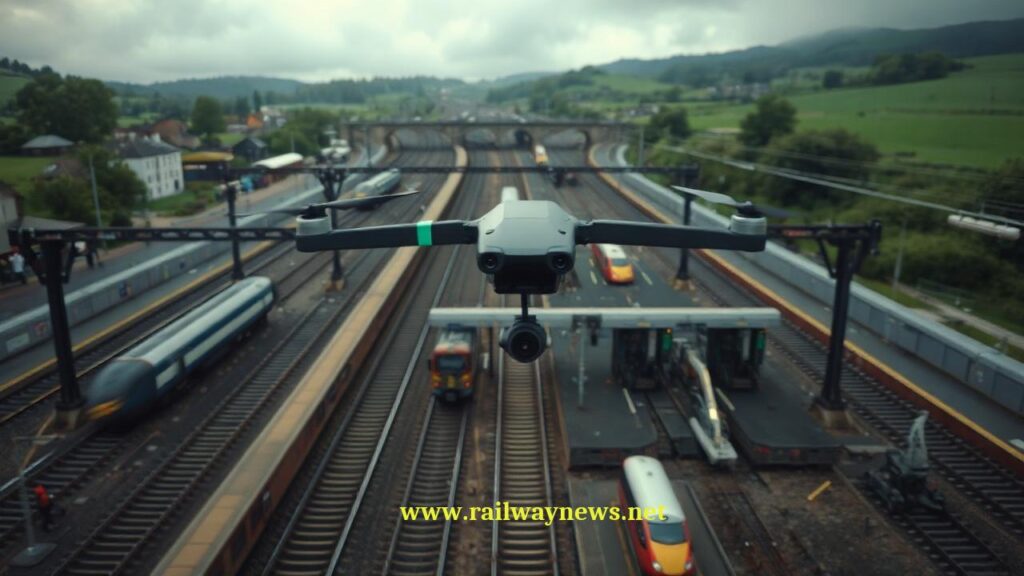
⚡ In Brief: The UK government will invest GBP 33.4 million (EUR 39 million) to install access gates at train stations across England, with first installations scheduled for the first half of 2027 and phase one completion by mid-2028.
LONDON, UK – The British government has allocated GBP 33.4 million to deploy new platform access gates at train stations throughout England, targeting an estimated annual fare evasion loss of up to EUR 468 million across the rail network. First installations begin in the first half of 2027, with the current phase concluding by mid-2028. The programme forms part of broader preparations for the launch of Great British Railways (GBR), the future coordinating body for the UK rail system.
How Is the Funding Structured?
The GBP 33.4 million (EUR 39 million) allocation is a direct government investment drawn from the broader rail reform budget, designated as phase one of a multi-stage programme to expand gated access at English stations. The funding covers procurement and installation of both standard-height gates and taller barrier models engineered to prevent passengers from jumping over turnstiles. Multiple access methods will be supported, including digital ticket scanning, printed ticket insertion, and contactless payment validation where Pay As You Go systems are operational. No breakdown of per-station costs or total gate quantities was officially disclosed.
Key Funding Data
| Parameter | Value |
|---|---|
| Fund / Programme Name | Station Access Gates Programme (Phase 1) |
| Total Value | GBP 33.4 million (EUR 39 million) |
| Parties Involved | UK Government; Great British Railways (GBR) transition team |
| Timeline / Completion | First installations H1 2027; phase one completion mid-2028 |
| Country / Corridor | England (with possible future expansion to other UK nations) |
How Does This Compare to Similar Funding Programs?
The GBP 33.4 million access gate investment represents approximately 8% of the estimated annual EUR 468 million (roughly GBP 400 million) lost to fare evasion, meaning the programme could break even within weeks if it curtails even a modest fraction of unpaid travel. By comparison, UK government rail expenditure reached GBP 7.1 billion for the HS2 high-speed project alone in the fiscal year ending March 2025, while total fare revenue across the network rose 8% to GBP 11.5 billion between April 2024 and March 2025, reflecting recovering passenger demand. (Source: UK Government Rail Trends, 2025; Railway Pro, 2025) The gate programme is a relatively low-cost, revenue-protection measure within a far larger spending envelope. Specific station locations and contractor awards were not disclosed at time of publication.
Note: The GBP 33.4 million rail access gate investment is separate from SSE’s GBP 33 billion grid and renewables infrastructure plan. Independent verification confirms these are distinct programmes under different government departments.
Editor’s Analysis
This investment signals that revenue protection, not just capital-intensive infrastructure builds, is climbing the Department for Transport’s priority list as Great British Railways takes shape. The timing aligns with a broader UK rail market expansion: the passenger rail segment accounted for 45.6% of market share in 2025, driven by high commuter volumes and government sustainability initiatives. (Source: Future Market Insights, 2025) Installing taller gates that resist barrier-jumping suggests the DfT is targeting behavioural fare evasion patterns observed at unstaffed or lightly supervised stations, a persistent operational headache that digital ticketing alone cannot solve.
FAQ
Q: Which stations will receive the new access gates?
A: The government has not published a list of specific stations. The programme targets stations across England that currently lack gated platform access, with potential expansion to Scotland and Wales in later phases.
Q: How much does fare evasion cost UK railways each year?
A: The British government estimates fare evasion costs the rail sector up to EUR 468 million annually — equivalent to roughly GBP 400 million at current exchange rates, or about 3.5% of the GBP 11.5 billion in annual fare revenue recorded in 2024–2025.
Q: Will the new gates work with digital tickets and contactless payments?
A: Yes. The gates will accept digital ticket scans, printed ticket insertion, and contactless payment validation in regions where Pay As You Go has been rolled out, including expanded trials underway in the East Midlands and South Yorkshire.

Railway infrastructure, rolling stock and transport technologies specialist focused on global rail industry developments, high-speed rail systems, signaling technologies and freight transportation. Covering railway investments, public transport modernization, rail operations and international mobility projects across Europe, Asia and North America.
RELATED POSTS

October 1, 2026 7:09 am
United States regulators confirmed a September 30 deadline for the...

October 1, 2026 12:13 am
Illinois approved $1.5 billion annually for the Northern Illinois Transit...

October 1, 2026 6:10 am
Amtrak approved a System Expansion Committee on July 30 to...
October 1, 2026 4:10 am
DART launched two public ridership dashboards in March 2026 to...
October 1, 2026 3:12 am
Greenbrier confirmed Brian Comstock as new president and CEO effective...

October 1, 2026 5:14 am
Siemens confirmed delivery of the first new S200 train to...