
Shizuoka Governor Approves Chuo Shinkansen Alpine Tunnel
JR Central secured Shizuoka governor approval July 7, 2026 for the EUR 59.4 billion Chuo Shinkansen Alpine tunnel project ending a nine-year construction delay.
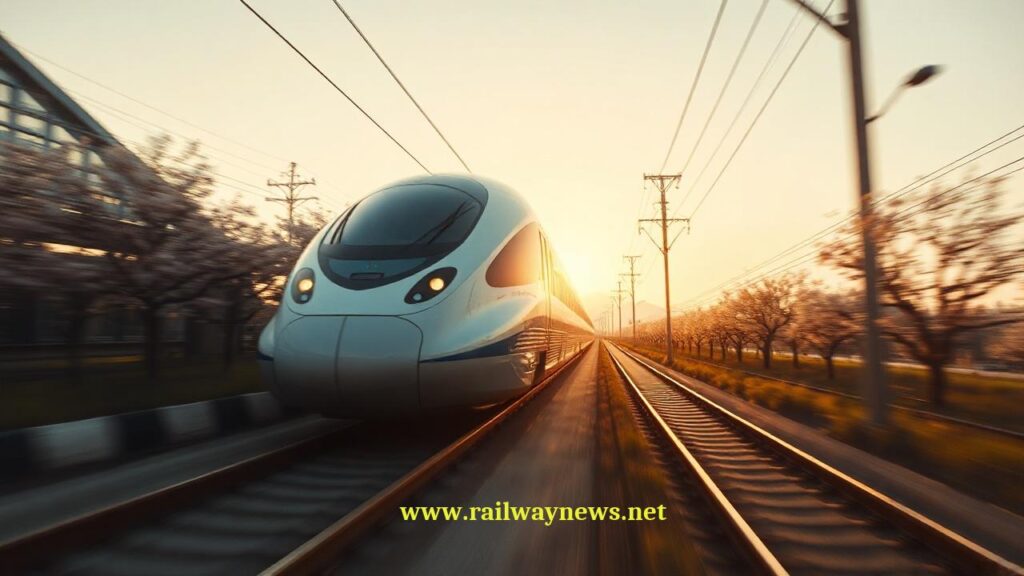
⚡ In Brief: Shizuoka Governor Yasutomo Suzuki approved construction of the Chuo Shinkansen maglev line’s Alpine tunnel section on July 7, 2026, clearing a nine-year delay for the Tokyo–Nagoya project now estimated at 11,000 billion yen (EUR 59.4 billion).
SHIZUOKA, JAPAN – Governor Yasutomo Suzuki of Shizuoka Prefecture granted approval on July 7, 2026, for construction of the prefecture’s segment of the Chuo Shinkansen maglev line, ending a stalemate that had frozen work since 2017. The approval follows JR Central’s acceptance of all 28 environmental protection measures demanded by the prefecture. The Tokyo–Nagoya section, originally slated for a 2027 opening, now carries a revised budget of approximately 11,000 billion yen (EUR 59.4 billion) and an earliest completion target of 2036.
What Is the Full Scope of This Project?
The Chuo Shinkansen is a 500 km/h superconducting maglev line connecting Shinagawa Station in Tokyo to Nagoya, traversing six prefectures — Kanagawa, Yamanashi, Shizuoka, Nagano, and Gifu — with no stations planned within Shizuoka Prefecture itself. The Shizuoka segment, though relatively short in linear distance, requires tunneling through the Southern Japanese Alps and represents the most technically demanding portion of the entire 286-km first-phase corridor. A second phase will extend the line to Osaka, cutting the Shinagawa–Osaka journey to approximately 67 minutes, compared to roughly 134 minutes on the existing Tokaido Shinkansen. JR Central designed the Superconducting Maglev system with superconducting magnets on the train and guideway coils, lifting vehicles approximately 10 cm above the track at cruising speed and eliminating mechanical contact during high-speed operation.
Key Project Data
| Parameter | Value |
|---|---|
| Project / Contract Name | Chuo Shinkansen (Tokyo–Nagoya Superconducting Maglev) |
| Total Value | 11,000 billion yen (~EUR 59.4 billion), revised from initial 5,500 billion yen |
| Parties Involved | Central Japan Railway Company (JR Central); Shizuoka Prefectural Government |
| Timeline / Completion | Construction in Shizuoka may begin late 2026; Tokyo–Nagoya opening no earlier than 2036 |
| Country / Corridor | Japan / Tokyo–Nagoya–Osaka (Pacific Belt, Honshu Island) |
How Does This Compare to Similar Projects?
The Chuo Shinkansen’s cost trajectory — doubling from 5,500 billion to 11,000 billion yen before major construction in the hardest section begins — places it among the most severe rail megaproject budget escalations globally. The UK’s HS2 Phase 1 (London–Birmingham, 225 km) saw its budget rise from an initial £32.7 billion (2013 estimate) to a range of £45–54 billion by 2023, an increase of roughly 40–65% (Source: UK National Audit Office, 2023). The Chuo Shinkansen has now surpassed a 100% cost increase, driven by geological complexity in the Southern Alps tunnels and nine years of suspended work in Shizuoka. By comparison, California’s High-Speed Rail project (Merced–Bakersfield initial operating segment, 275 km) has seen its cost estimate climb from approximately $33 billion (full Phase 1) to over $128 billion, though that project also expanded its scope materially (Source: California High-Speed Rail Authority, 2024). JR Central has not disclosed the detailed financing structure for the additional 5,500 billion yen, nor has it released a granular breakdown of how the Shizuoka tunnel segment alone contributes to the revised total. The Asia-Pacific region, including Japan, accounted for a substantial share of global rail construction activity in 2025, with the overall rail market projected to grow at a compound annual rate of 5.8% through 2035, driven by environmental sustainability mandates and urban mobility expansion (Source: Business Research Insights, 2025).
Editor’s Analysis
The Shizuoka approval removes the single largest non-technical barrier to the Chuo Shinkansen, but the 2036 opening target assumes uninterrupted tunnelling through some of Japan’s most seismically active and hydrogeologically sensitive terrain. JR Central is effectively building an earthquake-resilient bypass to the 1964 Tokaido Shinkansen — a corridor that carries over 150 million passengers annually and faces obsolescence risk as infrastructure ages. The cost doubling, while severe, must be weighed against the strategic value of a second Tokyo–Nagoya–Osaka trunk line in a country where seismic disruption to the existing route could paralyse the national economy. What remains undisclosed is whether JR Central has secured commitments from government-backed lenders or bond markets to cover the full 11,000 billion yen envelope, particularly given that the Osaka extension will require additional funding beyond the current budget.
FAQ
Q: When will the Chuo Shinkansen maglev line actually open?
A: JR Central now projects the Tokyo–Nagoya section will open no earlier than 2036, a nine-year slip from the original 2027 target. The timeline depends on tunnelling work in Shizuoka beginning promptly and encountering no further geological or environmental obstacles.
Q: How fast will the Chuo Shinkansen trains travel compared to current bullet trains?
A: The superconducting maglev trains will operate at a maximum commercial speed of 500 km/h, reducing the Tokyo–Nagoya journey from approximately 86 minutes on the existing Tokaido Shinkansen to roughly 40 minutes. Current Nozomi Shinkansen services on the same corridor operate at 285 km/h.
Q: Why was construction delayed in Shizuoka Prefecture for nine years?
A: Former Governor Heita Kawakatsu blocked construction starting in 2017 over concerns that tunnelling through the Southern Japanese Alps would reduce water flow in the Oi River, threatening agricultural and community water supplies. The new governor approved work only after JR Central agreed to all 28 environmental mitigation measures demanded by the prefecture.
Q: How much has the Chuo Shinkansen budget increased and who will pay for it?
A: The Tokyo–Nagoya section budget has doubled from 5,500 billion yen to 11,000 billion yen (approximately EUR 59.4 billion). JR Central has not publicly disclosed the complete financing structure for the cost overrun, including what proportion may be covered by government-backed loans, fare-box revenue bonds, or other instruments.

Railway infrastructure, rolling stock and transport technologies specialist focused on global rail industry developments, high-speed rail systems, signaling technologies and freight transportation. Covering railway investments, public transport modernization, rail operations and international mobility projects across Europe, Asia and North America.
RELATED POSTS
September 6, 2026 5:19 am
Hitachi delivered Taiwan's first N700ST high-speed train from Japan in...

September 5, 2026 4:19 pm
CPK launched formal tender talks with four consortia to design...
September 6, 2026 1:17 am
Hitachi Toshiba Supreme Consortium confirmed the first of 12 N700ST...

September 5, 2026 7:14 pm
HS2 Ltd signed renegotiated civils contracts with EKFB and Align...
September 5, 2026 6:17 pm
Universal Signalling won a deal to install its U-Cross system...
September 6, 2026 8:17 am
DB InfraGO reopened the Nuremberg-Regensburg line in Bavaria on 31...