
Dubai Metro Completes VAC Maintenance on 62 Trains
Dubai’s RTA and Keolis MHI completed preventive VAC maintenance on 62 Dubai Metro trains in July 2026, all work outside peak hours, no service disruption.
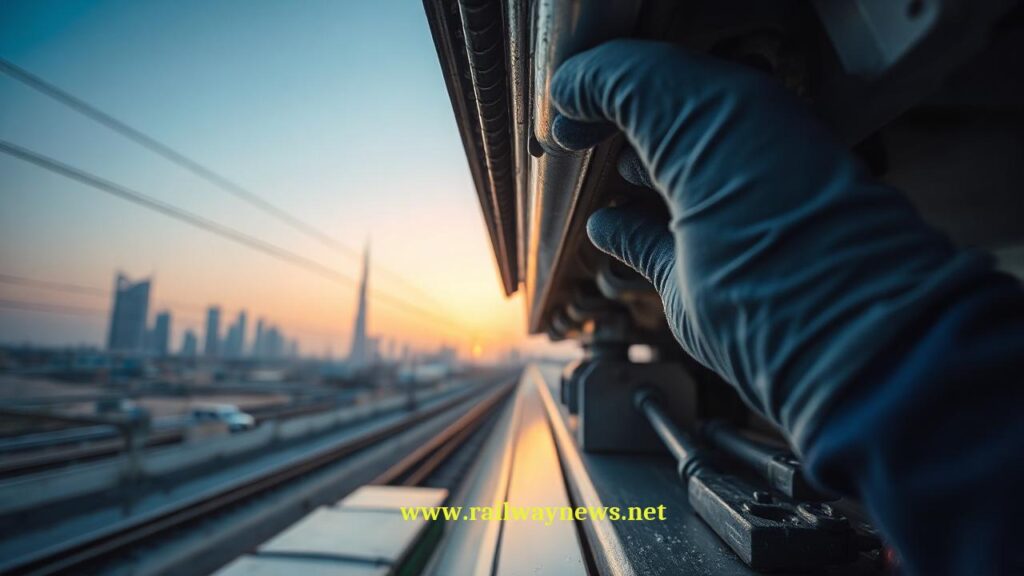
⚡ In Brief: Dubai’s RTA and operator Keolis MHI completed preventive maintenance on ventilation and air conditioning systems across 62 Dubai Metro trains, with all work scheduled outside peak hours to avoid service disruption.
DUBAI, UAE – Dubai’s Roads and Transport Authority (RTA), in partnership with metro operator Keolis MHI, completed a preventive maintenance overhaul of the ventilation and air conditioning (VAC) systems on 62 Dubai Metro trains in July 2026. The program covered detailed component inspections, replacement of end-of-life parts, and post-service performance testing. All work was executed outside peak traffic periods, with no reported impact on passenger service.
What Is the Full Scope of This Project?
The maintenance program covered full inspection of all ventilation and air conditioning components across 62 trains, targeted replacement of parts that had reached the end of their service life, and post-maintenance performance testing to verify cooling output against operational specifications. RTA confirmed the work was carried out in accordance with international railway industry standards, though the specific standards applied were not named. The program forms one element of a broader preventive maintenance strategy for Dubai Metro’s infrastructure and rolling stock, with future phases expected to integrate advanced engineering solutions and monitoring technologies. Total project cost was not disclosed.
Key Project Data
| Parameter | Value |
|---|---|
| Project / Contract Name | Dubai Metro Train VAC Preventive Maintenance Program |
| Total Value | Not disclosed |
| Parties Involved | RTA (Dubai Roads and Transport Authority), Keolis MHI |
| Timeline / Completion | Completed July 2026 |
| Country / Corridor | UAE / Dubai Metro (Red and Green Lines) |
How Does This Compare to Similar Projects?
Dubai’s preventive VAC maintenance program arrives amid a wave of urban rail climate-control investments globally. In 2025, Kolkata Metro launched a ₹585 crore (approximately USD 70 million) upgrade of tunnel ventilation and air cooling systems on its Blue Line, targeting legacy infrastructure rather than rolling stock (Source: Times of India, 2025). On the technology frontier, Wabtec Corporation secured an order in 2024 to supply Green Air HVAC units using natural R290 refrigerant for Norske Tog’s new regional trains in Norway, with service entry set for 2025 — a shift toward refrigerants with lower global warming potential (Source: Wabtec Corp, 2024). RTA has not publicly disclosed whether the Dubai Metro VAC systems use natural or synthetic refrigerants, nor has it confirmed whether refrigerant type was addressed during this maintenance cycle. The Moscow Metro also introduced new Moskva-2026 trains with upgraded climate systems in the same period, reflecting a broader operator focus on cabin environment as a passenger retention metric.
Editor’s Analysis
RTA’s decision to complete VAC maintenance on 62 trains without service disruption signals a maturing asset management capability — one that prioritizes fleet availability in a city where summer railcar temperatures can become a safety issue within minutes of system failure. With global urban rail investment reaching USD 21.67 billion in 2025 and China alone operating over 13,000 km of urban rail across 58 cities, reliability of existing fleets is now a competitive metric alongside network expansion (Source: RailwayPro, 2025). RTA’s stated plan to adopt monitoring technologies points toward a predictive maintenance model, mirroring a broader rail industry shift toward condition-based overhaul scheduling that the autonomous train market — projected at 8.9% CAGR through 2034 — is accelerating (Source: Fortune Business Insights, 2025). The absence of disclosed cost data leaves open the question of whether Dubai’s model is cost-competitive with alternatives such as Kolkata’s infrastructure-level approach.
FAQ
Q: Why is air conditioning maintenance treated as safety-critical on Dubai Metro?
A: Summer temperatures in Dubai routinely exceed 45°C, and a VAC failure during peak heat can render a railcar unsafe for passengers within minutes. Preventive maintenance ensures cooling system reliability during the months when thermal load on onboard equipment is highest.
Q: What advanced technologies is RTA planning to deploy next?
A: RTA stated that further advanced engineering solutions and monitoring technologies are planned to improve equipment performance and long-term network reliability, but did not disclose specific technology vendors, sensor types, or implementation timelines.
Q: How does this maintenance fit into Dubai Metro’s broader fleet strategy?
A: The VAC maintenance forms part of a broader preventive maintenance program for both infrastructure and rolling stock, with the stated goals of increasing fleet availability, supporting operational resilience, and maintaining passenger safety and comfort standards. Total fleet size and the proportion of trains still awaiting VAC maintenance were not confirmed in RTA’s disclosure.

Railway infrastructure, rolling stock and transport technologies specialist focused on global rail industry developments, high-speed rail systems, signaling technologies and freight transportation. Covering railway investments, public transport modernization, rail operations and international mobility projects across Europe, Asia and North America.
RELATED POSTS

October 1, 2026 7:09 am
United States regulators confirmed a September 30 deadline for the...

October 1, 2026 12:13 am
Illinois approved $1.5 billion annually for the Northern Illinois Transit...

October 1, 2026 6:10 am
Amtrak approved a System Expansion Committee on July 30 to...
October 1, 2026 4:10 am
DART launched two public ridership dashboards in March 2026 to...
October 1, 2026 3:12 am
Greenbrier confirmed Brian Comstock as new president and CEO effective...
October 1, 2026 5:14 am
Siemens confirmed delivery of the first new S200 train to...