
Siemens Delivers 300 Desiro ML Cityjet to ÖBB in Austria
Siemens Mobility deployed 300 Desiro ML Cityjet electric multiple units for ÖBB and Raaberbahn across Austria and Hungary, with 309 total units now in service.
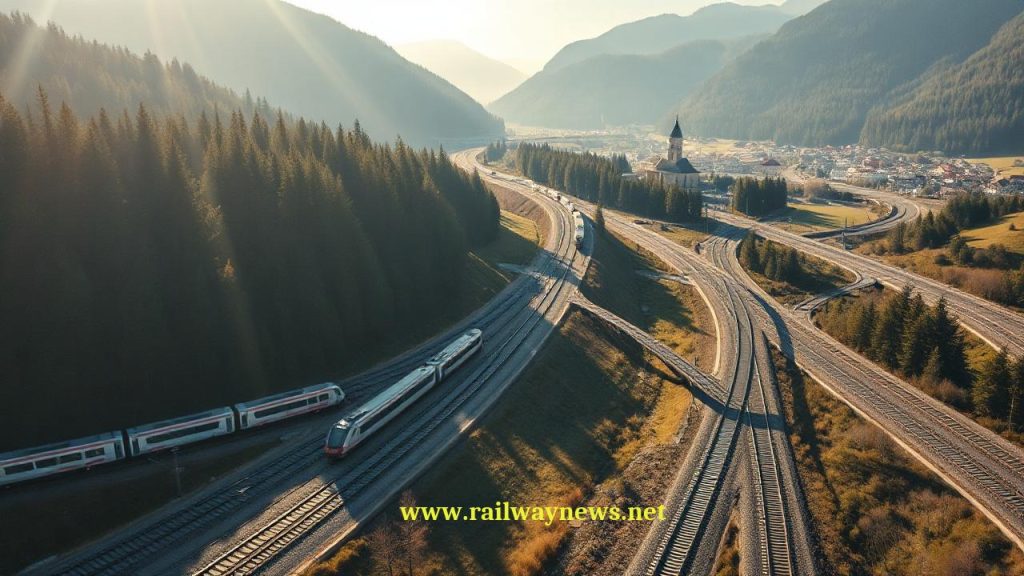
⚡ In Brief: Österreichische Bundesbahnen (ÖBB) and Siemens Mobility have deployed 300 Desiro ML Cityjet electric multiple units across Austria’s nine federal states and cross-border routes to Hungary, with a total of 309 units planned by project completion.
VIENNA, Austria – Siemens Mobility and ÖBB have reached the 300-unit milestone for Desiro ML Cityjet electric multiple units (EMUs) in passenger service, cementing the platform as one of Europe’s largest single-operator regional train fleets. The full delivery program will total 309 units—294 for ÖBB and 15 for Hungarian cross-border operator Raaberbahn—with final assembly conducted at ÖBB Technical Services in Jedlersdorf, Austria.
What Are the Technical Specifications?
The Desiro ML Cityjet EMU platform operates at a top speed of 160 km/h with high acceleration characteristics optimized for suburban and regional networks requiring frequent stops and short headways. The fleet is built in two distinct configurations: an urban variant seating 244 passengers and a regional variant accommodating 259 passengers, both maintaining an axle load below 17 metric tons and compliance with current European impact and fire protection safety standards. Barrier-free access is achieved through a low-floor design matched to Austrian 550 mm platform heights, supplemented by retractable steps and onboard elevators on each side for lower-platform stations, wide inter-car passageways, dedicated bicycle spaces, and multifunctional areas for passengers with reduced mobility.
Key Technical Data
| Parameter | Value |
|---|---|
| Technology / System Name | Siemens Desiro ML (ÖBB Cityjet) |
| Total Value | Not disclosed |
| Parties Involved | Siemens Mobility, ÖBB, Raaberbahn, ÖBB Technical Services (Jedlersdorf) |
| Timeline / Completion | 300 units in service; 309 total (294 ÖBB + 15 Raaberbahn) by project end; final completion date not disclosed |
| Country / Corridor | Austria (all nine federal states) and cross-border Burgenland–Hungary services |
Where Does This Technology Stand in the Market?
The Desiro ML Cityjet operates in direct competition with two dominant platforms in the European regional EMU segment. Stadler’s FLIRT family, with over 2,500 units ordered across more than 20 countries since its 2004 launch, offers top speeds from 160 to 200 km/h and supports platform heights ranging from 550 mm to 760 mm, with battery and hydrogen variants already in commercial revenue service. (Source: Stadler, 2024) Alstom’s Coradia platform—encompassing the Continental and Stream variants—has accumulated more than 1,000 orders from operators including DB Regio, Trenitalia, and SNCF, and fields the Coradia iLint hydrogen fuel-cell variant alongside battery-electric options now entering service in Germany and France. (Source: Alstom, 2024) The Desiro ML differentiates through its sub-17-metric-ton axle load—lower than most competing regional EMUs—and its optimization specifically for the 550 mm Austrian platform standard with integrated retractable step and elevator solutions, though Siemens has not yet publicly deployed a production battery-hybrid Desiro ML variant despite indicating development potential for non-electrified lines. Comparable fleet-wide availability and mean-distance-between-failure statistics for the Cityjet were not publicly available at time of publication.
Editor’s Analysis
The 300-unit Desiro ML deployment positions Austria’s regional rail network among the most modernized in Central Europe, yet the absence of disclosed contract value and reliability data leaves open questions about total lifecycle cost relative to the Stadler FLIRT fleets operating in Switzerland and Germany. Siemens’ explicit reference to battery-hybrid development potential signals an intent to close the gap with Stadler and Alstom, both of which already operate alternative-traction variants in revenue service. The cross-border Raaberbahn component—15 of the 309 units—also reflects a broader European pattern of interoperable regional rolling stock procurement, consistent with the European Commission’s 2021 Action Plan to boost cross-border rail, though Austria’s parallel high-speed rail investment trajectory for 2025 remains undefined in publicly available data. (Source: European Commission, 2021)
FAQ
Q: How many Desiro ML Cityjet trains will ÖBB and Raaberbahn operate in total?
A: The full program covers 309 units—294 for ÖBB and 15 for Raaberbahn—of which 300 are already in revenue service across Austria and the Burgenland–Hungary cross-border route as of mid-2026.
Q: What is the passenger capacity difference between the urban and regional Desiro ML variants?
A: The urban configuration, designed for high-density corridors such as Vienna, seats 244 passengers, while the regional variant provides 259 seats. Both versions include multifunctional areas and dedicated bicycle spaces beyond seated capacity.
Q: Can the Desiro ML Cityjet operate on non-electrified lines with battery power?
A: Siemens Mobility has indicated development potential for battery-hybrid solutions applicable to non-electrified routes, but no production battery-hybrid Desiro ML variant has been officially ordered or deployed as of this milestone announcement.

Railway infrastructure, rolling stock and transport technologies specialist focused on global rail industry developments, high-speed rail systems, signaling technologies and freight transportation. Covering railway investments, public transport modernization, rail operations and international mobility projects across Europe, Asia and North America.
RELATED POSTS
July 4, 2026 11:41 pm
Eurostar cancelled all direct London–Amsterdam trains through July 2 after...
July 1, 2026 1:37 pm
NRHS awarded $187K to 34 U.S. rail heritage projects in...
July 1, 2026 1:42 am
UK government launched a £30bn Better Connected plan, allocating £15.6bn...
July 1, 2026 6:37 am
Amtrak launched a small-plate dining program for Acela First Class...

July 1, 2026 8:49 am
The Short Line Training Center launched FRA-funded online DSLE and...

July 4, 2026 11:02 pm
Eurostar suspends all direct London–Dutch trains through 2 July after...