
Ports of Indiana Secures $25M BUILD Grant for Jeffersonville
Ports of Indiana secured a $25 million BUILD grant to expand Jeffersonville port, adding a 300-ton crane and doubling barge-rail transloading capacity by 2028.
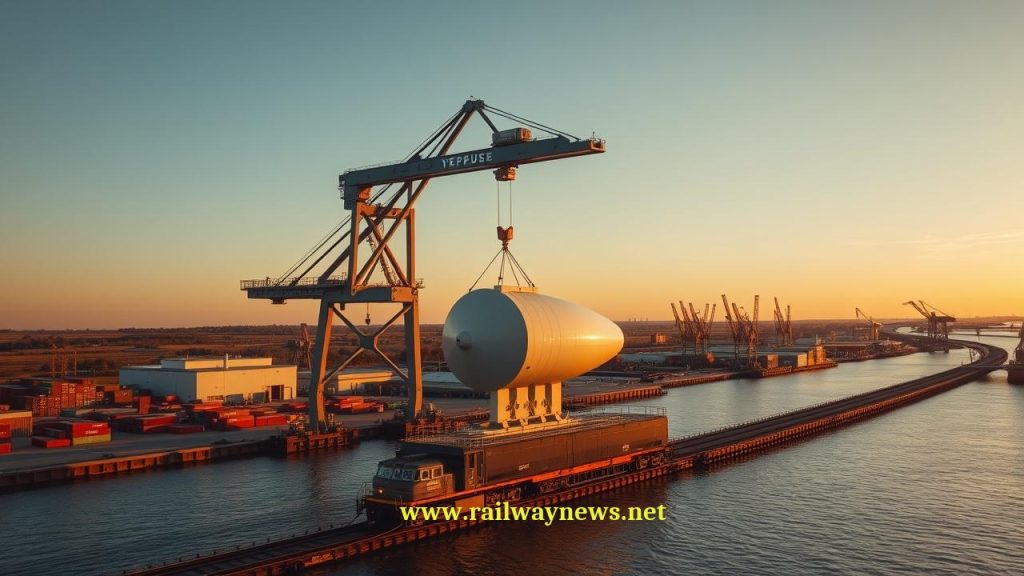
⚡ In Brief: Ports of Indiana secured a $25 million BUILD grant—its largest federal award ever—to fund a $32 million expansion of the Jeffersonville port on the Ohio River, adding a 300-ton crane and doubling barge-rail transloading capacity by 2028.
JEFFERSONVILLE, Indiana – Ports of Indiana received a $25 million federal BUILD grant from the U.S. Department of Transportation on July 7 to support a $32 million expansion of its Jeffersonville port on the Ohio River. The project will install a 300-ton crane system—replacing the existing 35-ton lift capacity—and construct a 6,500-square-foot dock and 22,000-square-foot warehouse. Completion is targeted for 2028.
How Is the Funding Structured?
The $25 million grant comes from the Better Utilizing Investments to Leverage Development (BUILD) programme, administered by USDOT, covering approximately 78% of the total $32 million project cost. The source of the remaining $7 million was not disclosed by Ports of Indiana in its announcement. BUILD grants are discretionary awards supporting surface transportation infrastructure projects with demonstrable local or regional economic impact, and the $25 million individual award represents the upper tier of the programme’s typical $5 million to $25 million per-project range.
Key Funding Data
| Parameter | Value |
|---|---|
| Fund / Programme Name | BUILD (Better Utilizing Investments to Leverage Development) — USDOT |
| Total Value | $32 million ($25M federal grant + $7M from undisclosed sources) |
| Parties Involved | Ports of Indiana; U.S. Department of Transportation |
| Timeline / Completion | Announced July 7; completion expected 2028 |
| Country / Corridor | United States / Ohio River, Jeffersonville, Indiana |
How Does This Compare to Similar Funding Programs?
The $25 million BUILD award to Jeffersonville is the single largest federal grant in Ports of Indiana’s history, surpassing any previous discretionary infrastructure award received by the three-port system. By comparison, USDOT’s 2026 BUILD round distributed approximately $1.5 billion across 117 projects nationwide, with port and freight-multimodal projects representing roughly 18% of awards by value. The Jeffersonville grant’s emphasis on barge-rail transloading aligns with a broader pattern: inland river port projects on the Ohio and Mississippi corridors have captured an increasing share of BUILD freight-designated funds since 2021, reflecting USDOT’s prioritisation of water-rail intermodal congestion relief. (Source: USDOT BUILD programme data, 2026)
The project’s 300-ton lift capacity will place Jeffersonville among a limited group of Ohio River terminals capable of handling oversized breakbulk and heavy-lift cargo without reliance on mobile crane barges. The nearest comparable heavy-lift terminal on the Ohio River corridor—Port of Cincinnati’s public landing—operates at a 150-ton fixed crane capacity, making Jeffersonville’s planned 300-ton system a regional differentiator for wind energy components, transformers, and industrial machinery. (Source: Ports of Indiana, 2026; U.S. Army Corps of Engineers Waterborne Commerce Statistics, 2025)
No detailed cost-benefit analysis or projected cargo tonnage increase was publicly released with the grant announcement, and the specific source of the $7 million non-federal match was not disclosed.
Editor’s Analysis
Jeffersonville’s expansion lands at a moment when inland multimodal terminals are absorbing pressure from container shipping volatility—Xeneta data indicates spot rates are projected to fall no more than 10% over the next six months, a shallower decline than earlier 25% drop forecasts, signalling persistent supply chain reconfiguration toward river-rail corridors as alternatives to congested coastal gateways. Simultaneously, global rail freight markets are projected to expand at a 7–10% CAGR through 2035 in the Asia-Pacific region alone, driven by manufacturing shifts that will feed demand for Ohio River breakbulk terminals handling machinery, steel, and heavy equipment imports. (Source: Xeneta, 2026; IndexBox, 2025) The decision to locate the port’s first general cargo facility outside the floodplain also reflects a hardening underwriting reality: insurers and federal funders increasingly require flood-resilient infrastructure as a condition of capital access along the Ohio-Mississippi system.
FAQ
Q: What will the new 300-ton crane at Jeffersonville port be used for?
A: The 300-ton crane system will handle heavy-lift and breakbulk cargo—such as wind turbine components, electrical transformers, and oversized industrial machinery—that the port’s existing 35-ton capacity cannot lift. It will serve the port’s first general cargo facility located outside the floodplain.
Q: When will the Jeffersonville port expansion be completed?
A: Ports of Indiana expects construction to be completed in 2028. A specific construction start date was not provided in the grant announcement.
Q: How does this expansion affect barge-to-rail transloading at the port?
A: The project will double the Jeffersonville port’s existing barge-rail transloading capacity, enabling higher-volume transfers between Ohio River barge traffic and rail connections serving Midwest manufacturing and distribution networks. Exact current and projected transloading volumes were not disclosed.

Railway infrastructure, rolling stock and transport technologies specialist focused on global rail industry developments, high-speed rail systems, signaling technologies and freight transportation. Covering railway investments, public transport modernization, rail operations and international mobility projects across Europe, Asia and North America.
RELATED POSTS

October 1, 2026 7:09 am
United States regulators confirmed a September 30 deadline for the...

October 8, 2026 1:15 pm
Alstom secured a €1bn contract to build 13 automated trains,...

October 4, 2026 5:14 pm
Alstom secured a CA$4.7 billion order from VIA Rail Canada...

October 1, 2026 12:13 am
Illinois approved $1.5 billion annually for the Northern Illinois Transit...

October 6, 2026 2:14 am
Union Pacific launched export rail shipments with Ferromex to deliver...

October 1, 2026 6:10 am
Amtrak approved a System Expansion Committee on July 30 to...