
India Tests Hydrogen Train at 120 km/h on Jind-Sonipat Route
Indian Railways confirmed the Namo Green Rail hydrogen train hit 120 km/h in certification trials on Jind–Sonipat route ahead of a 75 km/h commercial service.
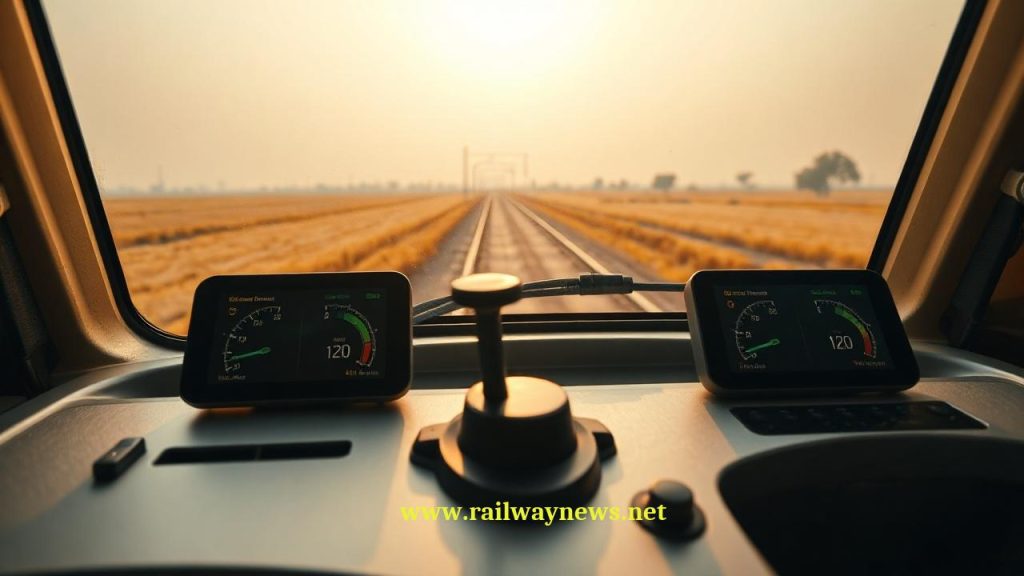
⚡ In Brief: India’s first domestically built hydrogen-powered passenger train reached 120 km/h during certification trials on the Jind–Sonipat route in Haryana, ahead of planned commercial service at 75 km/h on the non-electrified 90-km corridor.
NEW DELHI, India – A 10-car hydrogen fuel-cell passenger train built at Integral Coach Factory in Chennai achieved 120 km/h during supervised trials on Northern Railway’s Jind–Sonipat corridor, Indian Railways confirmed. The train, branded Namo Green Rail, carries up to 2,600 passengers with a combined power output of 2,400 kW and a projected range of 250 km per refueling cycle.
What Are the Technical Specifications?
The Namo Green Rail train consists of 10 railcars: two control motor railcars at either end each producing 1,200 kW, and eight intermediate passenger railcars, distributing traction across both ends rather than relying on a single locomotive. Ballard Power Systems of Canada supplied the proton exchange membrane fuel-cell modules, while Hyderabad-based Medha Servo Drives handled propulsion system integration onto a modernized DEMU platform. Onboard auxiliary systems—air conditioning, lighting, and ventilation fans—draw power entirely from the hydrogen system. The train achieved 120 km/h under test conditions, exceeding its planned commercial operating ceiling of 75 km/h, a standard safety-margin practice in railway certification overseen by RDSO. Emergency braking distance, oscillation behaviour, and continuous hydrogen monitoring systems were verified during the high-speed run.
Key Technical Data
| Parameter | Value |
|---|---|
| Technology / System Name | Namo Green Rail (hydrogen fuel-cell passenger train) |
| Total Value | Not disclosed |
| Parties Involved | Indian Railways (Northern Railway), RDSO, Integral Coach Factory Chennai, Medha Servo Drives, Ballard Power Systems |
| Timeline / Completion | Test completed; compliance procedures pending before commercial entry. No commercial launch date disclosed. |
| Country / Corridor | India – Jind–Sonipat route, Haryana (Northern Railway zone) |
Where Does This Technology Stand in the Market?
The Indian hydrogen train enters a market where European operators have encountered unanticipated reliability challenges despite earlier commercial launches. Alstom’s Coradia iLint, a two-car hydrogen multiple unit with approximately 400 kW per motor car and a range of up to 1,000 km on a single tank, entered revenue service in Germany in 2018 but later faced fleet availability issues and component supply disruptions, prompting several German regional authorities to pivot toward battery-electric multiple units for non-electrified lines. Siemens Mobility’s Mireo Plus H, a two-car hydrogen unit delivering 1.7 MW of traction power with a range of up to 800 km, completed testing in 2024 and targets entry into service in Bavaria and Brandenburg (Source: Siemens Mobility, 2024). By contrast, India’s Namo Green Rail deploys 2,400 kW of total installed power—substantially higher than either European counterpart—across a 10-car formation designed for high-density passenger loading of 2,600 passengers, a configuration without direct parallel in the European hydrogen rail fleet. Stadler’s FLIRT H2, tested in the United States by San Bernardino County Transportation Authority, delivers 1.2 MW and seats approximately 108 passengers in a two-car configuration (Source: Stadler, 2024). The Indian train’s reliance on Canadian fuel-cell modules from Ballard represents a continuing dependency on imported core technology, a gap Indian Railways has not yet publicly addressed with a domestic fuel-cell manufacturing roadmap. The Jind refueling infrastructure—comprising on-site hydrogen production, pressurized storage, and a dedicated dispensing station authorized by India’s petroleum and explosives safety authority—gives the corridor self-contained operational independence not present in all European deployments.
Editor’s Analysis
The Jind–Sonipat corridor selection carries industrial logic beyond its non-electrified status. Maruti Suzuki inaugurated its INR 350 billion Kharkhoda manufacturing plant on this same route, a facility designed for initial annual output of 500,000 units scaling to one million, employing over 21,000 workers and operating on renewable energy with zero liquid discharge (Source: Automotive World, 2025). A 2,600-passenger hydrogen train on this corridor positions Indian Railways to capture commuter demand from a workforce cluster that did not exist when the line’s diesel services were originally planned. The broader Indian rail capex trajectory—capital expenditure rose by approximately Rs 29,650 crore in the first two months of FY 2026–27 alone—suggests fiscal bandwidth exists to scale hydrogen rolling stock beyond a single demonstrator, though the absence of a disclosed per-unit cost for the Namo Green Rail makes lifecycle cost comparisons against battery-electric alternatives speculative at this stage (Source: Investment Guru India, 2025).
FAQ
Q: When will the Namo Green Rail hydrogen train enter commercial passenger service?
A: No commercial launch date has been officially disclosed. The train must still complete all RDSO compliance procedures and receive final certification before carrying passengers. The 120 km/h test run was one of the final technical milestones, but regulatory sign-off timelines remain unpublished.
Q: Why was the Jind–Sonipat route selected instead of a more prominent corridor?
A: The 90-km Jind–Sonipat route is non-electrified, making it suitable for hydrogen traction as an alternative to diesel. Additionally, the corridor serves the newly inaugurated Maruti Suzuki Kharkhoda plant, which will generate substantial commuter traffic from its 21,000-plus workforce.
Q: Does India manufacture the hydrogen fuel cells domestically, or are they imported?
A: The fuel-cell modules are imported from Ballard Power Systems of Canada. While Medha Servo Drives integrated the propulsion system and Integral Coach Factory built the railcars in Chennai, the core fuel-cell stack technology is not yet produced domestically. Indian Railways has not announced a timeline for localizing fuel-cell manufacturing.
Q: How does the range of India’s hydrogen train compare to diesel trains operating on similar routes?
A: The Namo Green Rail has a projected range of approximately 250 km per refueling cycle. The Jind–Sonipat route is roughly 90 km long, allowing a full round trip with reserve capacity. Diesel multiple units typically achieve ranges of 800–1,000 km between refueling, so the hydrogen train’s operational envelope is narrower and tied to dedicated refueling infrastructure at Jind.

Railway infrastructure, rolling stock and transport technologies specialist focused on global rail industry developments, high-speed rail systems, signaling technologies and freight transportation. Covering railway investments, public transport modernization, rail operations and international mobility projects across Europe, Asia and North America.
RELATED POSTS

September 6, 2026 5:19 am
Hitachi delivered Taiwan's first N700ST high-speed train from Japan in...

September 5, 2026 4:19 pm
CPK launched formal tender talks with four consortia to design...

September 6, 2026 4:12 am
Alstom delivered the first of 100 new G Class trams...

September 6, 2026 6:17 am
Hungary ordered a national ban on most freight trains from...

September 6, 2026 1:17 am
Hitachi Toshiba Supreme Consortium confirmed the first of 12 N700ST...
September 6, 2026 8:17 am
DB InfraGO reopened the Nuremberg-Regensburg line in Bavaria on 31...