
MTA Expands R211A Service to D Line with 294K MDBF
MTA deployed R211A subway cars on the D line July 1, 2025, with a fleet mean distance between failure of 294,221 miles, five times the legacy average.
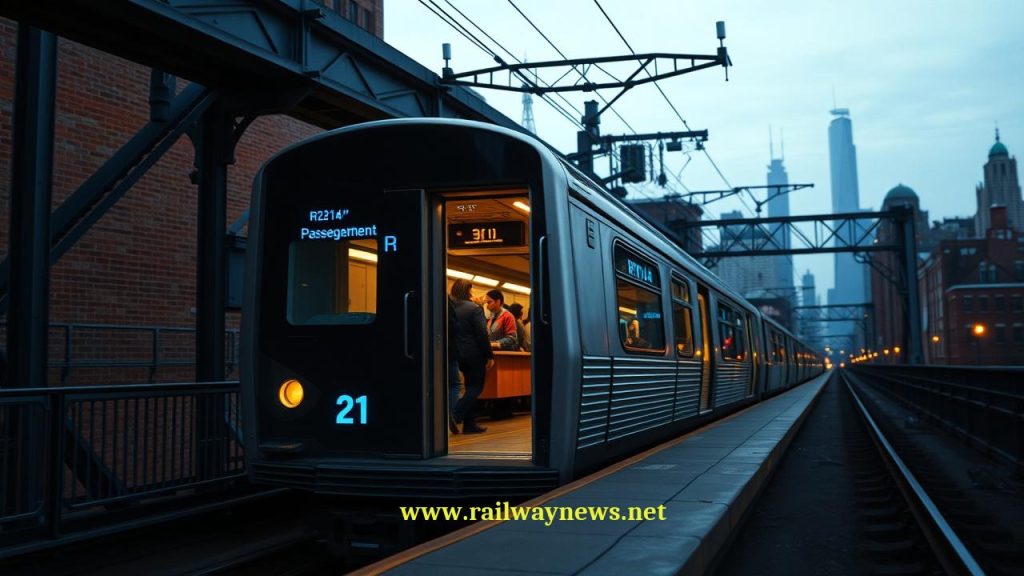
⚡ In Brief: MTA New York City Transit placed new R211A subway cars into revenue service on the D line on July 1, 2025, the sixth route to receive the model, which records a mean distance between failure of 294,221 miles—more than five times the legacy fleet average.
NEW YORK, US – MTA New York City Transit (NYCT) deployed the first R211A trains on the D line on 1 July 2025, expanding the reach of the new rolling stock to six subway routes. The R211A fleet, part of a broader replacement program, is posting an average mean distance between failure (MDBF) of approximately 294,221 miles, compared with the 58,685-mile average recorded by the R46 cars still operating elsewhere on the network, MTA officials said during the event at Coney Island.
What Are the Technical Specifications?
The R211A cars incorporate wider doorways—58 inches compared with 50 inches on older classes—and enhanced digital passenger information displays (Source: MTA, 2018). The reliability leap is driven partly by modern traction systems and redesigned subsystems that significantly extend the intervals between corrective maintenance events. The current MDBF figure of 294,221 miles reflects early fleet performance and places the R211A among the most dependable heavy-rail vehicles in North American transit.
Key Technical Data
| Parameter | Value |
|---|---|
| Technology / System Name | R211A Subway Car |
| Manufacturer | Kawasaki Rail Car |
| Base Order Value | $1.4 billion (535 cars, 2018) (Source: MTA, 2018) |
| MDBF (miles) | 294,221 (R211A fleet) vs 58,685 (R46 fleet) |
| Door Width | 58 inches (vs. 50 inches on older cars) |
| Fleet Replaced | R68 (B, D, N, W lines) and eventually R46 (six other lines) |
| Country / Corridor | USA / New York City Subway |
Note: MTA did not disclose the exact number of R211A cars assigned to the D line, nor a specific date for full retirement of the R68 fleet.
Where Does This Technology Stand in the Market?
The R211A’s MDBF of over 294,000 miles substantially exceeds other North American heavy-rail fleets. Washington Metro’s 7000-series cars (Kawasaki) reported an MDBF of approximately 165,000 miles in 2022 (Source: WMATA, 2022), while Chicago Transit Authority’s 5000-series (Bombardier) averaged roughly 100,000 miles before recent improvements. By comparison, London Underground’s S Stock achieved MDBF figures above 100,000 miles but still well below the New York benchmark. The R211A’s reliability places it in a leading position for new-generation metro rolling stock, with an MDBF roughly five times the North American fleet average and more than double the closest comparable U.S. fleet.
Editor’s Analysis
MTA’s deployment of the R211A on the D line underscores a strategic focus on fundamental fleet reliability rather than merely cosmetic upgrades. A fivefold improvement in MDBF directly reduces service disruptions and maintenance costs—critical for a system that carries over two billion passengers annually. The timing aligns with a broader U.S. transit capital surge: in July 2025, Chicago’s $2.1 billion Red Line extension reached substantial completion (Source: Construction Dive, 2025), illustrating how agencies are pairing infrastructure expansion with rolling stock modernization. If the R211A’s early reliability data holds, it could reset procurement benchmarks across North America, pushing agencies to demand MDBF guarantees far above historic norms.
FAQ
Q: Which subway lines currently use R211A trains?
A: As of July 1, 2025, the R211A serves the D line, in addition to five other previously announced routes. The full list of lines was not specified in the July 1 announcement, but MTA plans to eventually deploy them on all lines that currently use R68 and R46 cars.
Q: When will the R68 and R46 fleets be completely replaced?
A: MTA officials have not publicly announced a firm completion date. The R68 replacement program is underway, with the R46 fleet slated to follow, but the timeline depends on future R211 deliveries and funding.
Q: How many R211A cars are operating on the D line?
A: The exact number assigned to the D line was not disclosed by MTA at the July 1 event. The agency typically phases in new cars gradually as they complete testing and acceptance.

Railway infrastructure, rolling stock and transport technologies specialist focused on global rail industry developments, high-speed rail systems, signaling technologies and freight transportation. Covering railway investments, public transport modernization, rail operations and international mobility projects across Europe, Asia and North America.
RELATED POSTS

October 1, 2026 7:09 am
United States regulators confirmed a September 30 deadline for the...

October 8, 2026 1:15 pm
Alstom secured a €1bn contract to build 13 automated trains,...

October 4, 2026 5:14 pm
Alstom secured a CA$4.7 billion order from VIA Rail Canada...

October 1, 2026 12:13 am
Illinois approved $1.5 billion annually for the Northern Illinois Transit...

October 6, 2026 2:14 am
Union Pacific launched export rail shipments with Ferromex to deliver...

October 1, 2026 6:10 am
Amtrak approved a System Expansion Committee on July 30 to...