
1895 Haslemere Signal Box Opens as Museum July 2026
1895 Haslemere signal box, retired in October 2025, opens as a museum in July 2026 after volunteer-led restoration supported by a condition survey from SLC.
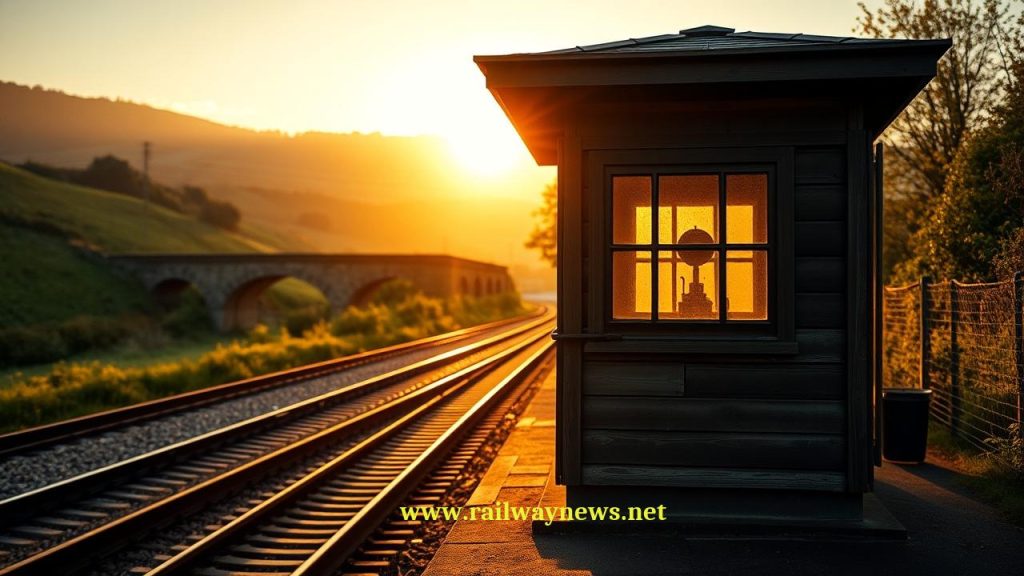
⚡ In Brief: The 1895 Haslemere signal box, retired after a signalling upgrade in October 2025, will open as a museum in July 2026 following restoration by volunteers and a pro bono condition survey by engineering consultancy SLC.
HASLEMERE, UK – The 130-year-old Haslemere signal box, which directed its final train at the end of October following a modern signalling upgrade, will reopen as a heritage museum in July 2026 after a volunteer-led restoration supported by a pro bono structural condition survey from SLC. The last train was dispatched from the box before a broader signalling modernisation project took over train control on the Portsmouth Direct Line.
What Are the Technical Specifications?
The restored signal box retains its original basement signalling mechanisms, including a mechanical lever frame and interlocking system that once directly operated points and signals on the line. A full condition survey documented timber deterioration, window integrity, historic fixtures and the state of the lever frame and rodding—details of the exact number of levers preserved were not disclosed in the project briefing.
Key Technical Data
| Parameter | Value |
|---|---|
| Technology / System Name | Haslemere Signal Box (LSWR Type 3 design) |
| Original Opening | 1895 |
| Signalling Type | Mechanical lever frame with interlocking (basement locking room) |
| Last Day of Operation | End of October 2025 (year inferred from handover date; not explicitly stated in source) |
| Handover Event | 13 June 2026 |
| Planned Public Opening | July 2026 |
| Condition Survey Provider | SLC (pro bono, corporate member of Community Rail Network) |
| Total Restoration Cost | Not disclosed |
Where Does This Technology Stand in the Market?
While mechanical signalling like that at Haslemere handled train dispatch manually for over a century, modern computer-based interlocking (CBI) and communications-based train control (CBTC) now dominate new signalling investments. The global railway signalling market, valued at an estimated USD 18.2 billion in 2025, is forecast to grow at a CAGR of 5.7% to exceed USD 31.5 billion by 2035 (Source: IndexBox, 2025). Siemens’ Trainguard ETCS Level 2 system delivers in-cab signalling with capacity gains of up to 40% on mixed-traffic lines, while Thales’ SelTrac CBTC can achieve 90-second headways on metro networks (Source: Siemens, 2023; Thales, 2024). In a separate transport infrastructure segment, the USD 570 million Port of Luleå expansion dredging contract awarded to Boskalis and Van Oord (Source: MarineLink, 2025) underscores the capital scale at which modern transport control systems are being deployed—contrasting sharply with the volunteer grant-funded preservation of a single signal box.
Editor’s Analysis
Haslemere’s transition from operational signal box to heritage museum mirrors a wider pattern across Britain’s rail network, where mechanical signalling relics are being conserved even as the country accelerates the rollout of digital train control under the European Train Control System (ETCS) programme. The Community Rail Network’s model, leveraging pro bono engineering expertise from firms like SLC, offers a template for preserving railway heritage without straining commercial budgets. As signalling expenditure pushes past USD 30 billion globally over the next decade, the survival of structures like Haslemere signal box serves as a tangible counterweight, reminding the industry that tomorrow’s automation is built on yesterday’s lever frames.
FAQ
Q: When will the Haslemere Signal Box museum open to the public?
A: The volunteer team plans to open the signal box and its museum for public visits from July 2026.
Q: What type of signalling equipment did the signal box originally use?
A: The box relied on a mechanical lever frame and interlocking equipment in the basement, typical of London & South Western Railway Type 3 designs, which manually controlled points and signals through rodding and wire connections.
Q: Who paid for the restoration of the signal box?
A: The restoration was led by volunteers and supported by a pro bono condition survey from engineering consultancy SLC; the full cost of the project was not disclosed.

Railway infrastructure, rolling stock and transport technologies specialist focused on global rail industry developments, high-speed rail systems, signaling technologies and freight transportation. Covering railway investments, public transport modernization, rail operations and international mobility projects across Europe, Asia and North America.
RELATED POSTS
September 6, 2026 5:19 am
Hitachi delivered Taiwan's first N700ST high-speed train from Japan in...

September 5, 2026 4:19 pm
CPK launched formal tender talks with four consortia to design...
September 5, 2026 7:14 pm
HS2 Ltd signed renegotiated civils contracts with EKFB and Align...
September 6, 2026 1:17 am
Hitachi Toshiba Supreme Consortium confirmed the first of 12 N700ST...
September 6, 2026 6:17 am
Hungary ordered a national ban on most freight trains from...
September 6, 2026 8:17 am
DB InfraGO reopened the Nuremberg-Regensburg line in Bavaria on 31...