
Amtrak Signs $7-8B Penn Station Pre-Development Pact
Amtrak signed a $7-8B pre-development agreement with Penn Transformation Partners for NY Penn Station and the design and outreach work will run through 2027.
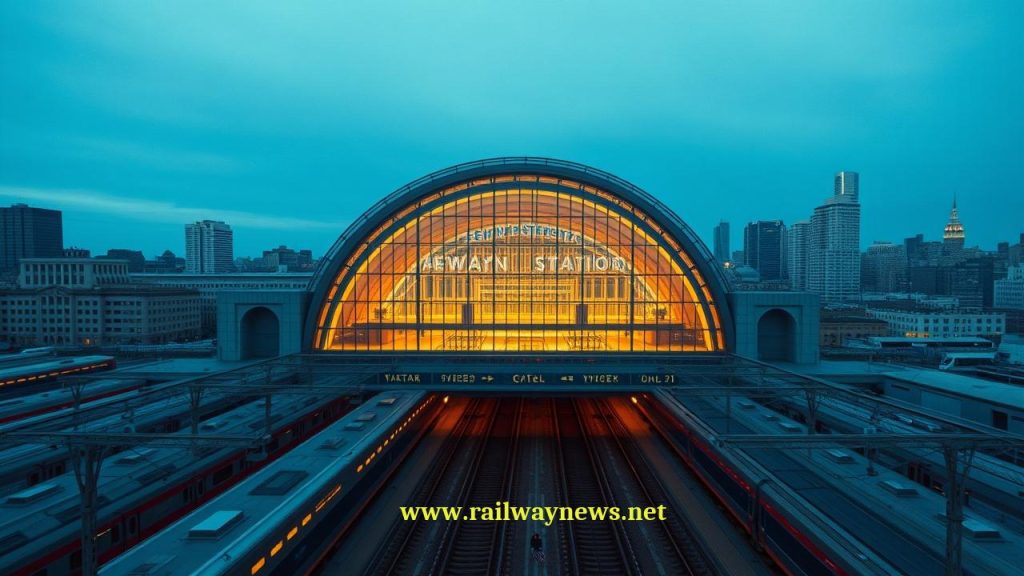
⚡ In Brief: Amtrak and Penn Transformation Partners finalized a pre-development agreement for the $7–8 billion New York Penn Station overhaul, with design and community engagement running through 2027 before construction costs are locked in.
NEW YORK, USA – Amtrak and the Penn Transformation Partners (PTP), a Halmar-Skanska joint venture, signed a pre-development agreement on 21 June 2026 to finalize design and establish a firm price for the $7 billion-to-$8 billion transformation of New York Penn Station. The PDA phase extends through 2027. Amtrak Special Advisor Andy Byford confirmed no fare increases or surcharges will be imposed on NJ Transit, MTA, or Amtrak riders to fund the work.
What Is the Full Scope of This Project?
The Penn Station Transformation project will demolish the Infosys Theater on Eighth Avenue to create a grand entrance into a new above-ground train hall with a redesigned façade, while converting cramped walkways into open concourses below street level. Track capacity expansion, new retail spaces, and structural upgrades to the existing subterranean station are also specified in the preliminary scope. The PDA does not yet lock in a firm construction cost; Amtrak and PTP will use the pre-development period to gather stakeholder input and refine the design before a guaranteed maximum price is set.
Key Project Data
| Parameter | Value |
|---|---|
| Project / Contract Name | Penn Station Transformation (PDA phase) |
| Total Value | $7 billion – $8 billion (current estimate; firm price pending) |
| Parties Involved | Amtrak (owner), Penn Transformation Partners (Halmar-Skanska JV), selected by US DOT |
| Timeline / Completion | PDA phase through 2027; full construction completion date not disclosed |
| Country / Corridor | USA – Northeast Corridor, New York City |
How Does This Compare to Similar Projects?
The $7–8 billion current estimate places the Penn Station overhaul among the most expensive single-station redevelopment projects in North America, though below the $11.1 billion final cost of Grand Central Madison (East Side Access), which delivered new LIRR terminal capacity beneath Grand Central Terminal (Source: MTA Capital Construction, 2023). The Moynihan Train Hall, completed in 2021 directly across Eighth Avenue as a partial relief valve for Penn Station, cost approximately $1.6 billion but added no new track capacity — a limitation the current transformation explicitly addresses (Source: Empire State Development, 2021). Washington Union Station’s proposed expansion carries a roughly $10 billion price tag, though that project remains in earlier planning stages (Source: Federal Railroad Administration, 2024). Byford’s commitment to zero fare increases distinguishes the Penn Station funding model from London’s Crossrail, where a supplemental business rate levy and fare contributions partially covered the £18.9 billion final bill.
Editor’s Analysis
The PDA structure transfers significant pre-construction risk to PTP by requiring a firm price before major work begins — a departure from traditional Amtrak procurement where cost overruns historically landed on the public balance sheet. With federal funding and private equity as the stated pillars, and no rider surcharges permitted, the financing model will test whether institutional investors view mega-station projects as viable infrastructure assets outside the transit-fare revenue stream. China’s accelerated rail-station development model, which tied station-air rights to commercial property revenues and lifted spending in connected towns (Source: Tourism Review, 2025), offers a parallel that US planners have studied but not yet replicated at scale.
FAQ
Q: Will Penn Station remain open during the transformation?
A: Amtrak has not released a detailed phasing plan. Major construction sequencing — and whether partial closures of platforms or concourses will be required — has not been officially confirmed as of the PDA signing.
Q: How is the $7–8 billion project funded without fare increases?
A: Amtrak officials stated funding will come primarily from federal appropriations, private financing, and equity raised by PTP. The exact split between these sources has not been disclosed, and no final funding package has been enacted by Congress.
Q: What is the role of Andy Byford in the project?
A: Byford serves as Amtrak’s Special Advisor for the Penn Station transformation, overseeing the PDA phase and stakeholder coordination. He previously led the MTA’s New York City Transit division and Transport for London, where he managed major station capacity upgrades.

Railway infrastructure, rolling stock and transport technologies specialist focused on global rail industry developments, high-speed rail systems, signaling technologies and freight transportation. Covering railway investments, public transport modernization, rail operations and international mobility projects across Europe, Asia and North America.